Nicolai Haugsted

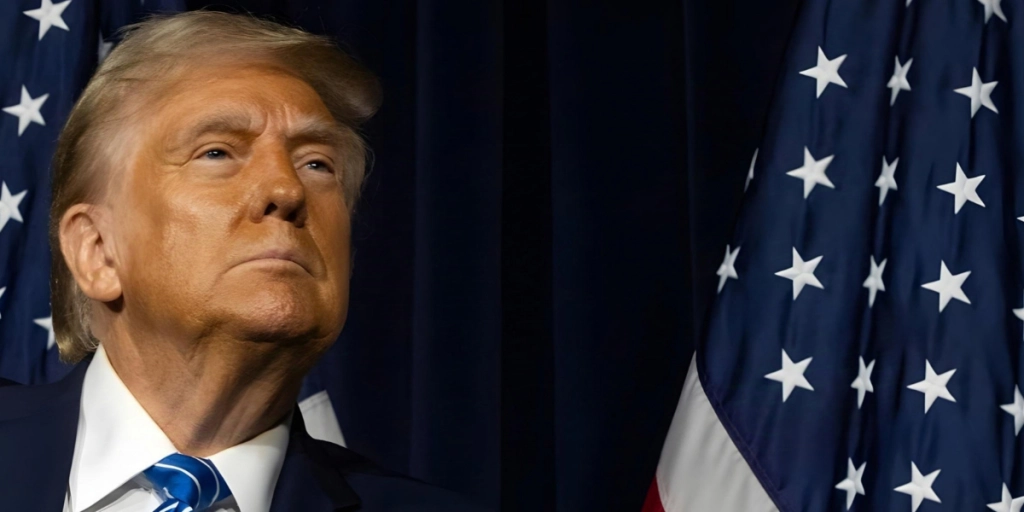
Trump delivers unexpected trade announcement as negotiations with Canada continue.

Trade relations between the United States and Canada have become an increasingly uncomfortable subject for businesses on both sides of the border. American manufacturers depend heavily on Canadian suppliers, while Canadian companies rely on access to their southern neighbor’s enormous consumer market.
President Donald Trump’s tariff policies have complicated that relationship, particularly for industries where products and components routinely cross the border several times before reaching customers.
Michigan’s automotive industry has found itself directly exposed to the dispute. But with the November 3 midterm elections approaching, Trump is now suggesting that the disagreement could be nearing a resolution.
Speaking at a Republican campaign rally in Port Huron on Sunday, the president, according to Reuters, claimed that Canada was prepared to make significant concessions to secure a trade agreement.


However, he offered no concrete details about what such an agreement would involve.
Trump claims Canada is ready to give him almost anything
Trump used his appearance in Michigan to defend the tariffs he has imposed on Canadian goods. The president repeated his longstanding accusation that Canada has benefited unfairly from its trading relationship with the United States.
According to Trump, the higher import duties were necessary to correct that imbalance.
“I had to do it,” he told supporters.
“We’ll have that settled pretty soon. They’re willing to give us anything at this moment.”
The remarks suggested that Trump believes Washington has gained considerable leverage over Ottawa during the negotiations.
However, the president did not identify which concessions Canada had supposedly offered, whether an agreement had been drafted or when an announcement might follow.
The office of Canadian Prime Minister Mark Carney did not immediately respond to Reuters’ request for comment.
For now, Trump’s prediction remains a statement of confidence rather than confirmation that the two countries have reached a deal.
Michigan has more at stake than most
Trump delivered his message in Port Huron, a Michigan city situated close to the Canadian border.
The location was particularly relevant given the economic consequences of the trade dispute.
Michigan’s manufacturing sector, especially the Detroit-based automotive industry, has extensive commercial connections with Canada.
Automakers frequently move engines, components and other materials across the border during production.
Tariffs can therefore increase costs at several stages of the manufacturing process, creating complications for companies that operate in both countries.
Those additional expenses can affect production decisions, business investment and ultimately consumer prices.
Trump nevertheless received strong electoral support in the region during the 2024 presidential election.
The surrounding area, including Port Huron, backed him with more than 66 percent of the vote.
That political support has not insulated local businesses from the uncertainty surrounding US-Canada trade.
Republican Senate candidate admits he has concerns
Trump’s tariff policy has also created a delicate political situation for some Republicans campaigning in Michigan.
Former congressman Mike Rogers, who is competing against Democrat Abdul El-Sayed for an open Senate seat, has attempted to distinguish his position on automotive tariffs from the president’s broader trade agenda.
Appearing on NBC’s Meet the Press on Sunday, Rogers praised aspects of Trump’s economic approach.
He credited the administration’s tariffs with helping secure manufacturing investments in Michigan involving Chevrolet and Detroit Diesel.
But Rogers also acknowledged that the trade restrictions affecting Canadian automotive products have caused him concern.
“The automobile portion of these Canadian tariffs worries me a little bit,” he said.
The Republican candidate then offered a more qualified assessment of the president’s trade strategy.
“There’s some good and there’s some things we have to work on,” Rogers explained.
His comments illustrated the competing priorities facing Michigan politicians.
Manufacturing investment remains an important political objective, but protecting existing supply chains and jobs is also a significant concern.
Trump’s campaign message meets economic reality
Trump’s appearance formed part of a wider effort to support Republican candidates ahead of the midterm elections.
The president has consistently presented tariffs as a tool for protecting American industry, encouraging domestic investment and strengthening Washington’s negotiating position.
Critics of the policy, however, have raised concerns about higher costs for manufacturers and consumers, particularly in industries that depend on international supply chains.
The automotive sector is especially sensitive because production is so closely integrated across North America.
For Michigan businesses, a settlement with Canada could potentially reduce uncertainty over future trading conditions.
Much would depend on the actual terms of any agreement, including which tariffs might be reduced or removed and whether existing trade arrangements would change.
Trump’s comments offered little clarity on those questions.
Canadian officials had not immediately confirmed his characterization of the negotiations, according to Reuters.