
 Nicolai Haugsted


Donald Trump Jr. reportedly opposes his father’s military strategy despite years of unwavering public loyalty.
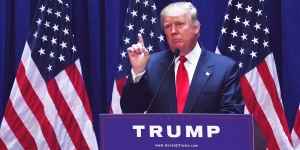

Political disagreements have a habit of creating uncomfortable situations, particularly when the people involved belong to the same family.
For President Donald Trump, loyalty has long been a defining feature of both his political movement and his inner circle. Few people have demonstrated that loyalty more consistently than his eldest son, Donald Trump Jr.
The 48-year-old has spent years defending his father’s decisions, confronting political opponents and promoting the agenda that helped return Trump to the White House. But the administration’s military campaign against Iran has apparently exposed a disagreement that even the famously united Trump family cannot entirely avoid.
According to a report by The Atlantic, Donald Trump Jr. has privately opposed the war from the beginning, despite maintaining his public support for his father.


And his objections reportedly reached the president himself.
Trump Jr. reportedly disagreed with his father from the beginning
The Atlantic spoke with two people who said they had discussed the Iran conflict directly with Donald Trump Jr.
According to those sources, the president’s eldest son has repeatedly expressed reservations about the military campaign, which has now continued for nearly eight months.
His concerns reportedly stem from a longstanding opposition to American military intervention abroad.
Trump Jr. believes the United States should avoid becoming entangled in another prolonged conflict in the Middle East, according to the report.
That position reportedly led him to tell his father directly that he did not want America drawn into another regional war.
The disagreement is particularly noteworthy because Trump Jr. has become one of the most recognizable defenders of the president’s political agenda.
His public appearances and social media activity have frequently reinforced the administration’s positions.
On Iran, however, his reported private views suggest that father and son have not seen eye to eye.
A disagreement that stays behind closed doors
Despite his objections, Trump Jr. has apparently decided that a public confrontation with his father would serve little purpose.
A person close to the president’s son told The Atlantic that his position should not surprise anyone familiar with his political beliefs.
“Don has kept his views on the subject private, as he would never publicly break with his dad on an issue like this,” the source explained.
The distinction between private disagreement and public loyalty is significant.
Trump Jr. has not launched a public campaign against the administration’s military strategy, nor has he openly challenged the president’s handling of the conflict.
Instead, according to the reporting, he has continued to maintain a united front while expressing his concerns privately.
The Atlantic’s account therefore points to a political disagreement within the family, rather than evidence of a broader personal falling-out.
Neither the report nor its sources establish that the dispute has damaged their relationship.
The Iran war divides Trump’s political movement
The reported disagreement also reflects a larger debate among supporters of the president.
Trump’s America First agenda has frequently emphasized avoiding costly foreign conflicts and prioritizing American interests at home.
That message has appealed to voters who oppose prolonged military involvement overseas.
However, the administration’s campaign against Iran has created tensions between supporters who favor military action and those who believe another Middle Eastern war contradicts that approach.
Trump Jr.’s reported position places him closer to the non-interventionist faction of the MAGA movement.
The conflict has also become increasingly unpopular among the wider American public.
According to a recent Pew Research Center survey cited in the report, 65 percent of Americans disapprove of Trump’s handling of the military action.
That figure reflects public dissatisfaction with the president’s management of the conflict, although it does not establish that all those respondents oppose military action under every circumstance.
For Trump Jr., the political debate is unusually personal because the commander-in-chief making the decisions is also his father.
An old social media post returns to the spotlight
The Atlantic’s reporting has also drawn attention to something Trump Jr. wrote more than two years ago.
Back in April 2024, Iran launched attacks against Israel, prompting renewed concerns about a wider regional confrontation.
At the time, Trump Jr. used social media to defend his father’s record on foreign policy.
“Remember when they said Trump would get us into a full-blown war with Iran?” he wrote on X.
He also praised Trump’s “strength and his resolve,” presenting his father as a leader who had avoided drawing the United States into a major conflict with Tehran.
The message reflected a familiar argument among Trump supporters that his presidency had helped deter foreign adversaries without requiring another large-scale war.
Against the backdrop of the current conflict, however, the old post has acquired a different significance.
The war that Trump Jr. once invoked as a hypothetical criticism of his father’s leadership has now become a central issue during his second presidency.
That contrast does not necessarily mean Trump Jr. has abandoned his earlier political principles.
According to The Atlantic’s sources, his opposition to military intervention has remained consistent, even as his father’s policies have changed.



