
 Kenneth Glad

Space is vast. For decades, astronomers have hunted for worlds that might share our cosmic chemistry. Now, a tiny hint of gas has turned the spotlight on one very specific distant star system.

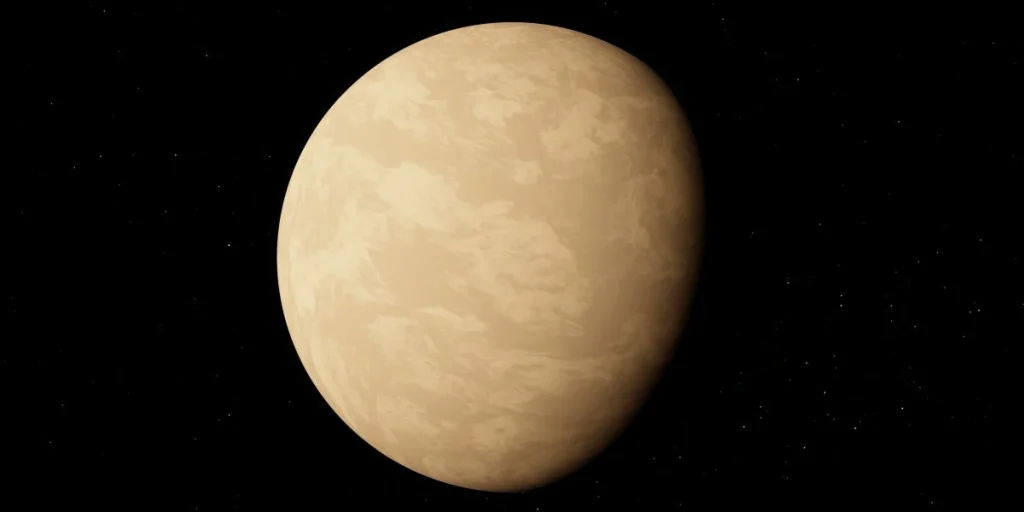
The excitement centers on LHS 1140b, a planet orbiting a faint red dwarf star in the Cetus constellation.
Recent observations suggest helium is leaking from its atmosphere. Previously, the James Webb Space Telescope ruled out a thick, primitive layer of hydrogen gas.
Finding helium points to an exciting reality, writes The Conversation. It suggests the distant world holds a stable and long-lasting atmosphere.
Earth has kept its own air for billions of years. That deep stability is exactly what allows biology to take hold and thrive.


Sizing up the world
Scientists are still trying to figure out exactly what kind of world they are looking at. In 2017, they noticed the star dimming every 25 days.
Those shadows revealed a body roughly 1.7 times larger than Earth. It weighs about five times as much as our home planet.
This size places it in a confusing middle ground. It could be a solid super-Earth, or simply a gassy mini-Neptune.
Our solar system has nothing in this weight class. That leaves researchers guessing about the basic physics of the most common planet type in the universe.
Searching for warmth
Location adds another layer of intrigue to the story. The planet sits inside the habitable zone of its faint star.
That means liquid water could theoretically exist on the surface. But the bare math paints a very chilly picture.
Without a thick blanket of greenhouse gases, the planet probably sits at a freezing minus 30 degrees Celsius. Some realistic models push that drop all the way to minus 90 degrees.
The helium discovery itself is also still very tentative. A second look at the planet failed to show the exact same chemical signature.
Playing the long game
Astronomers need more data to understand these distant worlds. This is only the second time they found traces of an atmosphere on a small planet.
According to The Conversation, researchers still need to study thousands of exoplanets to truly understand the rules of planetary weather. They cannot rely on just one or two lucky breaks.
We are only at the starting line of this cosmic journey. Still, every new gas trace brings us closer to finding a living world.



