
 Kenneth Glad

History often leaves its grand mark on monuments and palaces. But sometimes the most fascinating stories are hidden in the everyday tools of ordinary people. A simple wooden kitchen utensil has just offered a surprising glimpse into how our ancestors passed the time.

Archaeologists digging in the historic Russian city of Staraja Russa recently uncovered a fascinating wooden artefact. The medieval town sits within the ancient Rus kingdom, a vast territory originally settled by Vikings.
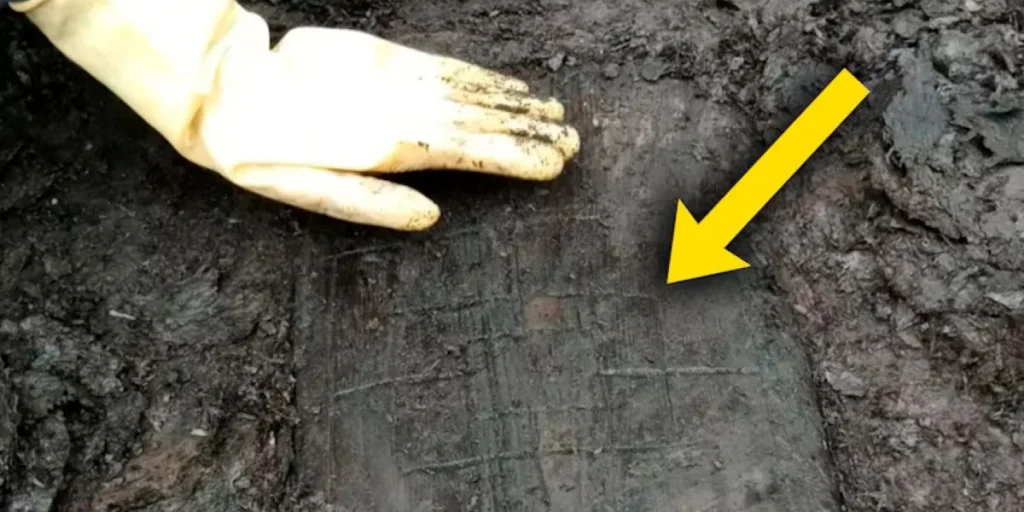
At first glance, the eleventh-century oak object looked completely ordinary. It was a classic flat shovel, measuring roughly 30 by 40 centimetres, designed to slide bread into a hot oven.
But flipping the tool over revealed a very different story. The back side was carefully etched with three squares nested inside each other. That distinct geometric pattern creates a perfect playing board.
Ancient board game
The carved lines form the grid for Nine Men’s Morris, an intense strategy challenge designed for two players. HistorieNet reports that the pastime operates a bit like a complex mix of tic-tac-toe and checkers.


Players try to line up three pieces in a row. Achieving that goal allows them to capture an opponent’s token. The match continues relentlessly until someone is blocked completely or reduced to just two pieces.
The activity was hugely popular across Europe and Asia during the Middle Ages. People loved it because it was simple. You did not need expensive equipment to join in on the fun.
Killing time
Grids were often scratched into any available flat surface. Opponents simply used small stones or whatever lay nearby as game pieces.
Researchers suggest two possible scenarios for this specific item. A bored baker might have carved the lines to play a quick round while waiting for dough to bake.
Or perhaps the story is even more practical. The wooden shovel may have simply snapped off its long handle during a busy morning. Instead of throwing it away, someone gave the wood a second life as a dedicated recreational board.
Spanning the centuries
Finding a complete specimen like this is extremely rare. While experts have found broken pieces of the game in the region before, an intact board carved into a kitchen tool is a major discovery.
Its roots stretch back far beyond the eleventh century. HistorieNet notes that similar grids might have been used in ancient Egypt around 1400 BC.
The Roman poet Ovid even wrote about a comparable game around the year 1 AD. He famously advised women to learn the rules. As he noted, romance frequently blossoms during a good match.



