
 Kenneth Glad

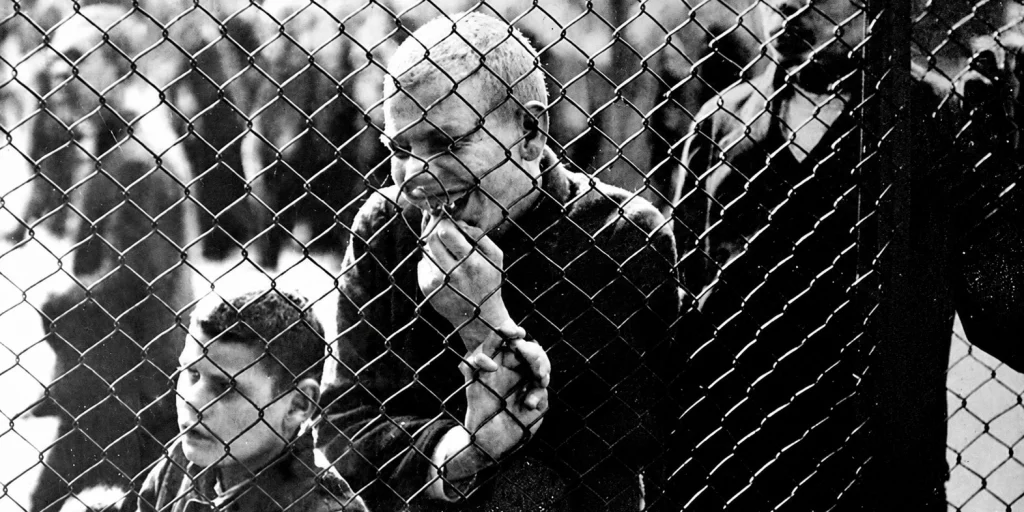
Hospitals are supposed to be safe havens. Yet history proves that clinical walls can hide unimaginable cruelty. Today, researchers are still exposing the secrets of doctors who betrayed their most vulnerable patients.


Nine-year-old Günther Oehls loved music. He played the harmonica beautifully and sang popular tunes and traditional folk songs with perfect rhythm.
His severe seizures began at age three. An epilepsy diagnosis landed him at Görden, a sprawling state psychiatric facility in Brandenburg, Germany.
Under the German Nazi regime, the doctors there stopped looking for cures. Medical staff instead viewed vulnerable patients like Günther as raw material for their twisted neurological research.
The young boy died suddenly in 1939. His rapid weight loss and untreated pneumonia perfectly matched the cruel starvation diets that Nazi doctors used to systematically murder disabled children, writes HistorieNet.


A calculated harvest
Medical historian Herwig Czech has spent years investigating these state-funded-murders. According to Historienet, he recently published a massive memorial book that details over a thousand individual victim biographies. He wanted to ensure these lost patients were remembered as real people with unique stories rather than mere medical statistics.
Behind the scenes, elite researchers worked directly with Aktion T4. This official Nazi campaign was specifically designed to wipe out disabled citizens and psychiatric patients across Germany. Doctors at the designated killing centers would flag victims they considered unworthy of basic care or life itself.
Czech identified 647 children under ten whose brains were shipped to prominent Munich and Berlin research labs. The doctors desperately wanted physical proof that certain neurological conditions and developmental delays were genetic.
They used this corrupted data to justify forcing parents into permanent sterilization under strict racial hygiene laws. The German state never bothered to ask grieving families for consent before harvesting organs, often lying about the true cause of death to cover their tracks.
Decided in advance
Ursula Kriescht suffered a grim fate similar to Günther’s. The teenager struggled with severe neurological movement and developmental disorders. She spent years as a patient at the Kaiser Wilhelm Institute’s research clinic in Berlin from a very early age.
Nazi scientists mapped out her destiny long before her death. Archival documents reveal a chilling written correspondence between the facility’s researchers. They had already agreed on exactly who would receive her brain tissue.
She was only 15 years old when she was murdered in a gas chamber in 1940. Doctors then sliced up her brain and divided the tissue among three different medical institutes for study. They even published scientific papers based on her stolen remains.
“We assess that Ursula and the other victims in that particular transport may have been killed specifically so the researchers could examine their brains,” Czech told Historienet.
Escaping justice entirely
Following the end of the war, the broader medical community largely abandoned eugenics. While global trials exposed horrific experiments, brain research failed to reckon with its dark past.
Julius Hallervorden was a leading German neurologist who openly requested brains from Nazi killing centers. He continued his prestigious career after the war without facing punishment, even receiving prominent scientific honors.
Scientists treated the stolen samples as valuable data points. They willfully ignored that their slides contained the remains of murdered children, keeping the grim collections active in university archives for decades.
The stolen tissue led to early descriptions of conditions like Tay-Sachs disease, taken from a murdered Jewish boy. Czech insists the actual scientific value was minimal since these findings never produced cures. Facing immense public pressure, authorities finally buried the remaining human tissue in 1990.



