
 Nicolai Haugsted

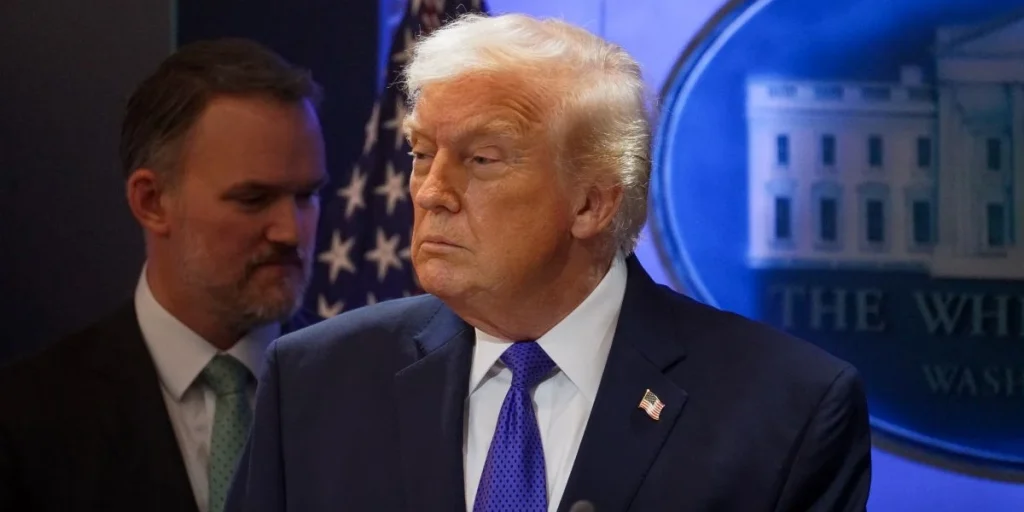
Trump is reportedly exploring ways to govern without congressional approval.


The upcoming midterm elections could significantly change the political landscape in Washington, potentially forcing President Donald Trump to spend the final two years of his presidency working with a Congress controlled by his political opponents.
Republicans currently hold narrow majorities in both chambers, but Democrats are hoping to overturn that advantage when Americans head to the polls on Tuesday.
Such an outcome would give Democrats greater influence over government spending, presidential appointments and congressional investigations.
However, Trump and his closest advisers are reportedly preparing to ensure that a Democratic victory does not prevent the administration from pursuing its political agenda. According to Reuters, the White House has spent months developing plans to govern through executive authority, potentially allowing Trump to introduce major policy changes without seeking approval from Congress.


Trump’s closest advisers have reportedly been planning for months
The preparations reportedly began in April, long before the final weeks of the election campaign.
Three people familiar with the discussions told Reuters that senior administration officials, including Deputy Chief of Staff Stephen Miller and budget director Russell Vought, have been examining ways to implement Trump’s policies independently of Congress.
White House counsel Will Scharf and his legal team have also been involved.
According to a White House official, the discussions include identifying what the president can legally accomplish without lawmakers, how far his authority can be extended and how potential decisions could be defended in court.
Trump has reportedly participated in discussions and received briefings about the preparations.
Asked how comfortable the president would be relying on executive authority under a Democratic-controlled Congress, one person familiar with the plans offered a straightforward answer.
“Very comfortable.”
White House considers new tariffs and immigration restrictions
The administration is reportedly examining several policies that could be introduced without passing new legislation.
Potential measures include additional tariffs on imported critical minerals and wind turbines, tighter visa requirements for international students and temporary foreign workers, and initiatives intended to reduce housing and construction costs.
Federal agencies have reportedly submitted proposals outlining which changes could be implemented through existing presidential powers.
Vought is also reviewing how the administration could advance its priorities using money already approved by Congress.
According to Reuters’ sources, he wants to change federal grant procedures to give political appointees greater influence over which programs receive government funding.
Such changes could strengthen the White House’s influence over federal spending, although presidential authority remains subject to legal restrictions and judicial review.
Trump has already relied heavily on executive orders during his second term, particularly concerning immigration, trade and the federal workforce.
Nathan Gonzales, editor of the nonpartisan political publication Inside Elections, expects that approach to continue if Republicans lose their congressional majorities.
“President Trump in the last two years has basically ignored Congress and tried to do as much as possible through executive orders and executive power,” Gonzales told Reuters.
“I think he will only continue if there are Democratic majorities.”
Trump jokes that he could become ‘Mr. Veto’
The president has also publicly acknowledged the possibility of governing alongside a Democratic Congress.
During an interview with the New York Post’s Pod Force One podcast, Trump suggested that he might initially respond by rejecting legislation passed by his political opponents.
“I guess I’ll become Mr. Veto,” he said.
“And then at some point, we’ll probably make deals.”
Presidential vetoes would allow Trump to block legislation he opposes, although Congress could override them with two-thirds majorities in both chambers.
Democrats would also have considerable influence if they gained control of the Senate.
They could refuse to confirm Trump’s nominees for senior government positions and federal judgeships, including a potential Supreme Court appointment.
Andrew Busch, a public policy professor at the University of Tennessee, Knoxville, expects Democrats to take a cautious approach to presidential nominations.
“I would anticipate they will be very reluctant to approve any of the president’s appointments,” he said.
Democrats could launch investigations into Trump
Perhaps the most significant challenge for the administration would come from congressional investigations.
A Democratic-controlled House could launch inquiries into Trump’s presidency, summon witnesses and demand access to government documents.
Reuters previously reported that Democratic lawmakers had discussed investigating whether Trump used presidential powers to benefit himself, political allies or donors.
The White House has reportedly been preparing for that possibility.
According to people familiar with the discussions, administration lawyers have advised political appointees and agency officials on how to respond to congressional subpoenas and document requests.
Officials have also reportedly been encouraged to exercise caution about what they put in writing.
The administration has additionally sought legal guidance on whether executive privilege could protect communications between Trump and private advisers from congressional scrutiny.
However, courts could ultimately determine whether such protections apply.
Republicans face a crucial election
The preparations come as Trump continues campaigning to preserve Republican control of Congress.
Republicans currently hold a 218–214 advantage in the House of Representatives and a 53–47 majority in the Senate, according to the figures cited by Reuters.
Democrats need a net gain of four seats in either chamber to take control.
The White House has rejected suggestions that Republican losses are inevitable.
“This administration and commonsense Republicans will continue to secure our borders, restore law and order, putting more money back into the pockets of hard-working Americans, and deliver wins for the American people,” spokeswoman Lauren Bis said.
Meanwhile, Trump’s advisers are reportedly preparing for a political environment in which cooperation with Congress becomes considerably more difficult.



