
 Nicolai Haugsted

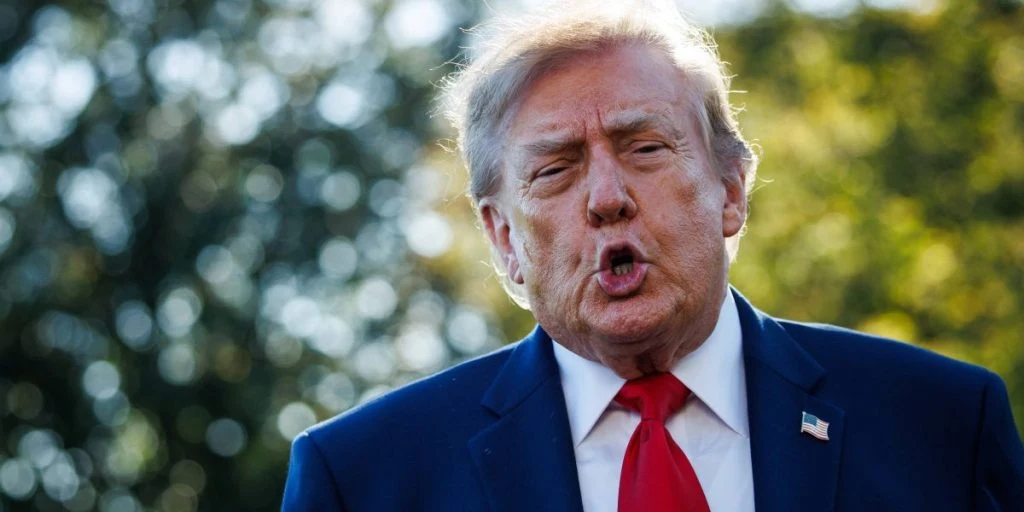
Trump’s Justice Department challenges a judge’s attempt to protect election officials from threats.

American election officials are preparing for one of the most politically consequential votes of Donald Trump’s second presidency, with control of Congress hanging in the balance.
Their responsibilities are already demanding enough. Beyond counting millions of ballots, local authorities must navigate complicated election laws, security concerns and an increasingly contentious debate over voter eligibility.
But with the November 3 midterm elections approaching, some officials have found themselves facing an additional source of pressure from Washington.
According to NBC News, the Trump administration has been demanding that election workers identify and separate ballots belonging to people federal authorities suspect are not American citizens. The Justice Department has also warned officials that failing to cooperate could carry criminal consequences.


Now, a federal judge has intervened, accusing senior administration officials of using intimidation to interfere with the electoral process.
Rather than accepting the restrictions, however, Trump’s Justice Department has launched an appeal.
Trump administration challenges judge’s restrictions
On Saturday, the Justice Department filed an appeal with the 9th U.S. Circuit Court of Appeals, seeking to overturn an order issued the previous day by U.S. District Judge Trina Thompson in California.
The eight-page ruling temporarily prohibits federal officials from threatening or pressuring state and local election workers into stopping the processing of ballots based solely on the administration’s allegations about voter eligibility.
Specifically, the order bars actions that may “threaten, intimidate or coerce state or local elections officials or workers to demand that they halt processing the ballots of any registered voter solely on the basis that the ballot belongs to an individual alleged by [the administration] to be ineligible to vote.”
The restrictions are scheduled to remain in effect until November 16, almost two weeks after Election Day.
The ruling represents another legal obstacle for the administration’s attempts to intervene in how states handle suspected noncitizen voters.
Judge accuses federal officials of intimidation
Judge Thompson delivered particularly strong criticism of the administration’s conduct in her ruling.
According to the judge, senior officials at the Justice Department and Department of Homeland Security have gone beyond investigating potential violations of election law.
“In the lead-up to the election, high-ranking DOJ and DHS officials have engaged in a campaign to intimidate, threaten, and coerce state and local officials and employees who are engaged in administering the ongoing midterm 2026 election,” Thompson wrote.
The judge also warned that the administration’s approach could interfere with the rights of legitimate voters.
“Although Defendants claim that their actions are designed to halt unlawful voting by noncitizens, their actions are likely to have the effect of interfering with election administration and disenfranchising lawful voters,” she added.
Federal law prohibits noncitizens from voting in federal elections, and the administration maintains that its investigations are intended to prevent illegal ballots from influencing election results.
The legal dispute, however, concerns whether federal authorities can compel state officials to change their ballot-processing procedures based on lists of suspected ineligible voters.
Election workers receive warnings of criminal consequences
The controversy intensified after the Justice Department contacted election officials across California.
Last week, federal authorities sent letters to officials in 57 of the state’s 58 counties, demanding cooperation with investigations into suspected illegal voting.
The correspondence warned that officials who failed to cooperate could themselves face federal scrutiny.
In a letter dated October 22, First Assistant U.S. Attorney Bilal Essayli contacted an election official in San Bernardino County.
“As you’re aware, federal law prohibits noncitizens from voting in federal elections,” the letter stated.
“I write to seek your help to protect the integrity of the ongoing federal election.”
Essayli included a list identifying 1,133 registered voters whom federal authorities suspected of being noncitizens.
The Justice Department said the names had been identified through an investigative process involving several federal agencies.
Officials were then given a remarkably short deadline to respond.
“Within 48 hours, we ask that you commit to working with DOJ and DHS to identify who on the accompanying list is a citizen and who is not,” Essayli wrote.
The letter also requested access to private registration information, including Social Security numbers, state identification records and driver’s license details.
Federal authorities want certain ballots separated
The administration’s demands did not stop at identifying voters.
Essayli also instructed election officials to separate mail-in ballots belonging to individuals whose citizenship could not immediately be verified.
“For individuals whom citizenship status cannot be confirmed, we request that you immediately instruct the appropriate elections official to segregate — not cancel — those individuals’ vote-by-mail ballots until their citizenship status can be determined,” he wrote.
The distinction between separating and canceling ballots is significant.
Under the administration’s proposal, disputed ballots would be withheld from the normal counting process while officials investigated the voters’ eligibility.
Critics argue that such a requirement could delay legitimate votes, particularly if American citizens are mistakenly included on federal lists.
Essayli emphasized the potential consequences of ignoring the department’s instructions, warning that the “legal consequences for either facilitating or ignoring federal crimes are significant.”
Those warnings became a central issue in the court’s examination of whether federal officials were improperly pressuring election workers.
Courts have repeatedly rejected Trump’s demands
The latest appeal follows several courtroom defeats for the administration over its efforts to challenge suspected noncitizen ballots.
On Friday, a federal appeals court rejected a request to force California officials to separate ballots identified by the Justice Department.
Earlier in the week, another appellate ruling had also gone against the administration in a dispute involving more than 20,000 ballots.
Federal officials had sought to prevent those votes from being counted because they believed some registered voters might not be American citizens.
The courts declined to grant the requested intervention.
A federal judge also questioned the administration’s methods for identifying suspected noncitizens and raised constitutional concerns about Washington’s attempts to direct state election procedures.
In a Wednesday ruling, the judge concluded that the Justice Department’s request “violates longstanding constitutional principles mandating that states have control over their elections.”
The legal setbacks highlight a fundamental disagreement over the federal government’s authority to intervene in elections traditionally administered by individual states.
California is not the only state facing pressure.
Federal officials have also sought to require Washington state to separate ballots associated with suspected noncitizens, although that dispute remains unresolved.
Election officials face uncertainty ahead of Tuesday’s vote
The administration’s appeal places the latest confrontation before the 9th Circuit just as Americans prepare to vote.
The Justice Department argues that its actions are necessary to enforce federal election law and prevent noncitizens from casting illegal ballots.
Judge Thompson’s ruling, however, reflects concerns that the administration’s tactics could disrupt election administration and interfere with the voting rights of eligible Americans.
The court order does not prevent lawful investigations into suspected illegal voting. Instead, it restricts federal officials from using threats or coercion to force election workers to halt ballot processing solely on the basis of the administration’s allegations.
Whether the appeals court will modify or overturn those restrictions remains to be seen.



