
 Daniel Wolfram

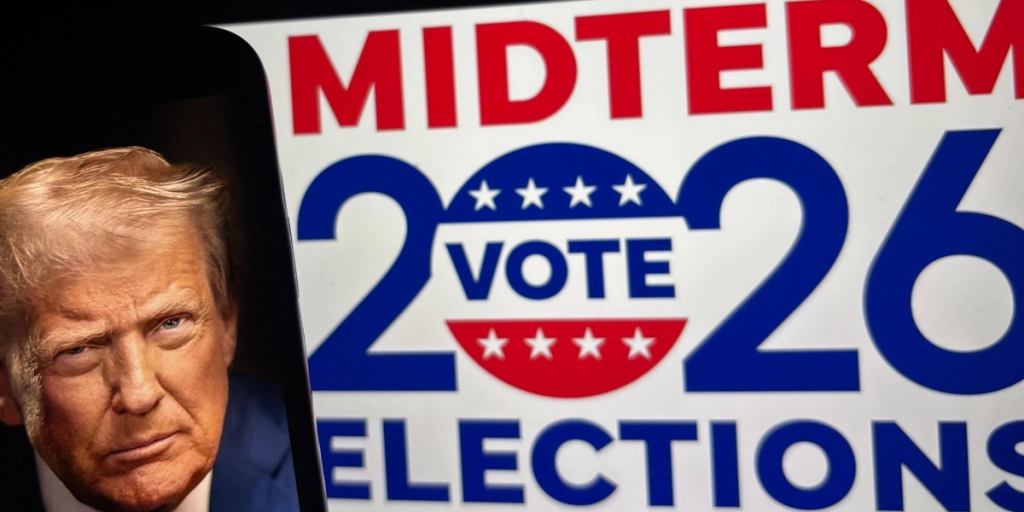
After a Trump account raised doubts about the validity of the midterm elections, experts explained why mail-in ballots take days to verify and count — and why the process is entirely legal.


An official Trump social media account named “Rapid Response 47” commented on a Public Broadcasting Service (PBS) article explaining to voters how it is normal that not every midterm election result will be known by midnight Tuesday.
The account commented, “No, it isn’t,” further ramping up fears that Trump will dispute the midterm elections if the Republican Party loses control of the Senate.
Click to display external content from x,
- You can always enable and disable third-party content.

You agree to display external third-party content. Personal data may be sent to the provider of the content and other third-party services.
But according to election officials, there are a number of reasons why some elections are not called until days – or even weeks – later.


Patience pays off
As Joe Lenski of polling firm SSRS told PolitiFact, “There are always a handful of really close Senate and House races in which the winner will not be determined for several days or, in the cases of Alaska and California, as much as a week or two.”
No state has to wrap up on election night. In fact, state rules give local canvassers plenty of time to review provisional ballots, fix paperwork issues, and certify the final numbers.
States have different timelines as to when an election has to be called and then certified. The certification happens at local and state levels. “It is an estimate, not a statutory deadline or guarantee,” said Daniel A. Baxter, an election official in Detroit, Michigan.
Following the rules as stated
In the case of mailed ballots, which Trump has tried to ban nationwide, require careful hands-on work before anyone can feed them through a scanner.
Officials must verify voter signatures by hand. In Detroit, where thousands of voters drop off forms right before the deadline, officials expect to count 95 percent of ballots overnight, Baxter noted.
Still, slow updates do not mean that an election is being stolen. Election tech expert Ryan Macias noted that media calls hinge on margins rather than mysterious delays.
“States are neither fast [nor] slow; they all count and certify the results in accordance with the laws passed by their state legislature,” Macias said.
Ranked-choice systems in Maine and Alaska also trigger extra rounds of counting when no contender secures a clear majority.
As Maine Secretary of State Shenna Bellows told PolitiFact, “We will work as expeditiously and efficiently as possible to get results as quickly as we can,” adding, “but what is most important is that it is accurate and reflects the will of voters.”



