
 Christine Drews Sieger

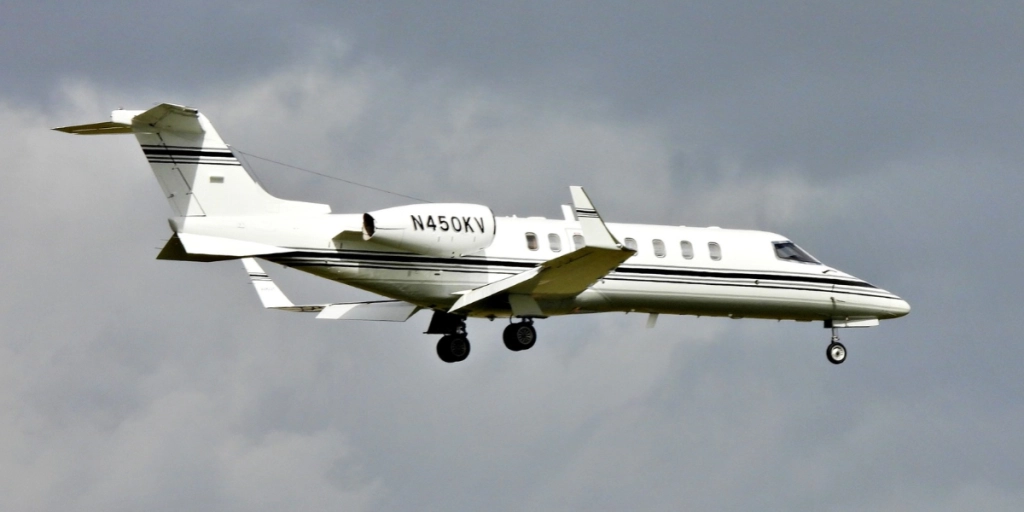
All nine people aboard a private Learjet died after the aircraft lost control in severe weather and crashed near West Palm Beach.


A twin-engine Learjet 60 bound for the Bahamas crashed along a roadway near West Palm Beach on Sunday afternoon, claiming the lives of all nine people on board.
Federal investigators from the FAA and the National Transportation Safety Board (NTSB) are currently examining weather conditions, flight recorder data, and cockpit communication to determine why the high-performance business jet lost control at cruise altitude.
Family members confirmed to The New York Post that 20-year-old Nathalia Gadelha served as co-pilot on the charter flight from Austin, Texas. Gadelha, a South Florida native, earned her pilot’s license at 17.
In a previous interview with CBS12, she reflected on her early start in aviation: “I definitely do brag because people say, ‘Oh, you can’t drive,’ and I’m like, ‘Yeah, but I can fly’.”


Her mother, Camila Gadelha, told The New York Times that her daughter was drawn to the vantage point of flying: “She loved the freedom. It was completely different seeing the world from the top,” the Daily Mail reports.
Distress calls detail final moments
Air traffic control transmissions released after the crash document the crew’s rapid loss of control amid severe weather cells.
As controllers in Miami advised on steering clear of storm activity, the flight crew acknowledged conditions before declaring an emergency.
In the final recordings, an unidentified male pilot can be heard reciting the Lord’s Prayer—”who art in heaven, hallowed be thy name”—while Gadelha reported severe telemetry deviations to controllers.
“Seven two two bravo delta, we’re descending 8,000… mayday mayday… we’re descending 10,000ft per minute,” Gadelha transmitted, reporting shortly afterward that the aircraft had triggered an overspeed warning and was banking at 60 degrees.
Her final words warned controllers: “We’re out of time,” according to the Daily Mail.
The aircraft impacted the ground eight miles west of Palm Beach, carving a deep crater into the pavement but causing no ground casualties.
A aerodynamic hazard under scrutiny
Aviation analysts have pointed to the aerodynamic hazard known as “coffin corner” as a possible factor in the disaster.
At extreme altitudes and in turbulent, shifting temperatures, the margin between a jet’s minimum stall speed and its maximum structural speed narrows dramatically.
Whether environmental factors triggered an aerodynamic stall or mechanical failure occurred remains the focus of federal investigators, the Daily Mail reports.



