
 Asger Risom

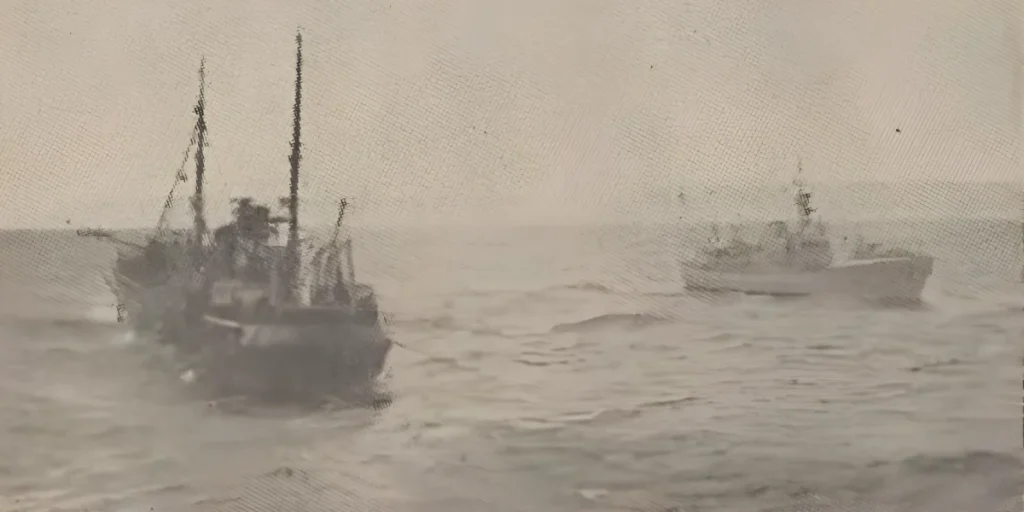
Between 1958 and 1976, Iceland went toe-to-toe with the British Royal Navy in a series of tense maritime clashes known as the Cod Wars. Armed with small coast guard tugs, improvised net cutters, and calculated Cold War diplomatic leverage, the tiny island nation outmaneuvered British warships and permanently established the modern 200-mile exclusive economic zone recognized worldwide today.


On paper, a naval showdown between Great Britain and Iceland in the mid-twentieth century sounds like a complete mismatch. Britain commanded aircraft carriers, guided-missile frigates, and centuries of maritime prestige, while Iceland had no standing military and relied on a handful of converted coast guard tugs. Yet across three separate confrontations between 1958 and 1976, that tiny island nation repeatedly pushed the Royal Navy out of its waters and forced London to surrender.
Cod was everything to Iceland
For post-war Iceland, Atlantic cod was not just a staple food; it was practically the entire national economy. British distant-water trawlers had fished the rich continental shelf around the island for generations, scooping up massive catches with heavy commercial gear. With foreign factory ships steadily draining local fish stocks right off its coastline, the Icelandic government decided to push outsiders away from its shores.
In September 1958, Iceland announced it was expanding its protected fishing boundary from four nautical miles to twelve. British trawler companies refused to recognize the new boundary, arguing that international law kept coastal limits strictly confined to traditional margins. As documented in historical reporting by The Guardian, the British government deployed Royal Navy frigates directly into the contested fishing grounds to escort its commercial fleet.
The confrontation immediately turned into a high-stakes game of chicken between naval warships and lightly armed patrol boats. British captains operated under strict orders not to fire live ammunition, knowing the geopolitical disaster of sinking a tiny NATO ally’s vessel. Icelandic crews understood that restriction completely, leaning into aggressive maneuvers and treating the standoff as an endurance test.


Slicing nets in freezing swells
Over the next decade, Iceland kept pushing the boundary further, eventually expanding its claim to fifty and then two hundred nautical miles. The Royal Navy steamed right back into the freezing North Atlantic to break the blockade, creating an untenable daily standoff. Realizing they lacked the firepower to arrest escorted trawlers, Icelandic engineers built a custom tool designed to target British fishing gear instead.
The invention was called the trawlwire cutter, a heavy four-bladed anchor dragged behind coast guard boats on steel cables. Icelandic crews would race across the stern of an active British trawler, hooking the submerged wires that dragged its industrial nets. The internal blades sliced through the tensioned cables in seconds, sending tons of fishing equipment and catch straight to the seabed.
Trawler skippers were furious because replacing an entire net rig cost thousands of pounds and ruined days of work. Pulling off the cutting maneuver was wildly dangerous in rough northern seas, requiring helmsmen to steer within meters of moving ships. Royal Navy frigates responded by physically intercepting the cutters, initiating a series of violent collisions to protect the fishing fleet.
A high-seas demolition derby
By late 1975, the dispute had devolved into a maritime demolition derby across the stormy North Atlantic. British frigates and Icelandic coast guard vessels routinely rammed one another at speed, crushing bow plates and shearing off bridge wings. Royal Navy captains found themselves using multimillion-pound frontline combat ships as oversized, floating bumper cars.
Structural damage mounted quickly on both sides as freezing weather made open-sea maneuvering even more volatile. British warships regularly limped back to dry docks in Scotland with gaping holes in their hulls, while Icelandic tugs reinforced their sides with heavy timber. Even with dozens of deliberate rammings taking place in freezing spray, neither navy ever authorized the use of deck guns.
British commanders were left in an impossible operational position that made their military look completely ineffective. They had to field advanced anti-submarine warships against civil coast guard crews who simply refused to back down. Every crushed hull and broken railing made London look like an aggressive imperial power bullying a tiny neighbor over fish dinners.
The geopolitical trump card
Iceland’s ultimate leverage had nothing to do with net cutters or reinforced hulls; it was an airstrip in Keflavík. The island hosted an essential NATO base that tracked Soviet submarines trying to slip through the Greenland-Iceland-UK gap into the Atlantic. If that base closed, the Western alliance would lose its primary submarine-detection barrier during the height of the Cold War.
Icelandic diplomats played their hand ruthlessly, threatening to sever diplomatic ties with Britain and pull out of NATO entirely. Washington recognized the strategic danger immediately and stepped in to pressure the British government into an unconditional retreat. Facing direct arm-twisting from the White House, London realized protecting distant-water trawlers was not worth shattering the NATO alliance.
In the summer of 1976, Britain conceded defeat and recognized Iceland’s full 200-nautical-mile exclusive economic zone. That settlement destroyed the old maritime status quo and established the modern 200-mile offshore economic limits recognized across the globe today. A tiny nation with no military had taken on one of history’s greatest naval powers and fundamentally rewritten the law of the sea.



