
 Asger Risom

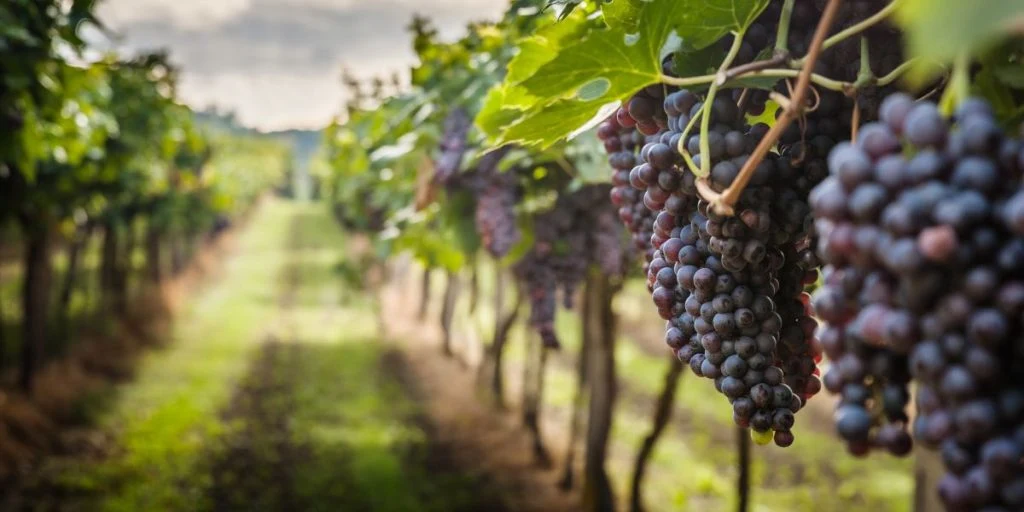
In the late nineteenth century, an invasive North American pest decimated vineyards across France, bringing European wine production to the brink of total collapse. The industry was saved not by chemical treatments, but by botanical surgery: grafting centuries-old European grapevine varieties onto wild, blight-resistant American rootstocks. Today, virtually every classic French wine is produced by chimeric vines that rely on American roots to survive in their own native soil.


When people pay a premium for a bottle of Bordeaux or Burgundy, they are buying into centuries of French agricultural heritage. The label promises a specific hillside, traditional cellaring, and the pure expression of European soil. Look beneath the dirt, however, and almost every celebrated vine in France is tethered to a wild rootstock shipped across the Atlantic.
The microscopic insect that gutted France’s vineyards
In the early 1860s, winemakers across the southern Rhône valley noticed their vines withering without any clear explanation. Healthy green leaves yellowed and dropped, roots blackened with galls, and within two seasons entire hillsides turned into brittle graveyards. By the time the blight spread across the country, it was wiping out more than two-thirds of the wine production in Europe.
The culprit was an invasive North American aphid called Phylloxera vastatrix, an insect barely a millimeter long that had hitched a ride on imported botanical specimens. While native European grapevines, Vitis vinifera, had zero natural defenses against the bug, it fed relentlessly on their subterranean root systems. The aphids injected a toxic saliva as they fed, forming sap-choking knots that let secondary fungal infections rot the plant from below.
French grape growers grew desperate, throwing every imaginable concoction at their soil to stop the decay. They buried live toads near the vines, flooded acres with stagnant water, and pumped toxic carbon disulfide into the ground in futile attempts to poison the pest. Nothing worked, and an entire economic pillar of rural France seemed on the verge of complete collapse.


The realization that American vines were immune
Botanists investigating the disaster began noticing a curious contradiction when studying imported North American vines. Even when North American species like Vitis labrusca and Vitis riparia carried thousands of the aphids on their foliage, their roots never rotted away. Over millions of years of co-evolution, native American vines had developed a sticky sap that suffocated the bugs, alongside thick subterranean bark that formed protective calluses over bite wounds.
A French biologist named Jules Émile Planchon teamed up with American entomologist Charles Valentine Riley to prove that the aphid was indeed the root cause of the blight. Their findings led to an immediate controversy within the French agricultural establishment between chemical manufacturers and field naturalists. Chemical companies wanted to keep selling expensive soil treatments, while field researchers argued that fighting the bug chemically was a lost cause.
A few growers attempted to crossbreed American and European grapes directly, but the resulting hybrid wines were rejected by traditionalists for having an unfamiliar, pungent aroma known as “foxy.” Winemakers refused to give up Vitis vinifera fruit, but they could not keep the vines alive in infested soil. The industry had hit an evolutionary dead end.
A botanical graft that saved the industry
The permanent breakthrough came from physical botany rather than chemical spraying or genetic crossbreeding. Researchers realized that if they sliced the top fruiting cane of a classic European vine and physically grafted it onto the root system of a hardy American vine, the two plants would fuse together. The American root system provided subterranean immunity against the aphid, while the European stem above ground produced genuine Pinot Noir, Cabernet Sauvignon, and Chardonnay grapes.
As detailed in an archival feature by Smithsonian Magazine, botanical pioneers like French researcher Pierre-Marie-Alexis Millardet worked alongside horticulturists to identify which American root varieties could adapt to France’s limestone-rich soils. Texas horticulturist Thomas Volney Munson shipped trainloads of wild grapevine rootstocks from the American southwest, which thrived in dry, chalky ground.
What followed was a colossal decade of manual surgery across European fields. French workers sat in sheds bench-grafting millions of tiny vine cuttings by hand using wedge and whip cuts before replanting them in bare hillsides. It was the largest agricultural rescue effort in history, effectively rebuilding Europe’s grandest vineyards from the ground up.
The invisible line beneath every vineyard
Today, nearly every commercial grapevine in France, and across much of the wine-producing world, is a chimeric organism. If you brush away the dirt around the base of a legendary Grand Cru vine, you can often see a distinctive swelling just above the soil line where the graft healed. Below that scar sits wild American root tissue; above it grows the pedigree European stock that produces wine.
The phylloxera aphid never actually left European soil, and it remains just as deadly to ungrafted Vitis vinifera as it was in 1870. The only reason modern winemakers do not worry about catastrophic root blight is that their underground rootstocks simply do not react to the insect. A tiny handful of rare vineyards planted in pure sandy soil, where the aphids cannot tunnel, remain the only ungrafted vines left on the continent.
The French wine industry still prides itself on the concept of terroir—the idea that regional soil and climate uniquely shape the flavor of a harvest. The enduring irony is that this sacred European soil cannot sustain European roots on its own. The heritage in every glass of modern Burgundy has spent the last century and a half drinking through an American straw.



