
 Kenneth Glad

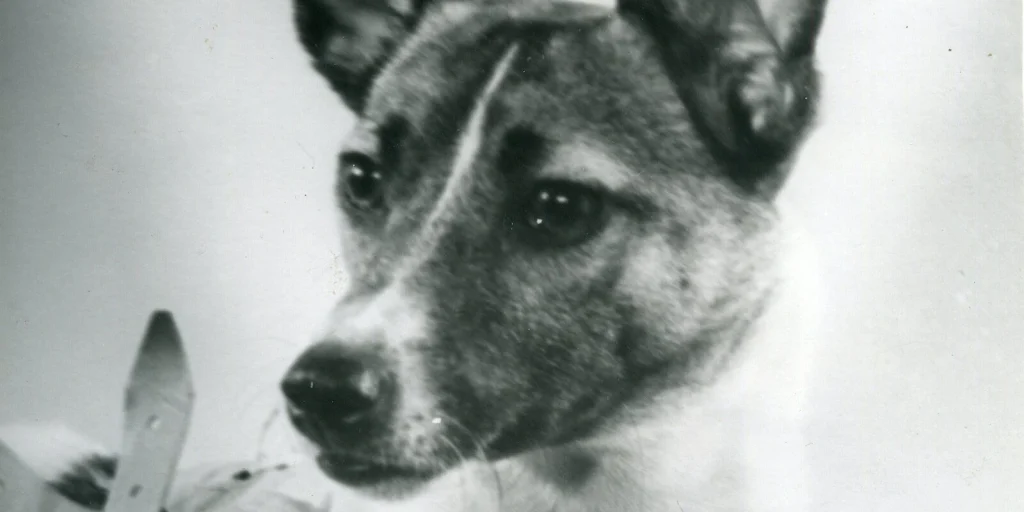
Humanity has always pushed the boundaries to see what lies beyond the clouds. Long before men and women strapped themselves into rockets, other test subjects paved the way. One famous pioneer never made it back home.

On the third of November 1957, a small street dog made history. The Soviet Union launched Laika into orbit during the tense early days of the Cold War.
She secured a legendary legacy as the first living creature to circle the Earth.
But her time among the stars was cut tragically short. HistorieNet notes that monitors stopped picking up biological signals from the capsule merely a few hours after liftoff.
Hiding the truth
For decades, officials refused to admit exactly when or why their famous test subject perished. Leaders in Moscow originally claimed the animal survived comfortably in space for six full days.


They told the public she was humanely put to sleep. A poisoned batch of dog food supposedly provided a peaceful end before the vessel ran out of oxygen.
That official narrative was a complete fabrication. The heartbreaking reality remained buried until 2002, when the true facts finally came to light.
A fatal design flaw
A Soviet researcher involved in the historic mission eventually stepped forward to set the record straight. Dimitri Malashenkov revealed the dog actually succumbed to extreme heat and panic after completing just four laps around the globe.
“It turned out that it was practically impossible to create a reliable temperature control system in such limited time constraints,” Malashenkov said,
Laika was far from the first animal to leave the atmosphere. Both superpowers regularly fired creatures into the great unknown to study how weightlessness affected living bodies.
The early pioneers
American researchers launched fruit flies on a V2 rocket in 1947 to study high-altitude radiation.
A rhesus monkey named Albert II followed in 1949, dying on impact when his parachute failed upon return. Mice also took to the skies the following year, reaching an altitude of 137 kilometers.
While America relied heavily on monkeys, Soviet scientists looked to the streets. They specifically chose stray dogs, assuming a rough life of scavenging made them uniquely tough for spaceflight.
The Soviet Union ultimately shot 51 dogs into orbit, and 12 of them died in the process. Five months after her fateful launch, the capsule containing Laika fell back toward Earth and burned up in the atmosphere.



