
 Kenneth Glad

When we picture the prehistoric world, we usually imagine giant predators hunting for meat or massive beasts grazing on leaves. But survival sometimes requires a softer touch. A recent fossil discovery proves some ancient creatures had entirely different dinner plans.
Researchers have uncovered a new dinosaur species that roamed the earth alongside the fearsome T. rex. The team published their findings in Nature Communications.
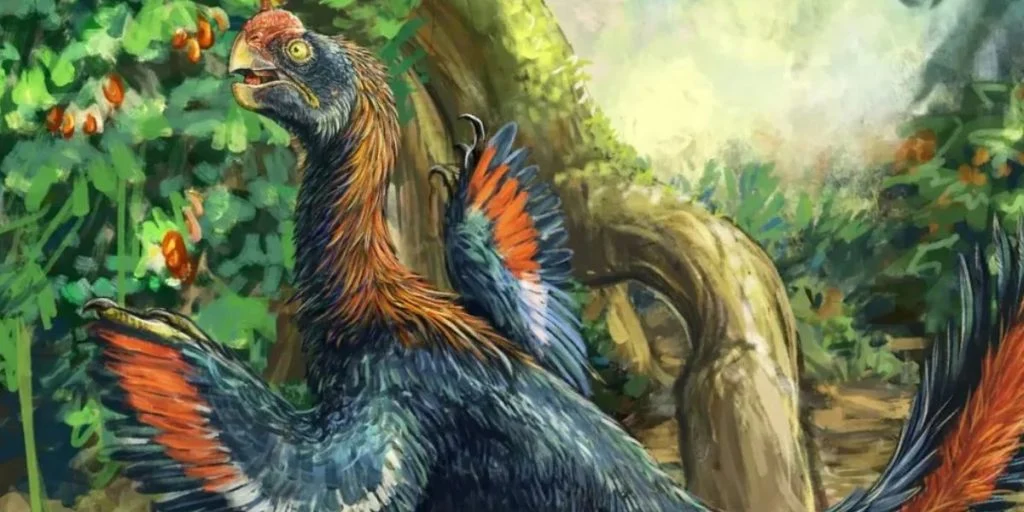
They named the turkey-sized creature Infernogallus jamesi, which translates to hell chicken. It lived millions of years ago in a region that now spans parts of Montana, the Dakotas, and Wyoming.
While its giant neighbors crushed bones or chewed through tough ferns, this tiny feathered dinosaur weighed just 25 pounds. And it survived by hunting for something sweeter.
A bizarre mouth
Stony Brook University researchers discovered that the creature had a highly specialized skull. It was built specifically for eating fruit.


The animal relied on a unique jaw structure to mash soft food. The roof of its mouth dipped downward, letting the beak slide back and forth like a human jaw.
“We knew dinosaurs evolved to fill so many different roles in ecosystems in the Cretaceous, but we never expected to discover fruit-eating dinosaurs,” Greg Funston of Stony Brook University said in a statement.
Weird but effective
This chewing style is incredibly rare. Today, you can only find a similar setup in mammals and certain fruit-eating birds like the vulturine parrot.
“The anatomy of Infernogallus is bizarre among dinosaurs, and we quickly realized that we were dealing with something special,” Thomas Dudgeon from the Royal Ontario Museum noted.
As early fruits became more common, the hell chicken adapted its mouth to separate fruity flesh from hard seeds.
Planting the future
This quirky diet likely made the tiny dinosaur an accidental gardener. By eating ancient fruits, the hell chicken probably helped disperse seeds across the land.
Finding a complete skull of such a small dinosaur is highly unusual. Experts believe the discovery will rewrite how we understand ancient animals and the first flowering plants.
As David Evans of the Royal Ontario Museum explained, “This discovery shows that we still have a lot to learn about the world of T. rex, and about dinosaurs more generally.”



