
 Jens Asbjørn Bøgen

Nearly two centuries after the ice swallowed them, forensic science is pulling names out of the Arctic.

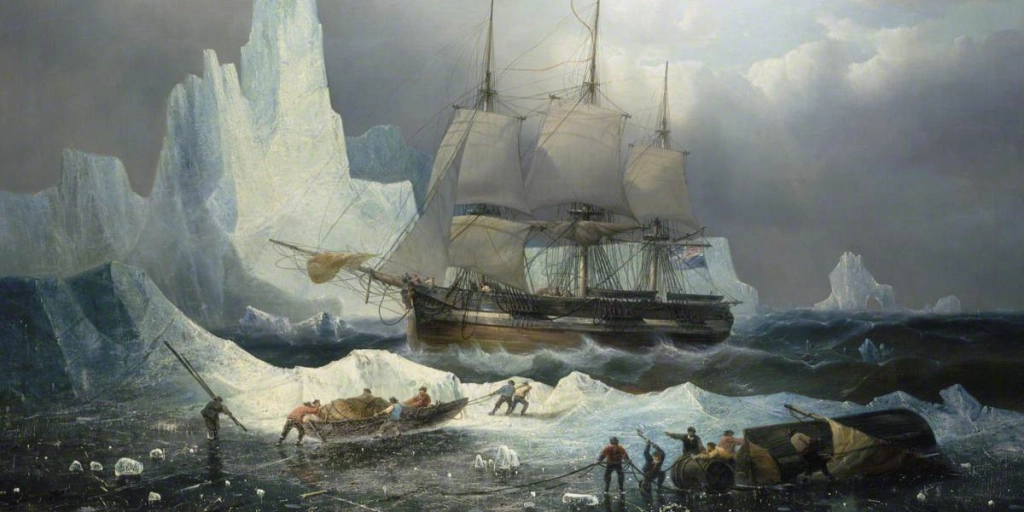
In 1845, two British Royal Navy ships sailed from England to find the Northwest Passage. Neither returned. Of the 129 officers and crew aboard HMS Erebus and HMS Terror, not a single man was ever seen alive again.
Now, researchers at the University of Waterloo and Lakehead University have used DNA extracted from skeletal remains to put names to four more of those lost sailors, bringing the total identified to six.
The study, published in the Journal of Archaeological Science: Reports, matched tooth and bone samples recovered on King William Island in Nunavut with DNA donated by living descendants and collateral relatives of expedition members.
The newly identified men are Subordinate Officers’ Steward John Bridgens, Able Seaman William Orren and Boy 1st Class David Young, all of HMS Erebus. The fourth is Harry Peglar, Captain of the Foretop aboard HMS Terror, the first sailor from Terror to be positively identified.


How teeth became an archive
Archaeologist Douglas Stenton and his team analyzed 50 tooth and bone samples from 10 archaeological sites, comparing mitochondrial and Y-chromosome profiles against samples from descendants of 33 Franklin crew members. In each of the four new cases, the genetic distance was zero.
“Three of the sailors we have identified are from HMS Erebus, and they all died at Erebus Bay,” Stenton said in the university’s announcement. “The fourth, the only sailor from the HMS Terror to be definitively identified by DNA analysis, was found 130 kilometers away.”
Peglar’s identification resolves a puzzle that has lingered since 1859, when his remains were recovered in a uniform that did not match his rank, together with the fragments of writing later known as the Peglar Papers. A second paper documenting his identification appears in the journal Polar Record.
A captain cannibalized
The darkest finding came earlier. In September 2024, the same team confirmed that a mandible found at site NgLj-2 on King William Island belonged to Captain James Fitzjames, who commanded HMS Erebus.
Cut marks on his jaw were consistent with the body having been butchered by other survivors. The site has yielded 451 bones from at least 13 sailors, and a 1997 analysis by anthropologist Anne Keenleyside found cut marks on nearly a quarter of the human bones there.
Anthropologist Robert Park, who co-authored the Fitzjames paper, framed the discovery as a measure of the crew’s final state. “It demonstrates the level of desperation that the Franklin sailors must have felt to do something they would have considered abhorrent,” he told Phys.org.
The expedition’s last written message, left in a cairn on King William Island, recorded that 105 surviving crew abandoned both ships in April 1848 and set out south across the ice. None reached safety.
Dental samples from the Franklin sites remain in the research team’s archive, and the scientists have said further matches are possible as additional descendants come forward for genealogical testing.



