
 Jens Asbjørn Bøgen

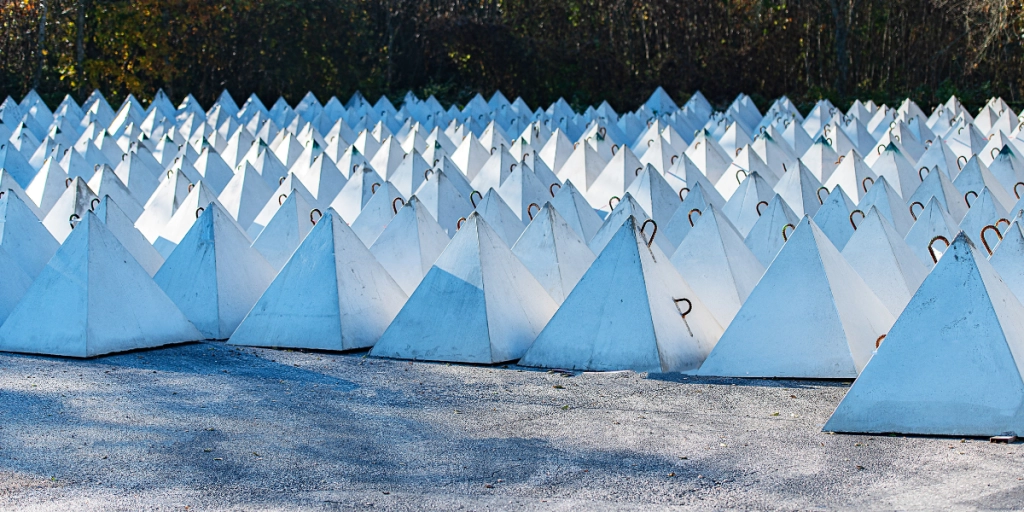
NATO’s eastern flank is hardening fast, and one of its smallest members is turning its border into concrete.


Latvia has begun pouring permanent anti-tank barriers along the line it shares with Russia, part of a wider Baltic effort to make heavy ground movement from the east slower and costlier.
The work is now visible on the ground rather than on paper.
Four kilometers of anti-tank trenches have already been dug and five kilometers of concrete “dragon’s teeth” have been installed along the eastern border, according to Latvian public broadcaster LSM.
The first 27 kilometers of fortifications are due to be finished by spring 2027, and the overall plan calls for 89 kilometers of trenches.


The budget runs to 303 million euros through 2029. The Latvian Cabinet of Ministers approved the Eastern Border Fortification and Counter-mobility Plan in March 2024, with each Baltic state funding its own stretch of what the three governments call the Baltic Defence Line.
Concrete barriers set in three rows
Each dragon’s tooth weighs about 1.5 tonnes and stands slightly over a meter tall. The blocks are being installed in three rows along the border, with interconnecting holes so individual pieces cannot be pulled out of the line.
In the border area of Balvi Municipality, troops have already dug anti-tank trenches more than five meters wide, with the concrete obstacles due to be added later.
“These obstacles are positioned at such a distance that the enemy cannot cross them with their vehicles,” Staff Sergeant Edgar Briedis of the Engineer Company, 2nd Vidzeme Brigade of the National Guard, told LSM.
The National Guard says crossing the trenches would require combat bridges or fill equipment, while removing the concrete barriers would require other specialized systems.
450 kilometers of border, selective fortification
Latvia’s border with Russia and Belarus runs more than 450 kilometers in total, but fortifications will not line all of it. Swamps, lakes and dense forest cover long stretches and already block heavy equipment.
The permanent obstacles are concentrated on the more passable terrain.
The National Guard has said construction will continue through the winter rather than pausing for the season, keeping the spring 2027 milestone in reach.



