
 Nicolai Haugsted

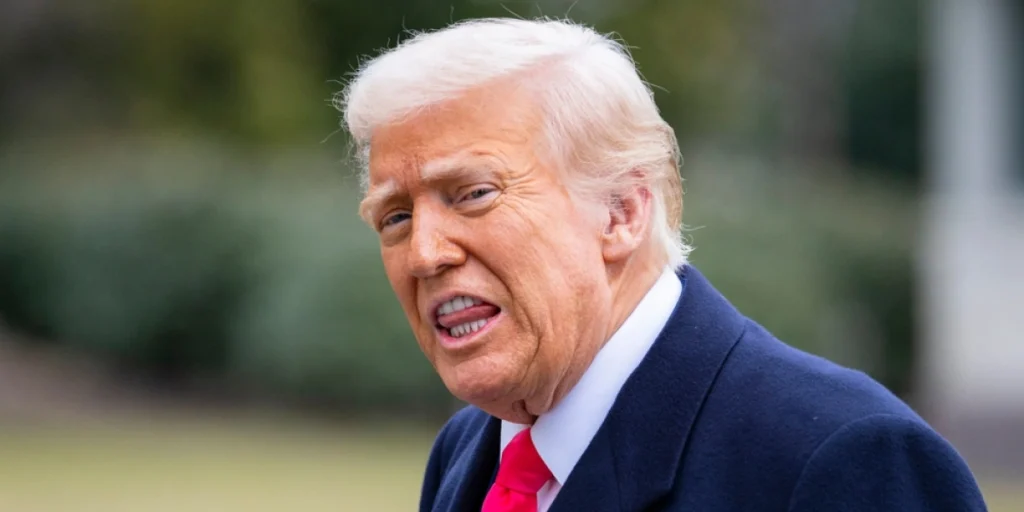
Trump gets mercilessly mocked after sharing his surprising expectations about the afterlife.


Donald Trump has never been particularly shy about discussing his achievements, his political opponents or the legacy he hopes to leave behind. But questions about what happens after his presidency — and, more specifically, after his death — have produced some rather unusual answers.
The 80-year-old president has occasionally spoken about religion and the possibility of reaching heaven, sometimes joking about whether his accomplishments might earn him a place there.
His comments have ranged from expressing doubts about his chances to suggesting that his efforts to negotiate international peace could improve his prospects.
During a new television interview, however, Trump was confronted with a rather different question about the afterlife.


And his response has sparked a wave of ridicule online, particularly after he made clear that even the prospect of eternal paradise would not necessarily persuade him to forgive some of his political enemies.
Trump explains why he believes he could go to heaven
The unusual conversation took place during Trump’s appearance on 60 Minutes on Sunday, November 8.
Interviewer Ross Douthat began by asking the president about mortality, referring to the assassination attempts he has survived and whether those experiences had influenced his thoughts about death.
“Let’s talk about death. You have survived multiple assassination attempts. One came very, very close to you. I imagine that that had some kind of effect on how you think about mortality. What do you think happens when you die?” Douthat asked.
Trump initially approached the subject by reflecting on his performance as president.
“I mean, I think I’ve done a good job,” he replied.
The interviewer then clarified that he was not asking about Trump’s political legacy or how future generations might remember him.
“What do you think happens to Donald Trump when you die? Not your memory, yourself,” Douthat explained.
Trump appeared to understand the distinction.
“You mean where I go? Well, I’m a religious person, so in theory, I go to heaven,” the president answered.
His response suggested that he hoped his religious beliefs would ultimately lead him to a favorable destination.
But Douthat was not finished exploring the president’s expectations.
Trump admits there is one destination he wants to avoid
The interviewer followed up by asking whether Trump genuinely believed he would reach heaven.
“Do you think you’re going to heaven?” Douthat asked.
Trump’s response was considerably less confident than his earlier suggestion.
“Uh, I hope so. I don’t want to go to hell,” he said.
The exchange offered a rare glimpse of the president discussing a subject that cannot be settled through political victories, negotiations or executive orders.
But Douthat then introduced a hypothetical scenario that brought the conversation back to something considerably more familiar to Trump: his political enemies.
The interviewer asked the president to imagine arriving in the afterlife and discovering that entry into paradise depended on his willingness to forgive people he had publicly criticized.
Among the examples were former FBI Director James Comey and former House Speaker Nancy Pelosi.
“Let’s say you pass away. You’re entering the next life, and all you have to do to enter paradise is feel love and forgiveness for James Comey, Nancy Pelosi, anyone who you have expressed hate for over the years,” Douthat said.
“Do you think you can do it?”
Trump did not appear particularly enthusiastic about the proposed arrangement.
Even heaven cannot persuade Trump to forgive his rivals
Rather than embracing the hypothetical opportunity to demonstrate forgiveness, Trump questioned whether doing so would be consistent with his personality.
“Well, then I wouldn’t be real, would I?” he responded.
The president also described Comey and Pelosi as “very bad people.”
Douthat attempted to emphasize the seriousness of the imagined situation.
“Before the judgment throne of God, before the judgment,” he pressed.
But Trump remained unwilling to reconsider.
“The answer is no,” the president insisted.
“I want to be honest. I think they were very bad people.”
The exchange highlighted how deeply Trump’s political rivalries have become embedded in his public identity.
Comey, who previously served as FBI director, has been a frequent target of Trump’s criticism for years.
Pelosi, meanwhile, has long been one of his most prominent Democratic adversaries.
Both have featured repeatedly in Trump’s public attacks, and the president has shown little interest in softening his language toward either of them.
His response during the interview suggested that even an imagined encounter with divine judgment would not be enough to change his assessment.
Of course, the conversation was hypothetical, and Trump’s answers do not establish anything about his private religious beliefs or what he might actually do in such circumstances.
Nevertheless, the exchange quickly attracted attention from critics on social media.
Critics mock Trump’s expectations of the afterlife
Following the interview, several users on X responded with ridicule and criticism.
Some questioned how Trump could express confidence about reaching heaven while simultaneously refusing to forgive people he dislikes.
One particularly angry user wrote:
“How fucking delusional is this idiot? If there is a heaven and hell, and he does not end up in hell, no one does.”
Another commenter argued that Trump’s wealth and influence would be of little use in determining his fate after death.
“He can’t buy his way to heaven, plus he violated all ten commandments too,” the user claimed.
A third person offered a considerably shorter prediction.
“He’ll be on the express elevator to Hell.”
Another commenter was equally dismissive.
“Trump is going to hell. Sorry, Trump.”
The remarks illustrate the hostility the president continues to attract from some of his opponents online.
However, the comments represent individual reactions rather than any broader measurement of public opinion.
Questions about salvation and the afterlife are also matters of religious belief, not something that can be determined through political arguments or social media commentary.
Still, the interview gave Trump’s critics another opportunity to challenge the contrast between his public expressions of faith and his combative approach to political opponents.
Click to display external content from x,
- You can always enable and disable third-party content.

You agree to display external third-party content. Personal data may be sent to the provider of the content and other third-party services.
Trump previously suggested a peace deal could help him reach heaven
The president’s latest remarks were not his first public attempt to assess his chances of entering heaven.
During an appearance on Fox and Friends on August 19, Trump discussed his efforts to negotiate an agreement between Russia and Ukraine.
At the time, he suggested that helping bring an end to the conflict might improve his prospects in the afterlife.
But he also acknowledged that his chances might not be particularly strong.
“I’m hearing I’m not doing well. I am really at the bottom of the totem pole,” he said.
The comments attracted attention because they appeared to connect a major foreign policy objective with the president’s personal religious hopes.
Trump has repeatedly portrayed himself as someone capable of resolving international conflicts through negotiation.
His remarks suggested that he was willing, at least partly in jest, to consider whether such achievements might have spiritual consequences.
Two days later, however, he offered a somewhat different assessment.
The president has previously doubted his own chances
Speaking to reporters aboard Air Force One, Trump was asked to clarify his earlier comments about heaven.
The president explained that he had been speaking playfully rather than making a serious theological argument.
“You know, I’m being a little cute. I don’t think there’s anything going to get me in heaven. Okay?” he said.
He then went further, suggesting that he was not especially confident about his prospects.
“I think I’m not maybe heaven-bound. I may be in heaven right now, as we fly on Air Force One. I’m not sure I’m going to be able to make heaven.”
Those remarks contrast with his more recent suggestion that, as a religious person, he would theoretically go to heaven.
The apparent inconsistency may reflect the informal and sometimes humorous manner in which Trump discusses the subject.
His comments have alternated between joking pessimism, expressions of hope and references to his political accomplishments.
The latest interview introduced another element by asking whether forgiveness might play a role in determining his imagined fate.
And that question produced one of the president’s most unequivocal answers.



