
 Nicolai Haugsted

Trump’s billionaire friend is facing renewed scrutiny over his financial interests in Greenland.

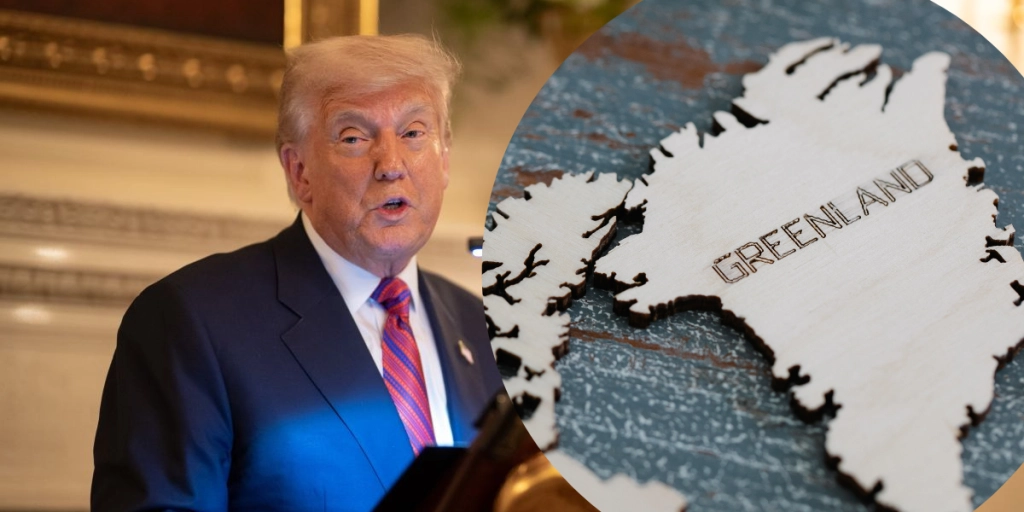
Donald Trump’s fascination with Greenland has become one of the more unusual chapters in modern American foreign policy. What initially sounded like an eccentric real estate proposal has since raised serious questions about national security, international influence and the future of the Arctic.
For Greenland, the stakes extend far beyond the ambitions of the American president. The island’s strategic location, natural resources and growing geopolitical importance have attracted considerable international attention, particularly as competition for influence in the Arctic intensifies.
But while Trump has become the public face of Washington’s interest in acquiring Greenland, the original inspiration reportedly came from someone else entirely, according to Greenlandic broadcaster KNR.
And that individual is now attracting renewed attention following revelations about an American investment connected to a prominent Greenlandic political figure.


At the center of the story is billionaire Ronald Lauder, a longtime friend of Trump whose involvement in Greenland has raised uncomfortable questions about the relationship between business interests and American political ambitions.
The billionaire who reportedly gave Trump the idea
Trump first publicly expressed his interest in purchasing Greenland in 2019, prompting widespread disbelief and considerable diplomatic tension.
The proposal was widely associated with the president’s background in real estate, but reporting by Danish broadcaster TV 2 in 2022 pointed to a different origin.
According to the broadcaster, the idea had been suggested to Trump by Ronald Lauder, the American cosmetics billionaire and heir to the Estée Lauder fortune.
Lauder and Trump have known each other since their student years, giving the businessman a personal connection to the president that stretches back decades.
Unlike many observers who initially treated the Greenland proposal as a political curiosity, Lauder has reportedly been quite serious about the possibility of American ownership.
His interest has also attracted attention from researchers studying the increasingly complicated relationship between Greenland, Denmark and the United States.
One of them is Heini í Skorini, a researcher in international politics at the University of the Faroe Islands who specializes in security policy in the Arctic and North Atlantic.
Speaking on the podcast Rigsrådet, Skorini identified Lauder as a significant figure behind the broader discussion about Greenland’s future.
“And behind this entire debate, there is a fear of this American businessman, Ron Lauder, who has close ties to Trump and who has been completely open about believing that the United States should own or acquire Greenland,” he said.
His comments came during the September 18, 2026, episode titled Pengeregn over Grønland, or Money raining down on Greenland.
The discussion followed revelations about an American investment involving a former Greenlandic government minister.
Millions of kroner and a house in Nuuk
The latest controversy concerns a property transaction in Nuuk, Greenland’s capital.
According to Greenlandic broadcaster KNR, the American investment group Greenland Development Partners LLC transferred just under 5.4 million Danish kroner to the seller of a house in June 2026.
The transaction was connected to financing arranged for Jørgen Wæver Johansen, a former Greenlandic government minister who held four ministerial positions between 1999 and 2007.
Johansen is also married to Greenland’s current foreign minister, Vivian Motzfeldt.
That family connection has naturally added political sensitivity to the transaction, particularly given the growing debate about American influence in Greenland.
The investment group has been linked to Lauder, whose longstanding relationship with Trump makes the financial arrangement especially noteworthy.
However, Johansen disputes the suggestion that Americans purchased the property for him.
He maintains that the arrangement was structured on ordinary commercial terms, involving equity and loans.
According to Johansen, the property belongs to his own company, Inuit Properties Greenland.
He has also denied that Lauder personally participated in the purchase.
Those distinctions matter. The reported transfer of funds does not, by itself, establish that Johansen received a gift, that the transaction was improper or that the American president had any involvement.
Nevertheless, the combination of a politically connected Greenlandic figure, an American investment group and a billionaire associated with Trump’s Greenland ambitions has prompted questions.
A property deal with much bigger political implications
For Skorini, the controversy illustrates a broader challenge facing Greenland and the Faroe Islands.
Both territories have their own economic priorities, but their international relationships also intersect with the security interests of Denmark and its allies.
Greenland, in particular, needs outside investment to support economic development.
Foreign capital can help finance businesses, infrastructure and other projects that might otherwise struggle to attract sufficient funding.
But the source of that money becomes politically sensitive when investors have connections to foreign governments or strategic ambitions involving the territory.
The difficulty lies in determining which investments represent legitimate commercial opportunities and which might carry national security implications.
From Nuuk’s perspective, American money could offer economic benefits.
From Copenhagen’s perspective, some transactions may raise concerns about foreign influence or the wider security of the Danish Realm.
And from Tórshavn, the debate raises similar questions about the freedom of smaller North Atlantic societies to establish their own economic partnerships.
Skorini argues that the competing interests make clear rules especially important.
Researchers call for clearer rules on foreign investment
Earlier in 2026, Skorini co-authored a report with Sara Olsvig examining questions surrounding foreign investment and security.
Their argument was that authorities need clearer and more objective standards for identifying potentially problematic investments.
Rather than treating every foreign investor with suspicion, policymakers should establish transparent criteria for determining when a transaction deserves additional scrutiny.
Such an approach could help protect national security without unnecessarily discouraging legitimate investment.
Greenland has already been working on legislation to screen foreign investments that could pose security risks.
The issue has become increasingly relevant as international interest in the Arctic continues to grow.
The United States has longstanding military and strategic interests in Greenland, while the island’s location between North America and Europe gives it considerable geopolitical importance.
Against that background, commercial transactions can attract attention far beyond their immediate financial value.
A property purchase that might otherwise remain a relatively local business matter can therefore become part of a much larger debate about influence and sovereignty.
The former minister disputes the allegations
Despite the attention surrounding the transaction, Johansen has continued to reject the characterization of the arrangement as an American-funded house purchase on his behalf.
His explanation is that the property was acquired through a commercial financing structure and is owned by Inuit Properties Greenland.
He has also maintained that Lauder was not personally involved.
Skorini, however, has questioned the apparent discrepancy between Johansen’s public explanation and the way the transaction has been described in media reports.
The researcher considers that inconsistency one of the more unusual aspects of the case.
Still, the publicly reported information leaves important questions unanswered, including the precise terms of the financing arrangement and the extent of any involvement by Lauder beyond his reported connection to the investment group.
Without those details, it would be premature to conclude that the transaction was intended to secure political influence.
Nor is there evidence in the supplied reporting that Trump directed or knew about the property arrangement.



