
 Kenneth Glad

It is easy to forget how much human hardware is hurtling through the dark. A new machine is now on a long journey to answer big questions about our solar system. The race to collect alien dust is officially on.

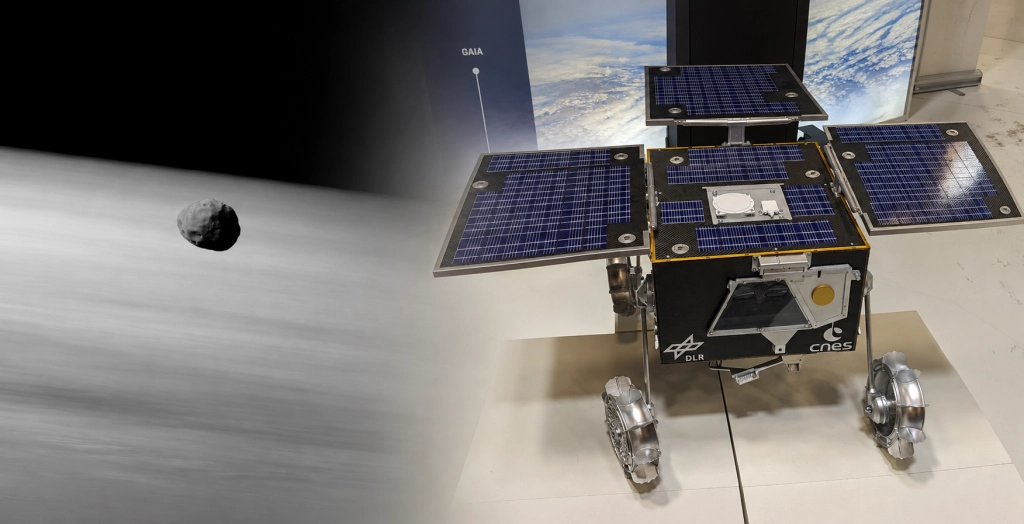
Japan launched a massive spacecraft called MMX in October. The spacecraft is currently flying across 500 million kilometres of empty space to reach Mars. Its primary target is Phobos. That is the largest moon orbiting the red planet.
Mission control wants to land on the rocky surface and scoop up 10 grams of dust. Scientists hope this will finally determine if the moon is a trapped asteroid or debris from an ancient crash. The gathered material should arrive back on Earth by 2031, according to science outlet Videnskab.
“It is a truly ambitious mission the Japanese have launched,” astrophysicist Michael Linden-Vørnle told Videnskab. He noted the project pushes boundaries for both science and engineering.
Japan already has deep experience in this field, having returned small asteroid samples during its previous missions.


Tricky landing zones
Picking a safe place to touch down will prove difficult. The landing zone must be flat enough to prevent a crash, but researchers also demand a location packed with valuable clues.
“But the most exciting places are not necessarily the safest,” Linden-Vørnle warned. He stressed that mission planners must balance high scientific reward with basic spacecraft survival.
To solve this puzzle, the spacecraft carries a small French and German rover. It is named Idefix, after the tiny dog in the Asterix comics. The robot will drop to the surface from a height of nearly 100 meters to scout the terrain.
Operating near Mars brings extra hurdles. Linden-Vørnle explained that the planet’s massive gravity pulls heavily on the spacecraft, making navigation far more complex than exploring an isolated asteroid.
A shifting space race
Japan faces stiff competition from rival nations. China plans to launch its own massive project in two years. Beijing hopes to haul half a kilogram of Martian soil home by 2031 to hunt for signs of ancient life.
Meanwhile, western space agencies are falling behind. An American and European mission stalled following NASA budget cuts by the Trump administration in January 2026, Videnskab notes. The delay leaves an already collected sample sitting on Mars, waiting for a ride.
“If the US and Europe had prioritized the necessary resources for Mars Sample Return, the mission could probably already be well underway,” Linden-Vørnle said.



