
 Kenneth Glad

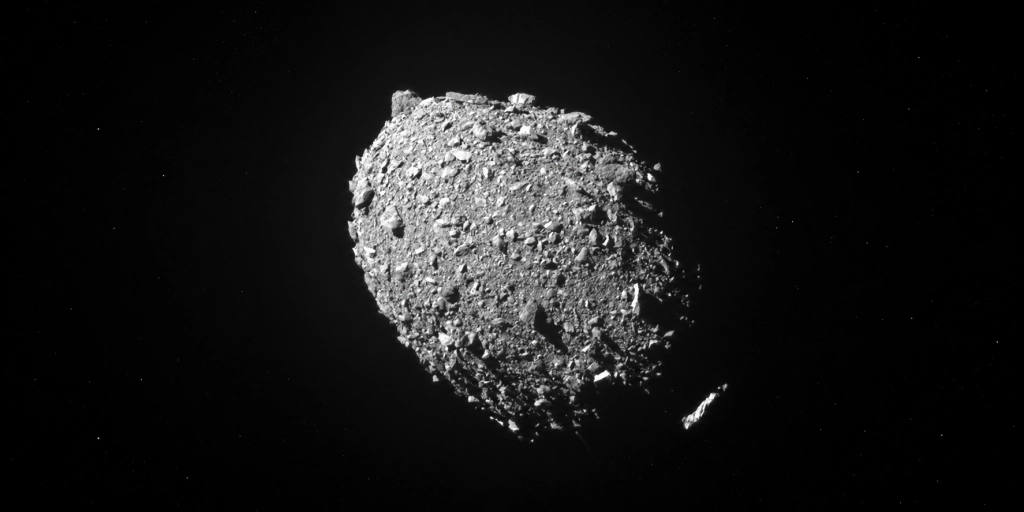
We all love a good action movie where humanity bands together to stop a doomsday rock from falling out of the sky. Away from the silver screen, real scientists have been quietly working on exactly that problem for years. Now, the highly anticipated sequel to their biggest test is finally here.

Four years ago, NASA deliberately crashed a spacecraft into an asteroid named Dimorphos. The ambitious goal was to see if human engineering could physically shove a fast-moving space rock off its natural path.
The bold experiment succeeded. It actually worked a little too well.
Now, a European spacecraft named Hera is finally reaching the distant crash site. It will spend the coming months investigating the damage.
According to science outlet Videnskab, the 2022 collision shaved a massive half hour off the asteroid’s orbit around its larger twin. Scientists had only expected a shift of a few minutes.


Looking under the hood
No one expected such a dramatic reaction. Researchers now suspect that Dimorphos is not a solid chunk of stone at all.
Astrophysicist Michael Linden-Vørnle told Videnskab that the object might just be a loose collection of flying boulders held together by gravity.
“That also makes the asteroid easier to affect,” the space researcher explained.
To uncover the truth, Hera will soon release two smaller companion probes into the void. One of them, a Danish-built craft named Juventas, will use advanced radar to look deep inside the asteroid for the very first time.
Stopping the next threat
A space rock measuring just 160 meters across might seem tiny. But a direct collision with Earth would unleash explosive energy far greater than a modern nuclear weapon.
This ongoing mission proves that humanity is no longer defenseless against the cosmos. If watchful astronomers spot a dangerous asteroid early enough, a gentle nudge is all it takes to keep our home planet entirely safe.
“It shows that we can easily handle these kinds of threats,” Linden-Vørnle said to the science outlet.
The Hera probe will continue gathering and sending vital data back to Earth until the summer of 2027.



