
 Jens Asbjørn Bøgen

The team first tried to measure the colony by hand before realizing that they would run out of air if they continued down that path.

Off a remote atoll in the Indian Ocean, a local boat skipper had been pointing visiting scientists at what he thought was an unusually long section of coral for three decades. Nobody had ever measured it.
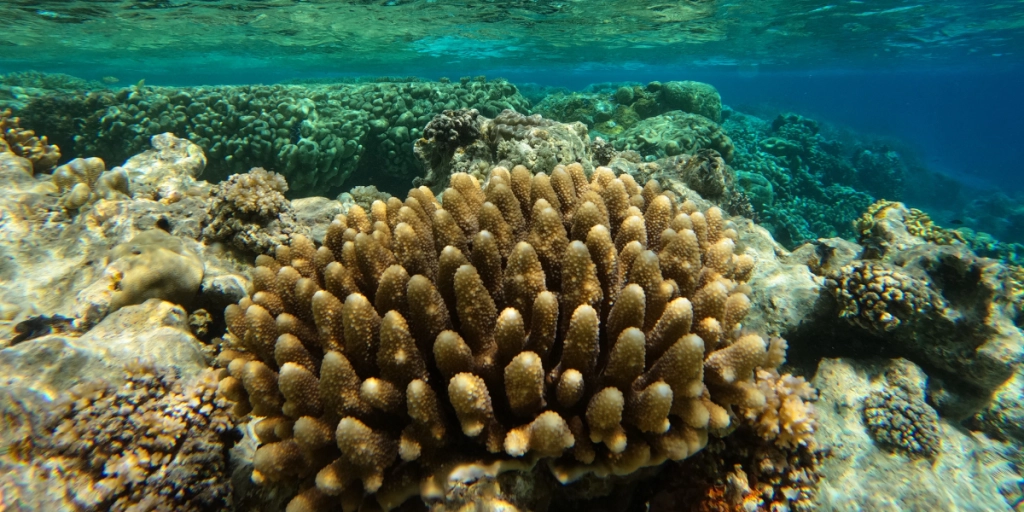
When a research team finally did, they needed twelve separate dives to get from one end to the other. The rose coral colony they mapped near the Cocos (Keeling) Islands stretches 1.56 kilometers, covering an area roughly three times the size of the Melbourne Cricket Ground, and it may be a single living organism.
“It’s a pretty exciting find. It was right under our noses, but we didn’t know how big it was,” JP Hobbs told Yahoo News Australia. Hobbs, a marine biologist at Adelaide University, led the expedition with support from Queensland Museum and James Cook University.
A colony that outran the tape measure
The structure sits on the deep outer slope of the atoll, spanning depths of 14 to 65 meters, with an average width of 36.5 meters, according to ScienceAlert.


Hobbs told the ABC the team began by trying to measure the coral by hand.
“We first started running out measuring tapes and measuring it centimetre by centimetre,” he said, before realizing they were running out of air before reaching the end.
The team switched to GPS-marked dive sites spaced about 600 meters apart.
The coral belongs to the genus Pachyseris, commonly called rose coral. Individuals of this type typically grow to only one or two meters in diameter.
The question nobody can answer yet
Whether the 1.56-kilometer stretch is one organism or many fused colonies is the central puzzle.
The team collected around 50 genetic samples from different points along the structure, which are being analyzed at the Queensland Museum.
If the DNA comes back matching from end to end, the formation would rank among the largest single coral colonies ever documented, bigger than the 34-by-32-meter “mega coral” reported in the Solomon Islands in 2024.
Peter Cowman, a marine genomicist at the Queensland Museum, told ScienceAlert that if the colony is one genetically identical organism “that came from a tiny larva that settled there and grew into this monstrosity,” it could be hundreds or even thousands of years old.
A rare bright note for coral
The waters around the Cocos (Keeling) Islands were declared Australian marine parks in 2022, with zoned protections that restrict fishing and anchoring.
The remoteness of the atoll and the colony’s depth may have helped shield it from the bleaching that has hit shallower reefs across the Indian Ocean.
Dieter Gerhard, the Cocos-based dive operator who first spotted the coral more than 30 years ago, had long urged researchers to take a proper look.
He told the ABC that when visiting scientists asked how far the structure ran, he could only answer that “you can’t see the end of it.”
The genetic testing at Queensland Museum is ongoing.



