
 Nicolai Haugsted

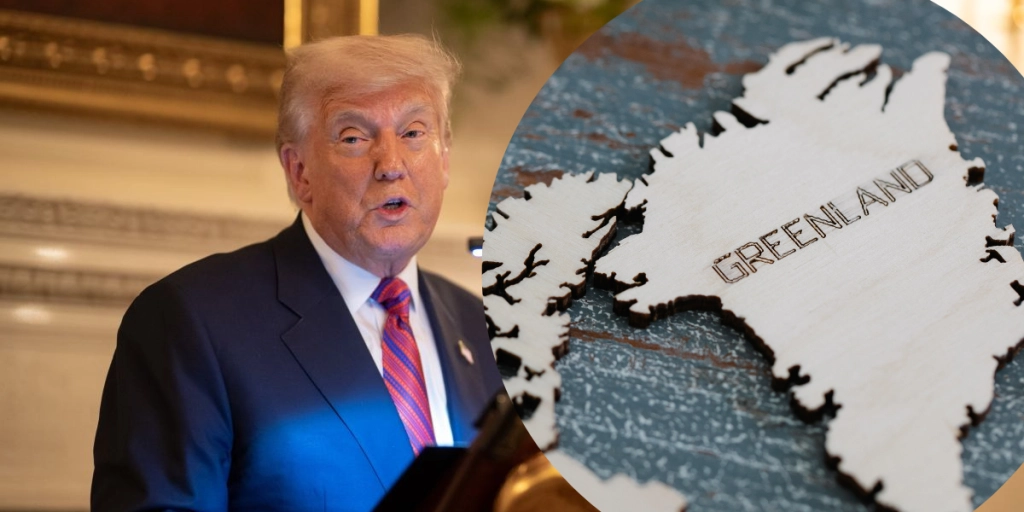
Donald Trump faces criticism from Denmark after claiming the United States now owns Greenland.

Donald Trump’s ambitions in Greenland have caused considerable diplomatic headaches for Denmark, but a new security agreement was supposed to provide some much-needed clarity about the Arctic island’s future.
Instead, the American president’s latest remarks have left at least one Danish politician wondering whether Washington and Copenhagen actually agree on what they signed.
According to The Express, Danish lawmaker Mads Fuglede has openly questioned Trump’s understanding of the agreement, warning that Denmark may have entered into a major security arrangement with an unpredictable partner.
His criticism follows two Fox News interviews in which Trump appeared to suggest that the United States had acquired Greenland permanently, despite the agreement explicitly preserving Danish sovereignty and Greenland’s right to determine its own future.


The distinction is rather important. Washington has secured expanded military access to Greenland, but the island itself has not become American territory.
Trump claims he has already secured Greenland
Speaking to Fox News on November 3, Trump appeared remarkably pleased with what he described as a major American victory.
“I got Greenland. We have Greenland, and nobody talks about it. If I didn’t get it, there’d be massive fanfare, I can tell you. But we got it, and it’s permanent. It’s forever,” the president declared.
Earlier that same day, he offered an equally sweeping description of the arrangement.
According to Trump, Europe “gave the United States the greatest gift we were ever given … Greenland.”
His comments raised an obvious question about whether he was referring to expanded military rights or suggesting that the United States had obtained something considerably more substantial.
The agreement signed in September does not transfer ownership or sovereignty over Greenland to Washington.
Instead, it strengthens American military access while maintaining Greenland’s existing constitutional relationship with Denmark.
That difference has now become the subject of pointed criticism in the Danish parliament.
Danish lawmaker calls Trump’s administration an unstable partner
During a parliamentary debate on Thursday, Mads Fuglede, a member of the Denmark Democrats, expressed concern about the reliability of the Trump administration.
He described Denmark as having negotiated with an “unstable counterpart” and suggested that Trump’s subsequent public statements cast doubt on whether the president understood the arrangement.
“You naturally run a risk when you enter into an agreement with a party who, not very long after the agreement, also expresses on social media and elsewhere that he probably hasn’t entirely understood what kind of agreement he has entered into,” Fuglede said.
His remarks reflect a broader concern about how Denmark should manage its relationship with an American administration that has repeatedly expressed ambitions extending beyond military cooperation.
Trump previously refused to rule out using military force to take control of Greenland, arguing that American ownership was essential to national security.
Although he subsequently retreated from that threat and expressed support for Greenlanders deciding their own future, his latest comments have revived questions about his intentions.
The agreement gives America military access, not ownership
The security arrangement builds on the 1951 Defense of Greenland Agreement, which has governed much of the American military presence on the island for decades.
Under the updated framework, the United States can expand its military infrastructure and establish additional bases in Greenland.
The agreement also strengthens cooperation across the Arctic and North Atlantic, regions that have attracted increasing attention from Washington because of growing strategic competition with Russia and China.
Crucially, the arrangement explicitly reaffirms Danish sovereignty and Greenlanders’ right to self-determination.
That means Greenland remains a self-governing territory within the Kingdom of Denmark, regardless of the expanded American military presence.
The agreement is also intended to remain valid if Greenland eventually becomes independent.
For Washington, the deal offers greater military flexibility in a strategically important region without requiring a change in Greenland’s political status.
For Denmark and Greenland, it provides an opportunity to strengthen security cooperation while preserving control over the island’s future.
Trump’s public description of the arrangement, however, has made that carefully negotiated distinction considerably harder to explain.
White House insists the agreement is a major victory
The White House has defended the deal and emphasized its importance for American national security.
A spokesperson said the agreement “secures permanent American security control over Greenland, ensures that Greenland will forever be a part of the strategic defense area of North America, and excludes any adversary from Greenland and the surrounding region.”
The administration’s description focuses on military security rather than a formal transfer of sovereignty.
The State Department has similarly celebrated the arrangement, saying it “marks another major victory for American national security.”
American interest in Greenland is hardly new.
During the Cold War, the island served as an important strategic position for the United States in its competition with the Soviet Union.
Its geographical location remains valuable for monitoring military activity across the Arctic and protecting North American security interests.
A Congressional Research Service report published in July 2025 also identified increasing strategic competition with Russia and China as a reason for renewed American attention.
Greenland’s politicians have already approved the deal
The agreement was signed in September by Trump, Danish Prime Minister Mette Frederiksen and Greenlandic Prime Minister Jens-Frederik Nielsen during the United Nations General Assembly in New York.
Greenland’s parliament subsequently approved the security arrangement by 16 votes to zero, with seven lawmakers abstaining.
The vote followed months of political tension surrounding Trump’s repeated demands for greater American control over the island.
For some Greenlanders, the agreement represented an opportunity to satisfy Washington’s security concerns without surrendering political independence or territorial rights.
Nukaaka Lund-Mathaeussen, a resident living approximately 570 kilometers north of Nuuk, expressed hope that the agreement meant the Trump administration “got what they wanted.”
Not everyone in Danish politics has been as skeptical as Fuglede.
Sjúrður Skaale, who represents the Faroe Islands in the Danish parliament, praised the agreement as a diplomatic achievement.
“I think the agreement is truly a masterpiece,” he said.
However, he also warned against assuming that an agreement with Trump would necessarily remain unchanged.
“We can only hope that it does not end up like a certain agreement that the president made with Canada, which did not remain valid for very long,” Skaale added.
Greenland’s prime minister delivers a clear message
Following the parliamentary approval, Greenlandic Prime Minister Jens-Frederik Nielsen emphasized that the island’s political future remains in the hands of its people.
Writing on Facebook, Nielsen praised Greenlanders for remaining united throughout months of international pressure and geopolitical uncertainty.
“We must be able to cooperate with other countries,” he wrote, while stressing that such cooperation must respect “our people, our country and our rights.”
He concluded with a particularly direct statement about Greenland’s future.
“Greenland is our country. Greenland will always be our country.”
For Denmark and Greenland, the agreement is intended to secure stronger military cooperation without compromising sovereignty.
For Trump, judging by his recent interviews, it appears to be something he is considerably more comfortable describing as an American acquisition.
Whether that difference is merely political rhetoric or a sign of deeper disagreement over the agreement’s meaning is precisely the concern Fuglede has now raised in Copenhagen.



