
 Asger Risom

When Abraham Lincoln authorized the Secret Service in April 1865, not a single agent was assigned to guard the White House.

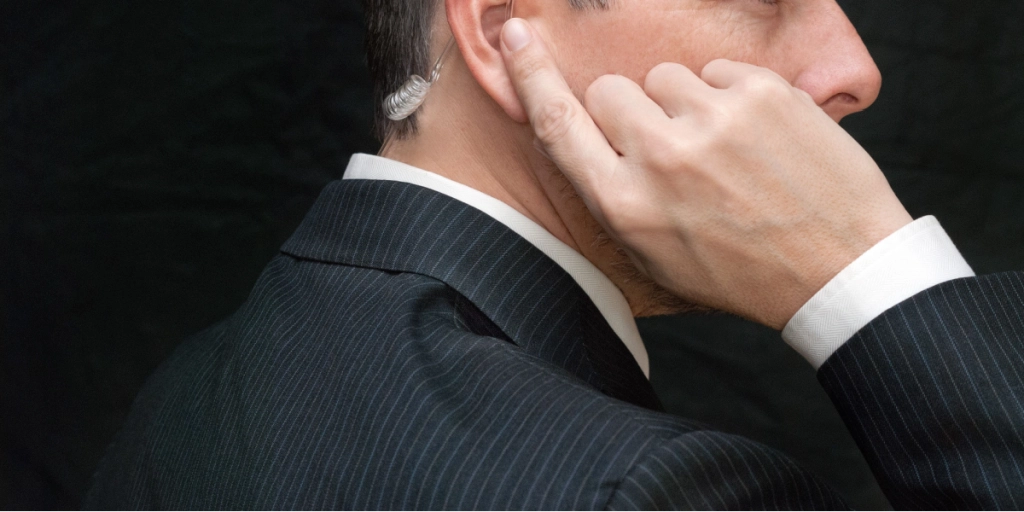
Picture the U.S. Secret Service today, and an immediate image comes to mind: dark-suited agents wearing coiled earpieces, scanning rooftops beside an armored presidential motorcade. Yet when Abraham Lincoln approved the creation of the agency on April 14, 1865—the very day he was fatally shot at Ford’s Theatre—not a single agent was assigned to watch the door. Lincoln signed the paperwork to rescue the American dollar from a massive wave of counterfeit bills.
A nation drowning in fake paper money
Before the Civil War, the federal government did not print paper currency at all. Instead, more than a thousand individual state-chartered banks issued their own banknotes, resulting in thousands of different designs, colors, and sizes floating through American pockets. Shopkeepers had to consult thick monthly reference guides just to figure out whether a bill handed across the counter came from a real bank or a basement printing press.
When the Civil War drained the nation’s gold and silver reserves, Washington began printing uniform national paper money—nicknamed greenbacks—to pay soldiers and buy supplies. Counterfeiters quickly realized that forging a single standardized federal currency was far easier and more profitable than copying thousands of local banknotes.
By the end of the war in 1865, an estimated one-third to one-half of all paper currency circulating in the United States was counterfeit. Fake bills were so common that merchants routinely discounted paper money or refused to accept it altogether, threatening to collapse public trust in the young national economy.


How a small Treasury squad hunted counterfeiters
To stop the financial bleeding, the federal government established the Secret Service Division inside the Department of the Treasury in July 1865. According to the U.S. Secret Service, its inaugural chief, William P. Wood—a former prison superintendent and skilled engraver—had one clear mandate: track down counterfeiting rings and seize their printing plates.
Because counterfeiting required specialized engraving and chemical skills, Wood recruited former detectives alongside reformed counterfeiters who knew exactly how forged plates were etched and how inks were mixed. Within a few years, operatives had raided hundreds of underground print shops across the country, dramatically reducing the volume of fake greenbacks in circulation.
In the late nineteenth century, Washington had almost no federal law enforcement agencies—the FBI would not be created until 1908. As a result, Congress occasionally borrowed Secret Service investigators to tackle other federal crimes, from illegal whiskey distilling and land fraud to early Ku Klux Klan violence. Guarding the president, however, was still nowhere on the agency’s job description.
Three assassinations before full-time bodyguards
For most of the 1800s, Americans viewed armed bodyguards around an elected leader as an uncomfortable throwback to European royalty. Presidents routinely walked the streets of Washington alone, answered their own front doors at the White House, and mingled with unscreened crowds at public events.
Even after Lincoln was assassinated in 1865 and President James Garfield was shot at a Washington train station in 1881, Congress declined to create a permanent protective detail. Secret Service agents only stepped into presidential security by accident in 1894, when operatives investigating a counterfeiting ring uncovered an assassination plot against President Grover Cleveland and began guarding him informally on a part-time basis.
The permanent shift finally arrived in September 1901, after an anarchist shot President William McKinley at a public exposition in Buffalo, New York. Following McKinley’s death, lawmakers asked the Secret Service to provide full-time, round-the-clock protection for the president, which officially began in 1902. More than a century later, the agency still runs on that unusual dual mandate—protecting the commander-in-chief on the street while hunting down counterfeit currency behind the scenes.



