
 Asger Risom

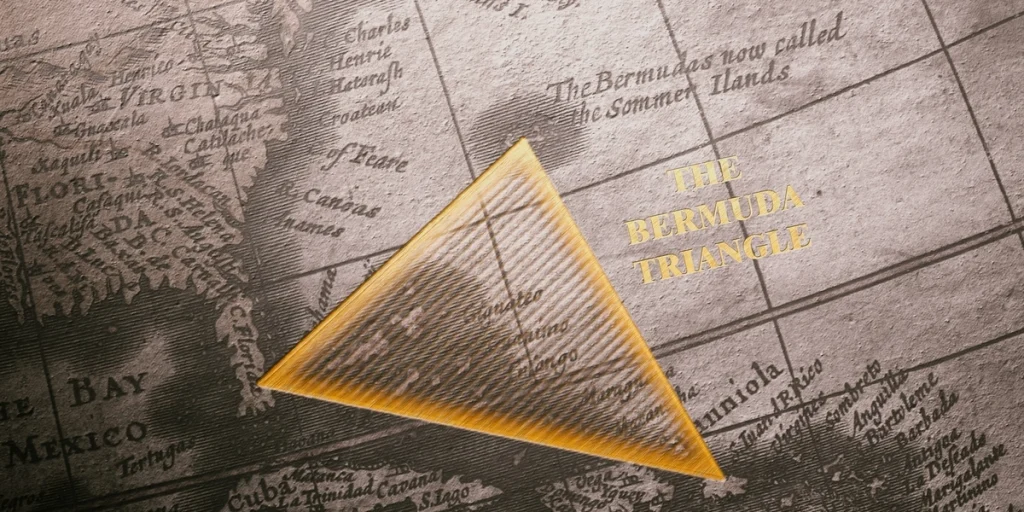
Pop culture treats the Bermuda Triangle as a supernatural trap, yet maritime insurers do not charge a penny extra for ships crossing it. Ocean currents, sudden tropical squalls, and heavy daily traffic explain why vessels vanish there at the exact same rate as anywhere else on Earth.

If the Bermuda Triangle were a real hazard, maritime insurers would charge extra for it. Yet underwriters in London do not add a penny to policies for cargo vessels crossing the stretch of Atlantic water between Miami, Bermuda, and Puerto Rico, and official geographic agencies do not even recognize the name on world maps. Strip away decades of late-night mystery documentaries and paperback sensationalism, and the Triangle turns out to be completely ordinary water governed by basic statistics and fast-moving currents.
The simple math of a heavily trafficked crossroads
To understand why so many ships and small planes have gone missing in the region, start with the same logic that explains why more fender-benders happen on a major city highway than on a quiet country lane: volume. The waters connecting the southeastern United States, Bermuda, and the Caribbean islands form one of the busiest maritime and aviation crossroads on the planet, packed year-round with commercial freighters, cruise liners, private yachts, and commuter flights.
According to the National Oceanic and Atmospheric Administration, there is no evidence that mysterious disappearances happen with any greater frequency in the Bermuda Triangle than in any other large, well-traveled stretch of ocean. Australian science communicator Karl Kruszelnicki, pointing to data from the U.S. Coast Guard and maritime insurance market Lloyd’s of London, noted in The Independent that on a percentage basis, the number of accidents in the Triangle is virtually identical to anywhere else in the world.
The legend itself was largely built by magazine and book authors in the 1960s and 1970s who stitched unrelated accidents together into a pattern. As Britannica notes, writers routinely inflated the mystery by including vessels that sank during well-documented hurricanes—or accidents that actually took place thousands of miles outside the Triangle altogether.


How the Gulf Stream erases wreckage in minutes
Part of what fuels the supernatural reputation is how cleanly wrecks seem to disappear without leaving floating debris behind. That vanishing act has nothing to do with interdimensional portals and everything to do with local oceanography.
Cutting right along the western edge of the Triangle is the Gulf Stream, a powerful ocean current that acts like a fast-moving river inside the Atlantic, pushing warm water northward at up to five or six miles per hour. If a small plane ditches at sea or a boat capsizes, that current can sweep floating wreckage, life vests, and fuel slicks dozens of miles away within hours—long before search-and-rescue aircraft even reach the last known coordinates.
Beneath the surface, the seafloor geography makes recovery just as difficult. While the islands and reefs of the Bahamas sit in shallow, treacherous shoals that easily snag careless boaters, the surrounding Atlantic drops abruptly into deep abyssal plains and trenches—including the Puerto Rico Trench, the deepest point in the Atlantic Ocean at more than five miles down. Once a heavy hull sinks past the continental shelf, it settles out of reach of standard salvage gear.
Sudden squalls, compass quirks, and human error
Weather and navigation hazards finish explaining the region’s most famous losses. Warm tropical waters meeting cooler air masses regularly spawn localized, fast-moving thunderstorms and waterspouts that can overwhelm small craft with little warning—especially in the decades before satellite weather radar.
Historically, navigators also had to contend with a subtle magnetic quirk. Across most of the globe, a magnetic compass points toward magnetic north rather than true geographic north, forcing pilots and captains to calculate an adjustment for the difference. For centuries, the Bermuda Triangle sat near the agonic line, where magnetic north and true north aligned—meaning navigators who forgot to stop adjusting their compasses could steadily steer themselves off course.
That kind of straightforward human error was behind the Triangle’s most famous case, the December 1945 disappearance of Flight 19, a squadron of five U.S. Navy torpedo bombers on a routine training run. When the flight leader’s compass failed and he mistook islands in the Bahamas for the Florida Keys, he led the entire formation eastward out over the open Atlantic instead of west toward the mainland, flying until every plane ran out of fuel and ditched at sea.
Why insurance actuaries never bought the legend
If any hidden force were actually pulling ships beneath the waves, the first people to notice would be marine insurance underwriters. Firms like Lloyd’s of London have spent centuries pricing maritime risk down to the decimal, immediately hiking premiums for vessels entering war zones, piracy corridors, or ice-choked polar routes.
They have never added a surcharge for the Bermuda Triangle. Once you account for heavy daily traffic, fast currents, and ordinary human mistakes, the world’s most famous ocean mystery looks less like a paranormal trap and more like a busy stretch of sea doing what oceans have always done.



