
 Nicolai Haugsted

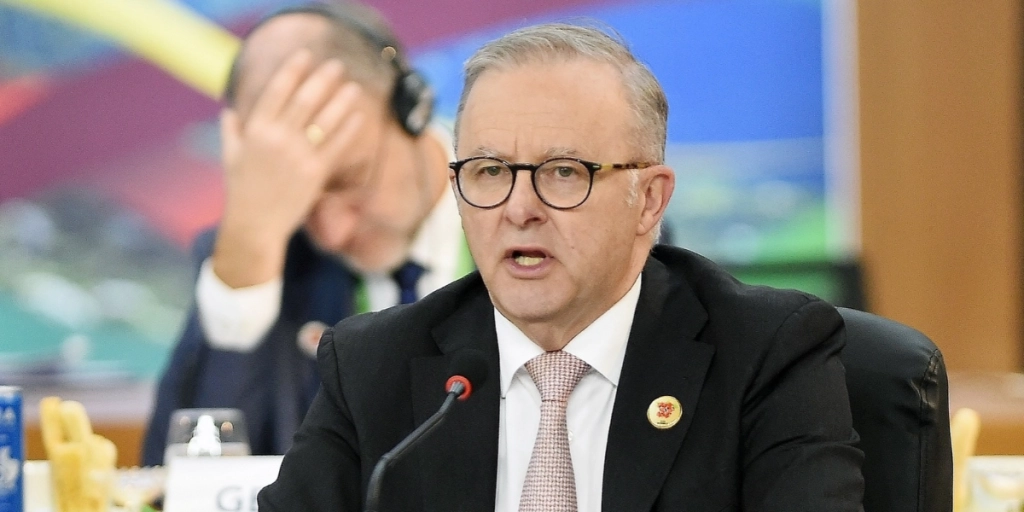
Australia strengthens ties with Trump as new agreement raises questions about China’s influence.


The global race to dominate artificial intelligence is no longer simply about developing smarter technology. Governments are increasingly concerned about who controls the materials, factories and infrastructure needed to keep the industry running.
For countries caught between the world’s two largest economic powers, that competition presents a particularly complicated diplomatic challenge.
Australia is now taking another significant step toward Washington, even as its government attempts to maintain a workable relationship with Beijing.
According to The Guardian, Australian Prime Minister Anthony Albanese has signed up to a US-led agreement designed to protect artificial intelligence supply chains, just ahead of a crucial meeting with President Donald Trump.


The move comes as world leaders gather in Manila, the Philippines, for a Quad summit that will bring Trump together with representatives from Australia, Japan and India.
And with China watching closely, Albanese faces the difficult task of strengthening Australia’s relationship with the United States without unnecessarily antagonizing its powerful regional neighbor.
Australia signs Trump’s new agreement on artificial intelligence
The agreement, known as the San Francisco Declaration, forms part of a broader international initiative called Pax Silica.
Its central objective is to strengthen cooperation between participating countries on technologies and infrastructure essential to artificial intelligence.
That includes semiconductor chips, critical minerals, specialized manufacturing equipment and other components needed to develop and operate advanced AI systems.
The declaration also seeks to protect sensitive technological knowledge and the industrial processes used to manufacture these products.
Countries involved in the initiative include the United States, Australia, Japan, the United Kingdom, India, Israel, South Korea and Singapore.
Their cooperation is intended to reduce vulnerabilities in supply chains that have become increasingly important to national security and economic competitiveness.
The agreement also addresses infrastructure that rarely attracts as much public attention as advanced computer chips.
Ports, transportation networks, telecommunications systems, energy infrastructure and digital logistics platforms all play essential roles in keeping international technology supply chains operational.
Protecting those systems is therefore a major part of the initiative.
American officials believe the agreement will help ensure that Washington and its partners establish international standards for emerging technologies rather than allowing competing powers to determine the rules.
China’s growing technological influence is a major concern
Although the declaration focuses on economic security and technological cooperation, China’s growing influence is an important consideration behind the agreement.
Beijing has invested heavily in artificial intelligence, semiconductor development and access to critical minerals.
Its position in several strategically important supply chains has raised concerns among Western governments about their dependence on Chinese production and processing capabilities.
For Australia, the situation is particularly sensitive.
The country maintains close security ties with the United States while also having substantial economic interests connected to China.
Supporting Washington’s efforts to secure AI supply chains therefore requires careful diplomatic handling.
The Australian government wants to strengthen cooperation with its American allies without allowing the initiative to cause unnecessary damage to its relationship with Beijing.
That balancing act will become especially important during the upcoming meetings between regional leaders.
Trump attends his first Quad summit after election defeat
Tuesday’s gathering in Manila will mark Trump’s first appearance at a Quad leaders’ summit across both of his presidential terms.
The diplomatic event comes shortly after Republicans suffered a major defeat in the American midterm elections.
Despite that domestic setback, Trump is expected to play a prominent role in a week of high-level international discussions.
His schedule also includes preparations for talks involving Chinese President Xi Jinping and Russian President Vladimir Putin.
The prospect of discussions between the leaders of the United States, China and Russia adds another layer of complexity to the regional diplomatic agenda.
For Australia, Trump’s participation in the Quad is significant in itself.
The grouping brings together the United States, Australia, Japan and India to discuss security, economic cooperation and strategic challenges across the Indo-Pacific.
Its leaders have not gathered for a summit since 2024.
Australian officials see the meeting as an opportunity to maintain American engagement in the region during the final two years of Trump’s presidency.
There are concerns that Washington could become increasingly distracted by domestic politics and other international conflicts.
Keeping the American president personally involved in regional cooperation is therefore an important objective for Albanese.
Albanese warns that international cooperation is essential
Speaking at the ASEAN-Australia summit on Monday, Albanese emphasized the importance of cooperation between countries facing shared economic and security challenges.
“At a time of global instability, the cooperation we demonstrate here will help us to confront the challenges we share at home and in our region,” the Australian prime minister said.
His comments reflected the government’s broader diplomatic approach during a particularly busy period of international meetings.
Following the Quad summit, Albanese is also expected to attend the Asia-Pacific Economic Cooperation leaders’ meeting in Shenzhen, China, later in the week.
The schedule illustrates Australia’s efforts to maintain relationships with both Washington and Beijing.
Rather than treating cooperation with one country as incompatible with engagement with the other, the government is attempting to preserve its strategic flexibility.
That approach may become increasingly difficult as competition between the United States and China intensifies.
However, Australian officials believe continued engagement with both powers remains essential to the country’s long-term interests.
Experts warn against turning the Quad into an anti-China alliance
Premesha Saha, a senior fellow at the Asia Society, believes the Quad summit will focus heavily on critical minerals, maritime security and energy security.
She argues that Australia’s primary objective is to keep Washington committed to the Indo-Pacific.
“For Australia, keeping the United States engaged in the Indo-Pacific is a core strategic interest, and the Quad is one of the few settings where the president is tied into a regional agenda alongside three close partners,” Saha explained.
Her assessment highlights the importance of the Quad as a diplomatic mechanism rather than simply another opportunity for leaders to pose for photographs.
With Washington increasingly focused on other international challenges, securing Trump’s attendance represents a meaningful achievement for Australia’s regional strategy, despite the potential of showing picking sides with the US over China.
Saha also believes that the grouping must be capable of producing practical results even when American political priorities change.
Nevertheless, she cautioned against assuming that the latest agreement would automatically provoke a major confrontation with China.
Beijing is likely to criticize the Quad and portray it as an attempt to organize countries into competing geopolitical blocs.
However, Saha noted that the Quad is not a formal military alliance and that Washington has repeatedly rejected the suggestion that it exists specifically as an anti-China coalition.
The distinction matters because Australia wants to deepen regional cooperation without presenting every diplomatic initiative as a direct challenge to Beijing.



