
 Jens Asbjørn Bøgen

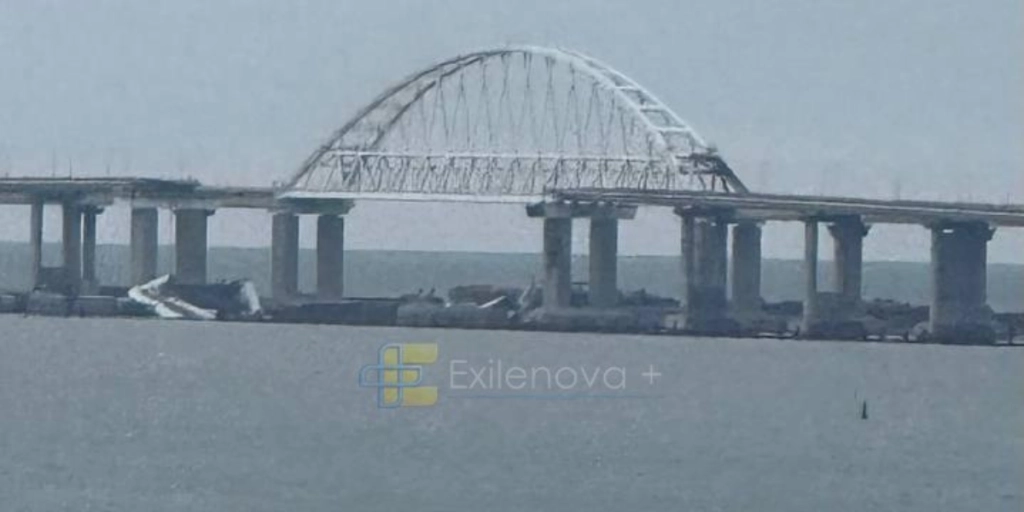
The think tank notes that even though Putin claims the bridge is only used for civilian purposes, Russian forces have long used the bridge.


For the third time in three days, Ukrainian forces hit the Kerch Strait Bridge.
Overnight between November 18 and 19, Neptune coastal missiles damaged the rail track, the Ukrainian General Staff reported. Days earlier, attacks had already collapsed the road section.
Those repeated blows did not happen by chance.
According to the Institute for the Study of War (ISW), Kyiv first spent weeks hunting down Russian air defenses across occupied Crimea, southern Ukraine, Rostov Oblast, and Krasnodar Krai.


Ukrainian teams targeted radar systems, mobile firing units, and missile launchers that shoot down incoming threats. Once those defenses went blind, missiles could finally reach the bridge.
Putin denies military use
In Moscow, the Kremlin still insists the crossing has nothing to do with the war.
Speaking at the APEC summit, Russian President Vladimir Putin described the span as a “purely civilian facility” and claimed troops had never moved weapons, ammunition, or fuel across it.
Analysts say the facts on the ground tell another story. ISW notes that Russian forces have long used the bridge to move military gear and keep their hold on Crimea.
Losing both road and rail capacity creates an immediate headache for commanders. Without a working bridge, moving heavy supplies from mainland Russia into the occupied peninsula becomes much slower.
And the analysts suggest that the Ukrainian strikes on the bridge “will likely have cascading effects on Russian logistics into Crimea and potentially on frontline operations.”
Alternative routes under fire
That bottleneck leaves Moscow with few good backup options. With the bridge crippled, Russia must send more convoys along the M-14 highway, a coastal road linking Rostov to Crimea, ISW reports.
Yet that coastal road is already in Ukraine’s sights. Ukrainian units are pounding the M-14 at the same time, squeezing Russian supply lines across the entire southern front.
Together, the strikes point to a wider strategy. Rather than fighting Russian troops only at the trenches, Kyiv is systematically cutting the roads and rails that feed them.



