
 Kenneth Glad

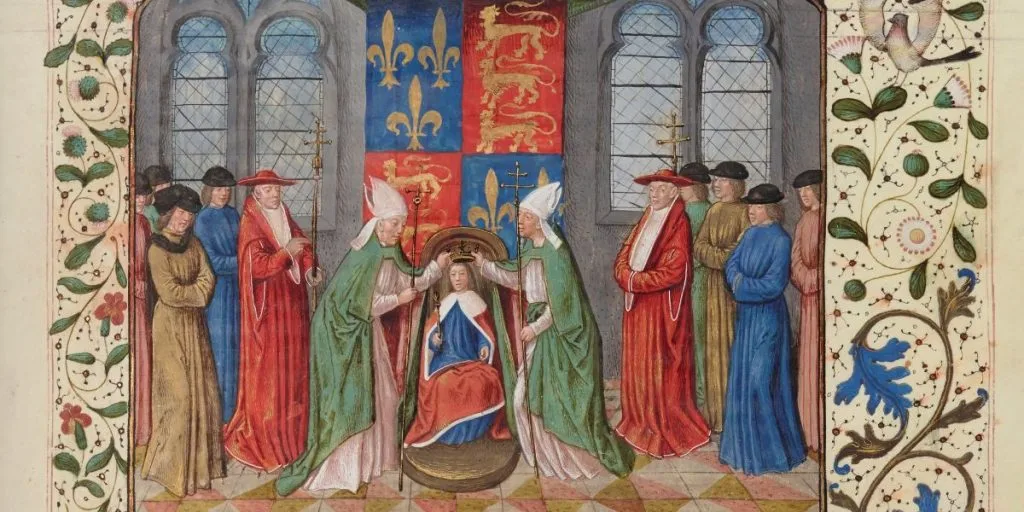
Handing power to a child has always been a high-stakes gamble, especially when an entire nation’s survival hangs in the balance. In medieval Europe, royal bloodlines meant that a crown could easily land on the head of a toddler, forcing hardened nobles to figure out how to run a country for a boss who could not even speak. History shows that England spent centuries perfecting this delicate balancing act, only to watch it unravel in spectacular fashion.

In the autumn of 1422, England faced an unprecedented political puzzle when Henry V and Charles VI of France died within two months of each other. According to History Today, this double tragedy left nine-month-old Henry VI as the rightful heir to two rival kingdoms locked in a bitter, century-long war.
While medieval bureaucracy could handle daily paperwork without a king in the room, the entire legal system relied on the monarch’s personal, God-given authority. Every royal pardon and charter required legitimacy that only a consecrated king could provide.
England had survived young rulers before, including nine-year-old Henry III in 1216 and ten-year-old Richard II in 1377. Still, an actual infant presented a brand-new crisis. Richard II could at least sit with his ministers, listen to advice, and stamp his personal seal on letters, whereas baby Henry could do nothing at all.
Guarding the royal crown
Over two hundred years, English elites had built a system of councils and parliaments to help govern when a king was away at war or too ill to rule. History Today notes that this shared setup came with a strict rule: Advisers could help do the king’s work, but they could never steal his ultimate authority.


When ambitious nobles pushed too far, the backlash was fierce. After 14-year-old Edward III took the throne in 1327, his mother Isabella and her lover Roger Mortimer hijacked the government for their own gain. By 1330, the teenage king had enough, staging a quiet coup at Nottingham Castle and executing Mortimer to remind everyone who truly held the crown.
To avoid repeating that disaster in 1422, Parliament refused to give total control to Henry VI’s ambitious uncle, Humphrey, duke of Gloucester, even though he pointed to thirteenth-century regent William Marshal to justify his claim.
Instead, lawmakers boxed the protector role inside a wider royal council and handed the top title to his older brother, John, duke of Bedford, letting Gloucester fill in only while Bedford was away fighting in France.
When safeguards finally fail
Even with strict boundaries, sharing power proved messy. Gloucester repeatedly tested his limits, sparking a territorial dispute in the Low Countries that threatened England’s vital alliance with Burgundy.
By October 1425, his bitter rivalry with the bishop of Winchester boiled over into armed clashes on the streets of London, forcing Bedford to rush home from France to restore peace.
Despite the constant bickering in Parliament, the makeshift government held together until Henry VI was crowned at Westminster in 1429, just before his eighth birthday. The system had worked, keeping the administration running and funding the war abroad while protecting the young boy’s birthright.
Those hard-won lessons were eventually forgotten with deadly consequences. When mental illness incapacitated an adult Henry VI in 1454, the protector role returned, setting the stage for civil war. A few decades later, in 1483, another duke of Gloucester used the exact same title to sideline 12-year-old Edward V before seizing the throne for himself as King Richard III.



