
 Kenneth Glad

History rarely stays buried forever. Beneath parks and coastal fields across Europe, the soil still holds subtle reminders of the conflicts that shaped the modern world. One historic shoreline in northern Poland has just given up a secret kept since 1939.

At 4:47 a.m. on September 1, 1939, the German warship Schleswig-Holstein opened fire on Westerplatte, a narrow peninsula outside what was then the Free City of Danzig, now Gdańsk. According to HistorieNet, those heavy shells sparked the opening battle of the Second World War.
Outnumbered Polish troops braced for the sudden onslaught. Private Mieczysław Krzak stood beside his comrades, ready to return enemy fire with their mortars as German forces launched the wider invasion of Poland.
By the next day, screaming German Stuka dive bombers pounded the coastal outpost in a fierce air raid. Commanders rushed Krzak to defend a frontline post called Fort, where he was killed during the heavy assault.
He never returned. Rescue teams could not recover his body amid the chaos, leaving the young soldier listed as missing for 87 years.


Dangers underground
Between April and August 2026, archaeologists from the Museum of the Second World War in Gdańsk dug into 479 square meters of the former barracks and parade ground. HistorieNet reports that their trenches uncovered the exact earth layers Polish troops crossed during the siege.
Deep below the grass, the team also spotted a 20-meter blast crater. Researchers believe German ammunition blew up there in spring 1945, flattening the northern wing of the barracks.
More than 2,700 relics turned up in the dirt. Among them were a damaged canteen, an 81-millimeter Polish mortar baseplate, and a window frame flecked with British pink camouflage paint.
Yet the dig came with real peril. Bomb disposal specialists had to secure over 28,000 pieces of live ammunition, including Mauser rifle rounds, grenades, and artillery fuzes.
A final homecoming
Then came November 5. During major construction work nearby, archaeologists uncovered a bayonet, Polish uniform buttons, and human bones.
Strong evidence points to Mieczysław Krzak, according to a press release from the Museum of the Second World War in Gdańsk. His long wait could soon be over.
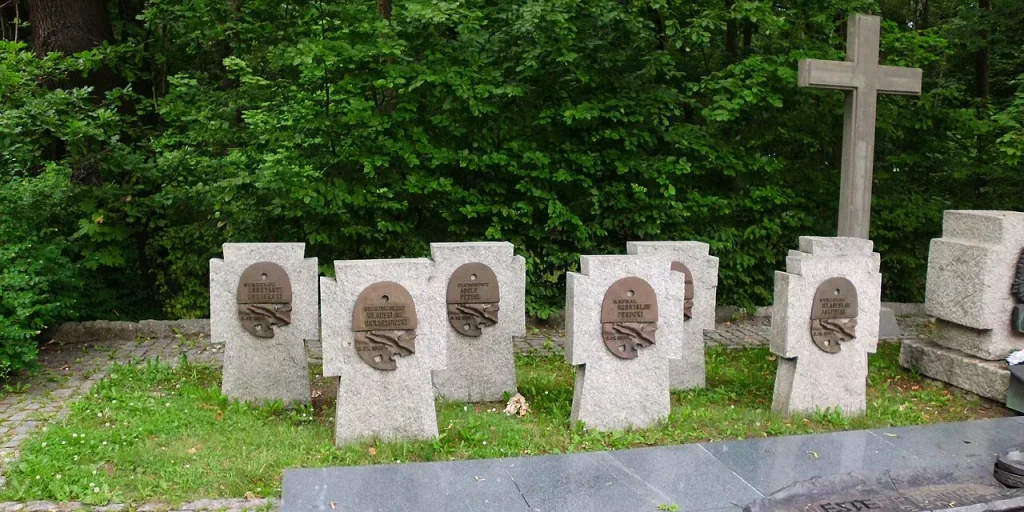
Since 2019, teams at Westerplatte have used DNA tests to identify fallen troops, burying them with full honors at a new Polish military cemetery on the site.



