
 Lauge Risom Koch

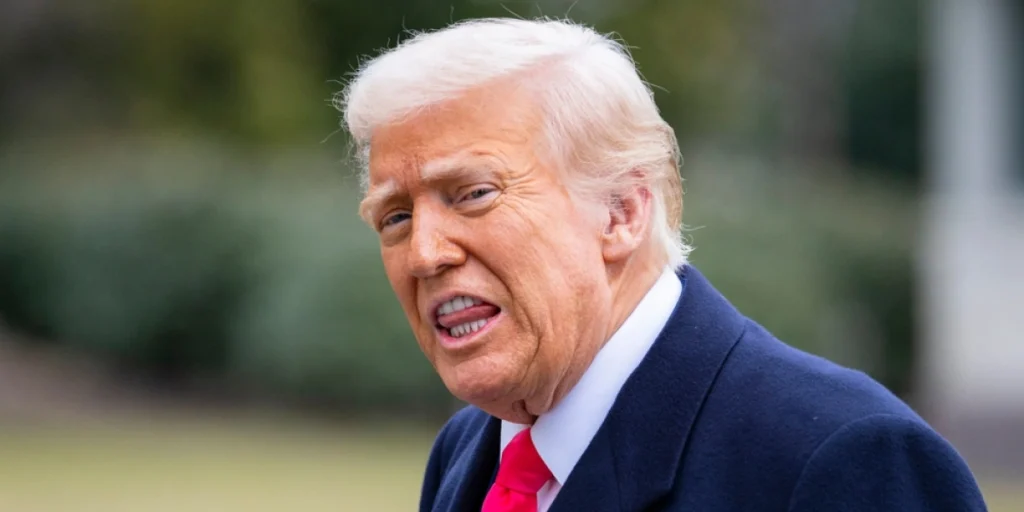
Following a trilateral summit in Shenzhen, President Donald Trump announced agreements with Russia and China on nuclear proliferation and AI guardrails, while claiming his diplomacy has pushed Beijing and Moscow out of Latin America.
President Donald Trump said Friday, November 20, that Beijing is expanding its nuclear arsenal at a “hot and heavy” pace, speaking one day after a trilateral summit with Chinese leader Xi Jinping and Russian President Vladimir Putin. According to the Associated Press, the leaders met in Shenzhen, China, and agreed to hold talks on preventing nuclear proliferation. The meeting brought together the leaders of three major nuclear powers.
While the United States and Russia maintain thousands of nuclear weapons, China’s stockpile is growing. The Pentagon’s review estimated Beijing’s arsenal in the low 600s through 2024 and projected it will exceed 1,000 warheads by 2030. During a White House news conference, Trump predicted that China’s nuclear capabilities could match those of the United States within ten years.
Following the meeting, Trump, Xi, and Putin issued a joint statement affirming that a nuclear war cannot be won and committing to dialogue on reducing nuclear risks. Secretary of State Marco Rubio defended the summit, calling it dangerous for the nations holding most of the world’s nuclear weapons not to communicate. Analysts characterized the agreement as a stabilizing step, noting Beijing had previously resisted arms control talks due to its smaller arsenal.
US and China target AI safeguards as Trump defends Jensen Huang
Beyond nuclear security, Trump announced that he and Xi agreed to establish joint guardrails for artificial intelligence development. The consensus follows warnings that unchecked AI advancement could pose severe risks. While endorsing bilateral safety measures, Trump maintained that the United States must win the AI race.


Policy experts remain skeptical about enforcing mutual AI restrictions between Washington and Beijing. Analysts at the Center for Strategic and International Studies noted that setting safety rules is technically difficult amid low trust. Geopolitical competition offers little incentive for either nation to limit its capabilities without guarantees that rivals will do the same.
The discussions coincided with Trump defending Nvidia co-founder Jensen Huang, who resigned this month over ties to a former executive suspected of diverting chips to China. Trump called Huang a “brilliant man” who gave the US a ten-year lead and suggested Nvidia should accept an apology and rehire him, even as the administration issued rules this week blocking Chinese companies from remotely accessing US servers.
Summit dynamics and shifting influence in Latin America
Describing the Shenzhen summit, Trump said there was “great electricity” in the room and called his relationship with Xi and Putin fantastic. He pointed to these diplomatic ties as a factor behind recent geopolitical shifts in the Western Hemisphere. Specifically, he credited his talks with Xi for rolling back Chinese influence campaigns in the region.
Trump asserted that China has withdrawn from footholds in Latin America at his request. He said Beijing was “nibbling on the edge of Venezuela” and expanding its involvement with the Panama Canal before he asked Chinese leaders to leave. According to Trump, China complied, aligning with his administration’s goal of restoring US predominance in the region.
The president added that Russian influence in South America has similarly declined. Trump noted that Moscow was previously involved in Venezuela but pulled back following the January capture of former Venezuelan leader Nicolás Maduro by US forces. Summarizing the shift, Trump said neither Russia nor China remains present there, leaving the United States as the dominant power.



