
 Lauge Risom Koch

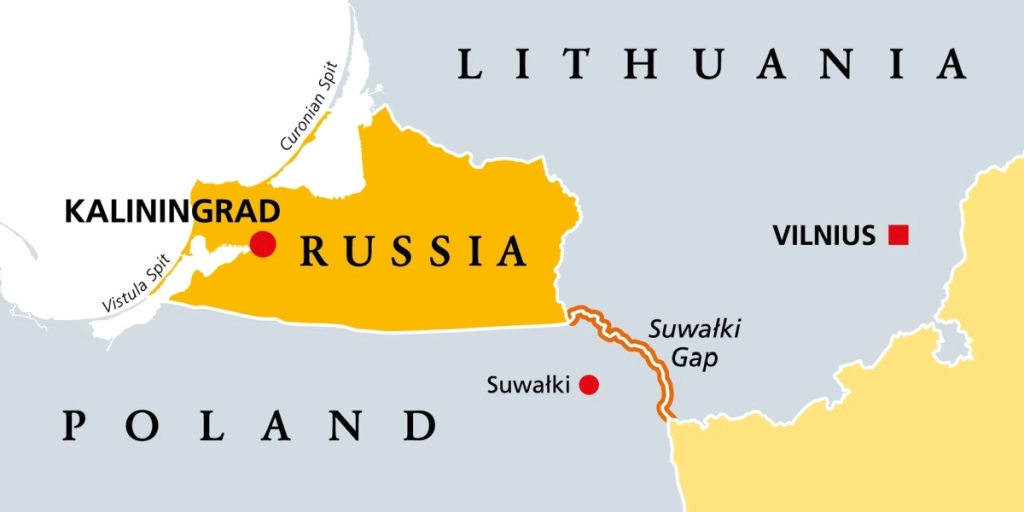
Lithuanian Foreign Minister Kęstutis Budrys denied any involvement after a drone strike targeted Russian Baltic Fleet facilities in Kaliningrad, hours after another drone hit a Russian military cargo ship in the Gulf of Finland.


Lithuanian Foreign Minister Kęstutis Budrys has rejected claims that Vilnius permitted its airspace to be used for a drone attack on Russia’s Kaliningrad exclave. According to the Kyiv Post, the Saturday evening, November 21, strike targeted Russian Baltic Fleet facilities in the naval port city of Baltiysk, marking the first drone attack on the exclave since Russia invaded Ukraine in February 2022.
Writing on X, Budrys stated that Lithuania has never granted permission for its airspace to be used for strikes against Russian territory and dismissed the social media allegations as false. Kaliningrad sits along the Baltic Sea coast between NATO members Poland to the south and Lithuania to the north and east.
Click to display external content from twitter,
– You can always enable and disable third-party content.

You agree to display external third-party content. Personal data may be sent to the provider of the content and other third-party services.
Air raid sirens sounded across the Kaliningrad region during the attack on Baltiysk, which houses the Baltic Fleet’s primary naval base. Regional authorities initially attributed the alarms to a civil defense drill before sirens resumed less than an hour later alongside active air defense fire, while eyewitness footage published by Ukrainian open-source intelligence channel Exilenova+ showed smoke rising over the city.


Drone strike hits Russian military cargo ship in Gulf of Finland
The attack on Baltiysk followed a morning drone strike on Saturday in the eastern Gulf of Finland that hit the Sparta II, a Russian cargo vessel carrying military supplies from Saint Petersburg toward Kaliningrad. Photographs and video published by Exilenova+ showed the vessel on fire after the strike.
Operated by Oboronlogistika, a logistics enterprise under Russia’s Ministry of Defense, the Sparta II is subject to Western sanctions. The ship has frequently transported military hardware and ammunition for Russian forces, including voyages along supply routes to Syria.
The Finnish Defence Forces confirmed detecting the drone strike in international waters west of Suursaari, noting that the burning vessel began drifting toward Finnish territorial waters. In response, Helsinki notified NATO allies and implemented temporary airspace and maritime restrictions in the area.
Strikes expand logistical pressure amid heightened Baltic tensions
The incidents in Kaliningrad and the Gulf of Finland followed an overnight drone attack on Russia’s northwestern Leningrad region that triggered explosions near the export port of Ust-Luga. Together, the operations represent a geographic expansion of long-range strikes targeting Russian military logistics.
These developments coincide with elevated security alerts among NATO members across the Baltic region. On Friday, November 20, two Russian cruise missiles and a drone entered Polish airspace, prompting NATO Secretary-General Mark Rutte to travel to Warsaw ahead of a North Atlantic Council meeting in Brussels to discuss reinforcing the alliance’s eastern border.
Meanwhile, allied forces continue military readiness exercises along NATO’s eastern flank. On Friday, troops from eight NATO countries concluded river-crossing drills across Lithuania’s Neman River near Prienai as part of the Freedom Shield 26-II exercises.



