
 Kathrine Frich

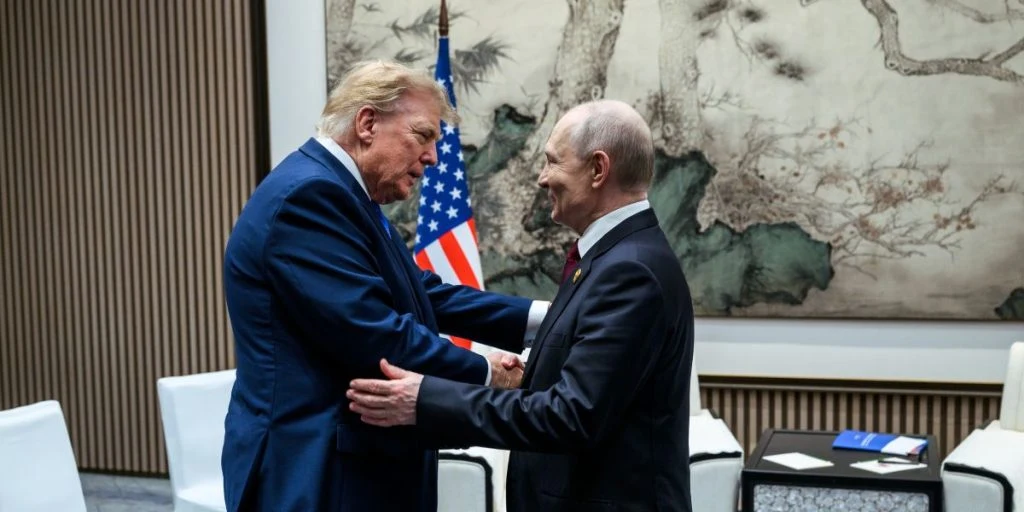
He said it was “embarrassing” for Moscow.


When world leaders gather around one table, observers quickly hunt for grand parallels in the history books.
After a high-profile summit in China, Donald Trump fuelled talk of a 1945 throwback online, though Cold War historian Sergey Radchenko says the reality looks very different.
Why Yalta falls flat
Trump, Xi Jinping, and Vladimir Putin met on November 19 during the APEC summit in Shenzhen, following reports in L’Express that talks could cover nuclear arms, Iran, and Ukraine.
Days later, Trump shared a social media graphic placing a photo of Putin, Xi, and himself alongside Allied leaders Joseph Stalin, Franklin D. Roosevelt, and Winston Churchill at the 1945 Yalta Conference, Kyiv Post reported.


Earlier, some Russian officials and outlets had floated the same Yalta parallel before the Kremlin formally rejected it, according to L’Express.
In an interview with L’Express ahead of the summit, Johns Hopkins professor Sergey Radchenko dismissed any Yalta comparison as “ridiculous” and “embarrassing” for Moscow.
“Today’s Russia is a joke compared to the Soviet Union,” Radchenko told L’Express, arguing that Moscow is stuck fighting over a narrow strip of eastern Donbas rather than rising as a superpower.
Putin also arrived weakened after Ukrainian drones partially destroyed the Kerch Bridge linking Russia and Crimea two days earlier, so Xi and Trump did a declining power a major favour by treating him as an equal, Radchenko told the French outlet.
China steps up while Europe holds clout
Hosting an unusual three-way summit signalled Beijing’s push to assert global leadership, even though China’s priorities do not always match Moscow’s, Radchenko told L’Express.
Meanwhile, the historian noted Trump risked standing outnumbered alongside two leaders accustomed to working together.
Even if Trump wanted to trade away Ukrainian interests for energy deals, Kyiv is still fighting back and holds real agency unlike occupied Poland in 1945, Radchenko said in the L’Express interview.
Putin also faces a shrinking window before Trump’s term ends in January 2029, weighing stubborn battlefield ambitions against the chance for concessions before 2028, Radchenko noted.
Europe missed the Shenzhen table, yet it “matters more than ever” as the primary financier of Kyiv’s war effort, Radchenko told L’Express.
Because European capitals now steer key decisions and hold real leverage, no outside powers can carve up the map over their heads, the historian concluded.



