
 Asger Risom

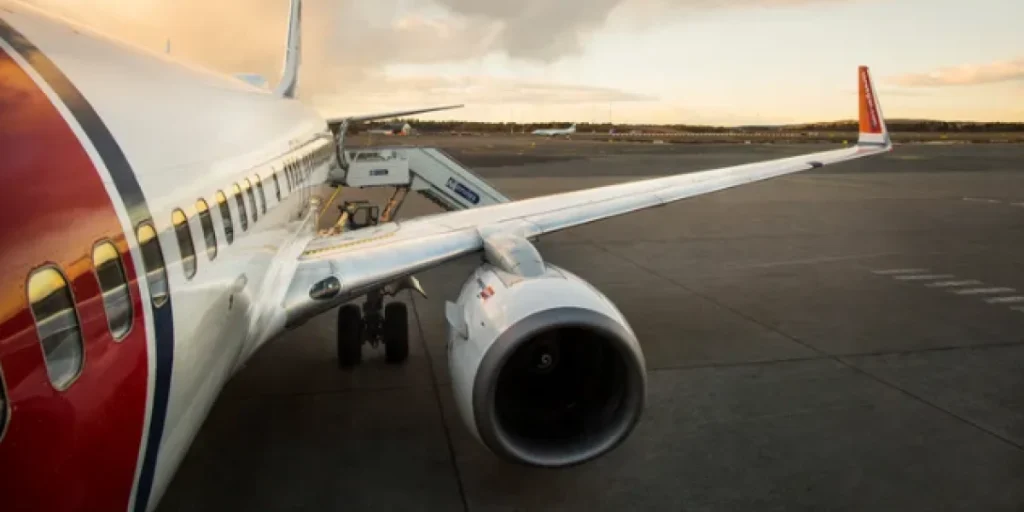
Flying east from New York to London routinely beats the return trip by an hour because pilots hitch a ride on a 200-mile-per-hour river of high-altitude wind.


Book a round-trip ticket between New York and London, and you will notice a strange quirk on your itinerary before you even pack a bag. The flight heading east across the Atlantic routinely lands about an hour faster than the exact same plane flying west on the return trip, even though the mileage between the two airports hasn’t changed by an inch. That missing hour isn’t an airline scheduling trick—it comes down to a giant, invisible river of wind six miles above the ocean that pilots either surf like a wave or dodge like oncoming traffic.
Why Earth’s spin isn’t giving eastbound planes a shortcut
When people first notice the time gap on transatlantic flights, they often assume it has something to do with the Earth spinning underneath the airplane. The logic sounds plausible at a glance, until you remember that the Earth rotates toward the east, which would actually help a westbound plane catch up to its destination rather than slow it down. More importantly, the atmosphere spins right along with the planet, meaning a jet taking off from JFK already carries Earth’s rotational momentum with it from the moment its wheels leave the runway.
As The Points Guy explains, the real culprit is the polar jet stream, a narrow band of hurricane-force wind roaring from west to east right at commercial cruising altitude. Sitting roughly thirty to forty thousand feet above the North Atlantic, this high-altitude current routinely blows at more than a hundred miles per hour and can top two hundred in the dead of winter. Because commercial airliners cruise in that exact slice of the sky, every transatlantic flight is essentially swimming either with or against a massive atmospheric current.
Think of it like paddling a kayak down a brisk river versus fighting your way back upstream. Your arms might move through the water at the exact same pace in both directions, yet your actual speed past the riverbank changes dramatically depending on which way the current is pushing. In aviation terms, a plane’s airspeed stays roughly the same both ways, while its ground speed gets a massive free boost heading toward Europe.


How clashing temperatures build a highway in the sky
That high-altitude wind current exists because of two basic forces: uneven sunlight heating the planet and the Earth’s constant rotation. Warm air near the equator expands and rises higher into the atmosphere than dense, frigid air sitting over the Arctic, creating a natural pressure imbalance that pushes upper-level air northward toward the pole. Left alone, that air would simply drift straight north from the tropics to the Arctic like steam rising off a radiator.
Because the Earth is spinning underneath that moving air, however, the Coriolis effect bends those northward winds sharply to the right in the Northern Hemisphere. Where bitter polar air slams into milder mid-latitude air, that deflection funnels the wind into a tight, meandering ribbon racing eastward around the globe. The sharper the temperature contrast between north and south, the faster that ribbon of air moves.
That is why the time difference between eastbound and westbound flights becomes especially dramatic between November and March. During winter, the Arctic plunges into months of darkness while the tropics stay warm, supercharging the temperature clash and cranking the jet stream up to ferocious speeds. By July, when northern temperatures warm up and narrow the gap, the jet stream weakens and shifts closer to the pole, trimming the east-west time difference down to forty-five minutes or so.
Surfing the tailwind east and dodging it on the way home
Airlines do not just passively accept whatever wind happens to blow across the ocean; dispatchers actively hunt for the jet stream before every departure. Before an eastbound flight leaves New York, flight planners map out the core of the strongest tailwinds and plot a curve straight into the fastest current they can safely ride. Catching a 150-mile-per-hour push from behind lets pilots throttle back slightly, saving thousands of gallons of jet fuel while still touching down at Heathrow well ahead of schedule.
On the return leg from London to New York, the game flips completely from catching a wave to staying out of its way. Flying straight into a 150-mile-per-hour headwind would burn enormous amounts of fuel and force heavy planes to make unscheduled refueling stops in Canada or Iceland. Instead, dispatchers steer westbound jets hundreds of miles north toward Greenland or south toward the Azores, willingly flying a longer curve on the map to stay in calmer air.
Because the jet stream snakes around like a loose garden hose from day to day, there is no single fixed highway across the North Atlantic. Every twelve hours, air traffic controllers in Prestwick and Gander publish a fresh set of parallel flight lanes—known as the North Atlantic Organized Track System—tailored to that day’s wind forecast. Dozens of overnight jets line up along those shifting corridors like commuter trains, spaced miles apart in the dark without radar coverage over the open ocean.
When a winter storm turns a passenger jet into a record-breaker
Every few winters, an unusually deep polar freeze collides with warm Atlantic air and pushes the jet stream into overdrive. During Storm Ciara in February 2020, winds at cruising altitude surged past two hundred miles per hour, turning the North Atlantic into an express lane for anyone headed east. A British Airways Boeing 747 caught the heart of that blast and made the trip from New York to London in four hours and fifty-six minutes, smashing the subsonic transatlantic record by more than fifteen minutes.
At its peak during that crossing, the jet reached a ground speed of 825 miles per hour—technically faster than the speed of sound at sea level. Passengers didn’t hear a sonic boom, though, because the airplane was still slicing through its surrounding pocket of moving air at normal cruising speed while the whole air mass carried it forward. Meanwhile, flights heading west against that exact same storm struggled through brutal headwinds, tacking well over an hour onto their usual travel times.
Even on an ordinary Tuesday without a named storm, that one-way wind tax shapes how airlines build their global timetables. Carriers pad extra buffer minutes onto westbound schedules so planes don’t constantly miss connecting flights on the American side of the pond. Next time you groan at an eight-hour flight back from Europe after breezing over in six and a half, you are simply paying the return toll on the same wind that gave you a free ride over.



