
 Kenneth Glad
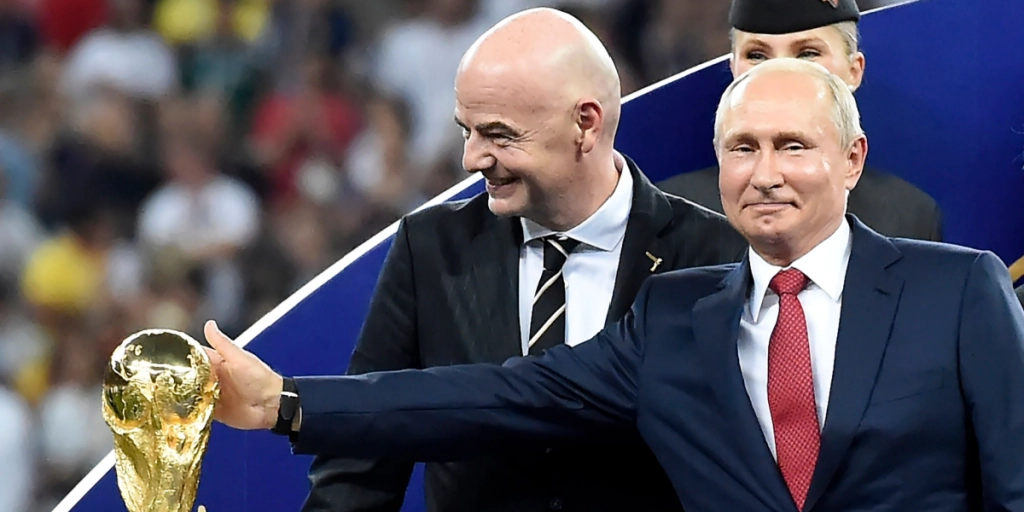
International sport is once again at the mercy of the geopolitical fault lines created by Russia’s war against Ukraine. Football and Olympic officials are grappling with whether sporting isolation can be maintained as the conflict drags on, and the outcome could have lasting consequences for the authority and credibility of governing bodies.

The dispute over Russia’s participation reveals the delicate power balance within FIFA, UEFA, and the International Olympic Committee, where key decisions are shaped not just by official statutes but by the politics of member-state resistance.
Russia has been excluded from FIFA and UEFA competitions since its invasion of Ukraine in 2022. This decision was driven more by a refusal from European federations to play Russian teams than by a formal disciplinary vote.
This political pressure continues to influence how decisions are made. Any reversal of the ban would require a change in the war’s trajectory or a collapse of opposition within Europe, where FIFA’s governing body, the FIFA Council, and UEFA’s Executive Committee remain firmly opposed to lifting the restrictions.
Infantino speaks out
FIFA president Gianni Infantino has however called for a reassessment of Russia’s ban, claiming that the exclusion has not altered political or sporting behavior.


As reported by Deutsche Welle, Infantino suggested that the ban had only fueled further frustration and hatred, and that at least in the youth categories, Russia should be allowed to return to international football.
Infantino has repeatedly stated that he hopes to see Russia reintegrated into the global football fold, though UEFA president Aleksander Čeferin has remained steadfast that the invasion must first come to an end.
The Guardian notes that the debate reached new heights after IOC president Kirsty Coventry’s address to the IOC congress in Milan. While not mentioning Russia by name, she argued that sport should remain a neutral ground where athletes are not penalized for their governments’ actions.
Russian IOC member Shamil Tarpischev welcomed Coventry’s remarks, noting that political factors should not dominate sport, and emphasized improved relations with the IOC.
Ukraine’s backlash
Ukraine’s response was sharp. Sports minister Matvii Bidnyi told Sky Sports that Infantino’s remarks were detached from the harsh realities of war:
“Gianni Infantino’s words sound irresponsible ― not to say infantile. They detach football from the reality in which children are being killed.”
Foreign minister Andrii Sybiha escalated the criticism on X, writing, “Six-hundred seventy-nine Ukrainian girls and boys will never be able to play football — Russia killed them.”
Click to display external content from t.co,
- You can always enable and disable third-party content.

You agree to display external third-party content. Personal data may be sent to the provider of the content and other third-party services.
Sybiha warned that lifting bans while the war continues would be remembered by future sports governance bodies, legal panels, and IOC reviews as a historic moral failure.
Sports historians note that previous bans, such as those on Yugoslavia in the 1990s and apartheid-era South Africa, ended only after significant political change, not gradual re-engagement. Those precedents suggest that easing restrictions now could undermine the credibility of sports governing bodies in enforcing collective sanctions.
Given the ongoing conflict, insiders within FIFA and UEFA privately acknowledge that any formal vote to reinstate Russia would almost certainly fail. The resistance within Europe remains formidable, and the decision-makers on these matters are unlikely to override such opposition without major political shifts.
Sources: Sky Sports, Deutsche Welle, The Guardian



