
 Jens Asbjørn Bøgen
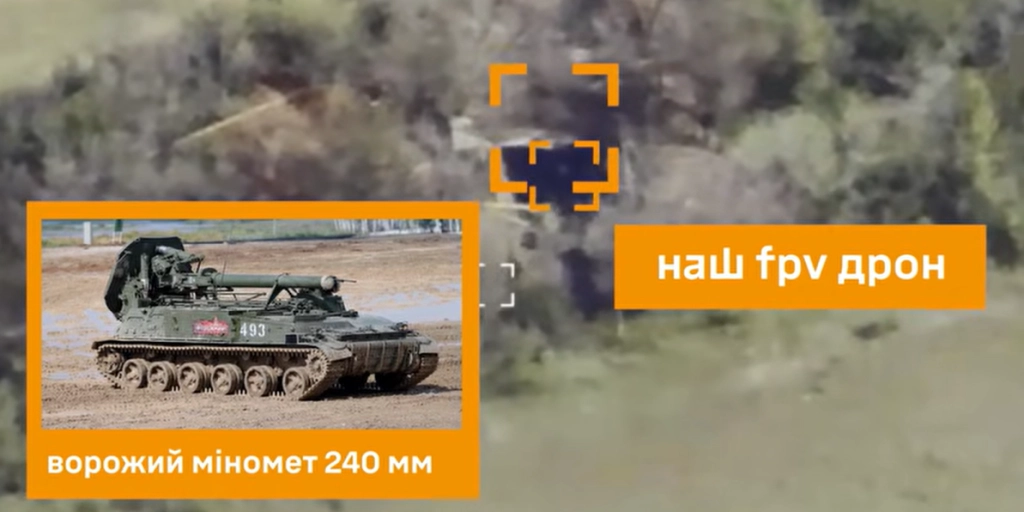
Mortars may be deadly, but they are heavy and slow – and drones are fast …


In modern warfare, the sky is full of eyes watching every move on the ground.
When heavily armored giants roll out to the battlefield, they often find that hiding is no longer an option.
A recent encounter between a Russian morter position and a Ukrainian drone shows exactly what happens when old-school firepower meets new-era technology.
Uncovering the giant
Drone operators from the Ukrainian armed forces recently spotted and dismantled a formidable piece of Russian military hardware.


According to the 118th Separate Mechanized Brigade, their cameras locked onto a massive 240mm self-propelled mortar.
The system in question is the 2S4 Tyulpan, a weapon known for inflicting massive damage. It was taken out of action by the Sirius unmanned systems battalion in a precision strike on April 30.
According to the statement from the brigade, Ukrainian troops referred to the massive mortar as a “high-value” asset. They acknowledged its steep cost and its significant impact on the front lines.
Article continues below.
Click to display external content from iFrames except google ads,
- You can always enable and disable third-party content.

You agree to display external third-party content. Personal data may be sent to the provider of the content and other third-party services.
Firepower from above
Built during the late Soviet era, this massive mortar system was engineered to crack open fortified structures. It uses an incredibly steep firing angle to drop explosives right on top of targets, bypassing frontal defenses.
The sheer size of the ammunition it uses is staggering. Standard explosive rounds tip the scales at roughly 130 kilograms, while specialized rocket-boosted versions can weigh more than 220 kilograms.
It was explicitly built to clear out bunkers and heavily reinforced positions. To do this, it can launch various specialized projectiles, including precision-guided munitions that punch through terrain cover.
Heavy and exposed
Despite packing a devastating punch, the giant mortar comes with serious flaws. The machinery is bulky and slow, taking a considerable amount of time just to set up for a firing mission.
Its rate of fire is also sluggish, managing only about one shot per minute. These factors leave the weapon highly exposed to the fast, agile drone strikes that define current combat operations.
As detailed in the original news report, the unit released a remark accompanying the strike footage noting that the “season of tulips” for Russian forces had “ended quickly.”
This recent hit follows a broader pattern of long-range successes. According to the original news report, Ukraine’s “Achilles” brigade of the Unmanned Systems Forces previously struck a Russian Nebo-M radar installation located roughly 100 kilometers away from the border.
Sources: 118th Separate Mechanized Brigade, Unmanned Systems Forces, United24Media



