
 Asger Risom
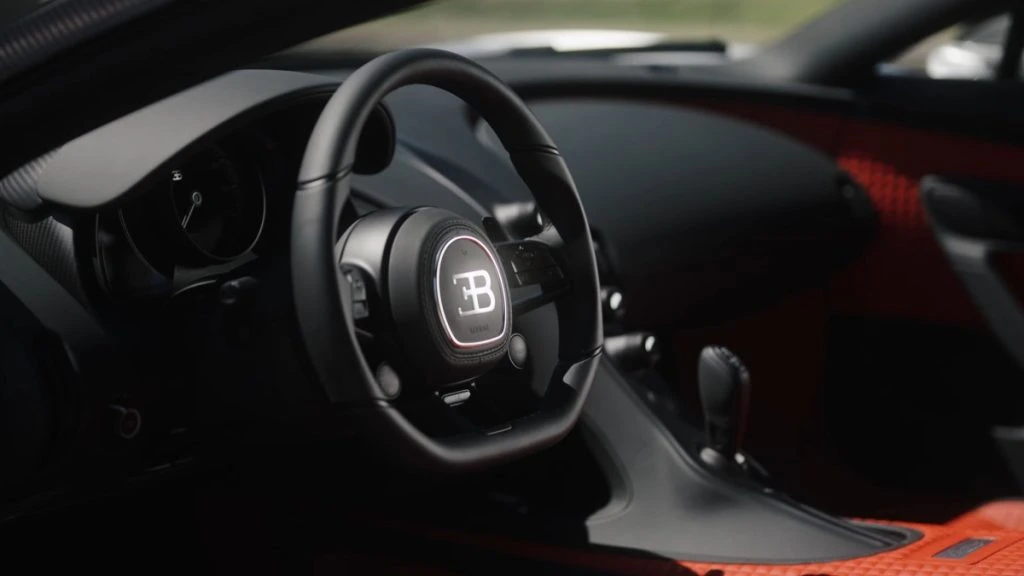
Bugatti CEO Mate Rimac and other top industry designers are pushing back against the touchscreen arms race. Between rising consumer frustration and new 2026 Euro NCAP safety rules mandating physical buttons, the era of the buttonless car interior is coming to an end.

The European automotive industry has spent the last decade locked in a bizarre arms race: turning car interiors into giant rolling iPads. For years, the metric of innovation was simply adding larger screens, eliminating physical buttons, and bragging about raw computing power.
But according to the CEO of Bugatti, that strategy is a dead end.
As reported by Motor1, Bugatti Rimac CEO Mate Rimac recently delivered a blunt message to the European auto industry: stop trying to beat Chinese automakers at the screen game, because you will lose. Instead of fixating on digital displays and charging speeds, Rimac argues that European manufacturers need to return to their roots—craftsmanship, tactile physical controls, and genuine premium materials that cannot be easily replicated by software.
“Screens are not luxury”
Rimac’s core argument is that a 12-inch display is fundamentally the same piece of hardware whether it sits in a €30,000 family crossover or a €300,000 supercar. If luxury is defined purely by technology, legacy brands lose their inherent value. Rimac compares the future of European luxury cars to the Swiss watch industry: they didn’t survive the digital watch boom of the 1980s by making cheaper electronics. They survived by doubling down on analog craftsmanship, mechanical complexity, and exclusivity.


Bugatti is not alone in this realization. The backlash against screen-dominated interiors is becoming a widespread industry pattern among top-tier brands.
In early 2025, Mercedes-Benz design chief Gorden Wagener echoed Rimac’s exact sentiment, publicly admitting that “screens are not luxury” and acknowledging that consumer fatigue with massive touchscreens is real. Wagener noted that customers increasingly view screen-heavy EVs as disposable electronic devices, whereas traditional analog cars are perceived like high-end mechanical watches.
Similarly, Aston Martin has actively pushed back against the touchscreen trend. The British automaker’s design team utilizes what they call the “piss-off factor” to determine interior layouts. Aston Martin designers realized that burying essential controls—like climate, heated seats, and volume—inside sub-menus actively infuriated drivers, leading them to aggressively reintroduce physical switches and knobs in their latest models to preserve the premium experience.
The safety mandate: Euro NCAP forces a return to buttons
The pivot away from touchscreens isn’t just about luxury aesthetics; it has now become a matter of regulatory survival.
For years, the industry ignored complaints that touchscreens force drivers to take their eyes off the road. But as of January 2026, Euro NCAP implemented strict new safety protocols aimed directly at touchscreen overload. Automakers can no longer achieve a coveted five-star safety rating if essential functions—such as windshield wipers, hazard lights, turn signals, the horn, and emergency calling—are buried in digital menus. They must be operated via dedicated physical controls.
This safety mandate effectively kills the minimalist, completely “buttonless” cabin pioneered by companies like Tesla, forcing mainstream and luxury automakers alike to integrate tactile switches back into the dashboard.
Finding a new identity
As Chinese automakers successfully move upmarket—offering massive screens, advanced software, and plush interiors at highly competitive price points—European legacy brands are facing an identity crisis.
Rimac’s broader point is that simply copying tech trends will strip European automakers of their competitive moat. While mainstream brands still need to figure out how to produce affordable, practical vehicles, the high-end market is finding its answer. The era of the hyperscreen as the ultimate status symbol is fading. True luxury is quietly returning to what it always was: tactile, beautifully crafted, and distinctly analog.



