
 Asger Risom
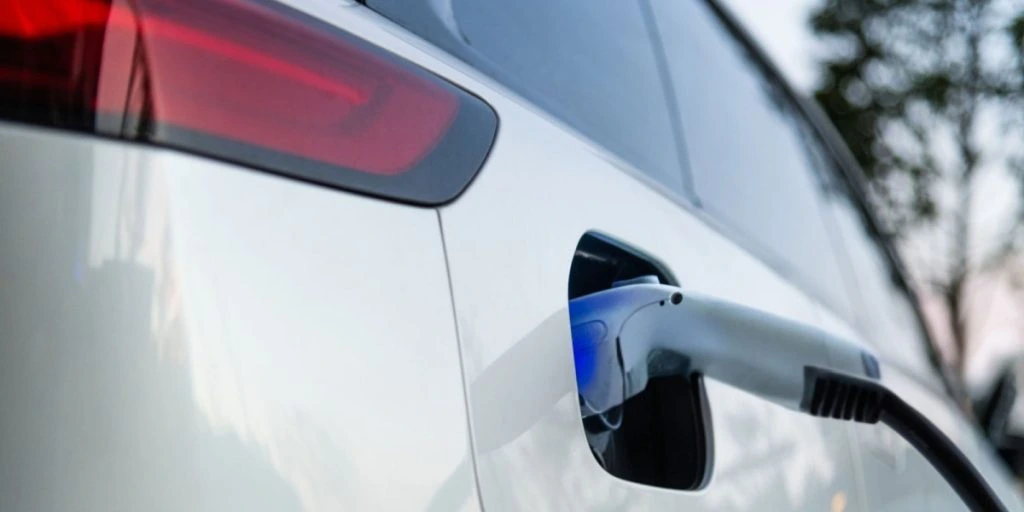
Germany’s new MiSpeL rules clear bureaucratic hurdles for vehicle-to-grid power trading, offering EV owners a way to generate passive income from their parked cars without driving for rideshares or renting out their keys.


Most personal cars spend 95 percent of their lifespan sitting on pavement, slowly rotting away while bleeding cash on insurance and depreciation. Until now, clawing back any of that money meant putting in actual labor: grinding through late-night shifts for Uber, driving a private cab, or handing your keys over to a stranger on Turo and hoping they return your wheels intact.
Germany is now building a system where your driveway ornament can earn its keep without you ever touching the steering wheel.
According to an official release from the Bundesnetzagentur (Germany’s Federal Network Agency) and reporting from InsideEVs, German regulators have formally adopted a new framework called MiSpeL. Short for Marktintegration von Stromspeichern und Ladepunkten (Market Integration of Electricity Storage Systems and Charging Points), the policy guts the bureaucratic nightmare that previously stopped EV batteries from trading electricity on the open market.
Turning driveway paperweights into pocket change
Unlike ridesharing, which chews through tires, burns out suspension components, and eats up your free time, vehicle-to-grid (V2G) tech turns an EV into a quiet energy trader. You plug in at night when renewable power is plentiful and wholesale electricity rates crater, then feed that power back to utility companies when peak evening demand sends prices through the roof.


On paper, it sounds like an obvious win. In practice, German bureaucracy spent years choking the idea.
Under previous tax laws, funneling grid power into a car battery that also held electricity from rooftop solar panels created a legal headache over renewable energy subsidies. The new MiSpeL rules kill off that accounting trap. Homeowners can now store solar generation and cheap grid power in the same vehicle without forfeiting their solar payouts or getting slapped with double grid fees. For households running rooftop solar arrays under 30 kWp, regulators also introduced a simplified flat-rate calculation, saving owners from having to install expensive secondary smart meters.
The hardware bottleneck (and America’s V2L hangover)
There is a catch: you cannot pull this off with a cheap adapter. A standard vehicle-to-load (V2L) plug—the kind that lets you run a toaster at a campsite or plug in a power tool on a job site—will not work for grid trading. Participating requires a full V2G-compatible vehicle, a bidirectional wallbox charger, a smart meter, and an energy provider that supports dynamic, time-of-use tariffs.
That hardware requirement underlines a growing tech divide across the Atlantic. As we covered in our recent breakdown of Tesla’s latest Model 3 updates, Tesla is only now rolling out basic V2L outlets to its Model 3s in Asia and Oceania, while leaving the feature completely off the options sheet for newly delivered American cars.
While U.S. drivers are still waiting for the ability to power a camping fridge from their tailgate, European regulators are already treating car batteries as distributed power plants that feed entire cities.
Europe’s decentralized power grid is coming together
Germany’s automotive lobbying body, the VDA, signed off on the new rules alongside major European manufacturers. Local grid operators and utility firms have until September 30, 2027, to get their billing systems fully aligned with the MiSpeL framework, though several regional suppliers plan to roll out active V2G tariffs much sooner.
The shift fits a broader pattern across the continent. The Netherlands is embedding bidirectional chargers directly into public street parking, the UK is using electricity bill credits to reward drivers who feed power back during peak hours, and French automakers are bundling bidirectional home chargers into new car sales.
As these systems click into place, the fundamental math of owning a car is changing. Instead of sitting idle as a pure money pit, a plugged-in EV can finally start acting like a tiny, automated hedge fund parked outside your front door.



