
 Asger Risom
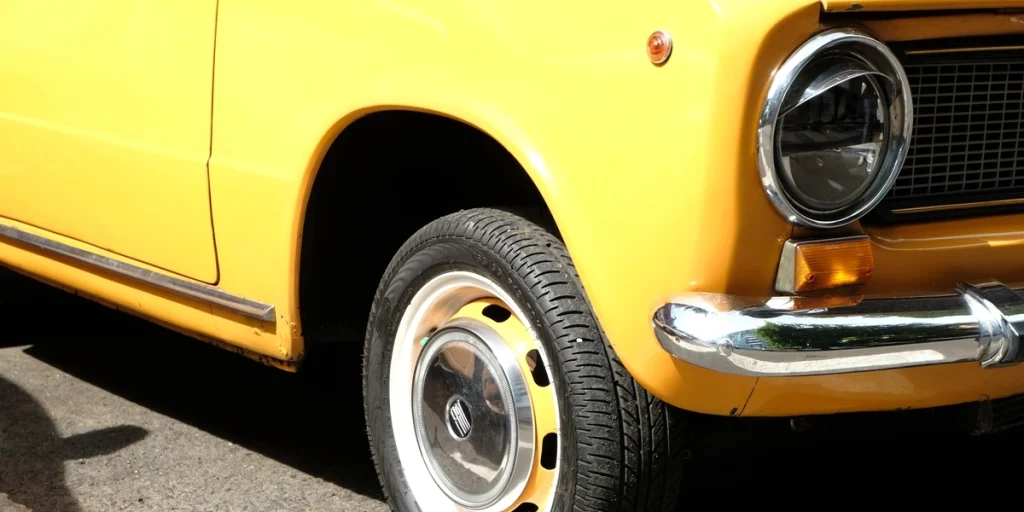
The Fiat 124 turns 60. Originally launched in 1966 as a modest Italian family sedan, Dante Giacosa’s design became a global powerhouse with over 20 million units built under licensing deals across Spain, Turkey, India, and the Soviet Union.


When Fiat pulled the sheet off its brand-new 124 sedan at the 1966 Geneva Motor Show, nobody fainted over hypercar acceleration or futuristic styling. It was a modest, square-jawed four-door measuring just over four meters long. Yet chief engineer Dante Giacosa had stumbled onto a mechanical blueprint that would prove almost indestructible.
According to elEconomista, Fiat is celebrating the 60th anniversary of a model that eventually spawned more than 20 million units worldwide over a 40-year production run—putting it squarely in the pantheon of the most manufactured automotive platforms in history.
A mechanical chameleon in steel
The basic recipe of the 124 was disarmingly simple. A 1.2-liter four-cylinder engine put out a modest 60 horsepower, but because the entire car weighed just 855 kilograms, it moved with surprising agility. Its front-engine, rear-wheel-drive layout with disc brakes on all four wheels gave working-class families access to engineering specs normally reserved for far more expensive machinery.
The real genius of the 124, however, was its ability to clone itself. Out of those 20 million units built globally, barely 1.5 million actually rolled off Fiat’s native assembly lines in Italy. The rest of the world simply licensed the blueprints and built their own local variants.


In Spain, it became the SEAT 124, putting a nation on wheels. In the Soviet Union, engineers heavily reinforced the chassis to withstand brutal Siberian winters and unpaved roads, rebranding it as the legendary Lada. In Turkey, it was the Tofaş, and in India, it lived on as the Premier 118N. Long before modern automakers started preaching the gospel of global shared platforms, Fiat had built a worldwide franchise in steel.
From sensible family sedan to American sports car legend
While the four-door sedan did the heavy lifting, Fiat wasted no time leveraging the platform’s lighter side. The same year the sedan debuted, the factory unveiled the Fiat 124 Sport Spider—a sleek, Pininfarina-styled two-seater that quickly became a darling among privateer rally racers, eventually spawning the aggressive Fiat Abarth 124 Rally.
Oddly enough, the dainty Italian roadster found its biggest fan base across the Atlantic. Nearly 75 percent of all Sport Spiders produced were exported directly to the United States, where the car enjoyed a major cult following and remained on showroom floors until 1983.
Stellantis is marking the 60-year milestone at its Heritage Hub in Turin with an exhibition titled “Mi chiamo Fiat 124” through the end of November, gathering everything from utilitarian family haulers to dirt-spattering rally champions.



