
 Lauge Risom Koch
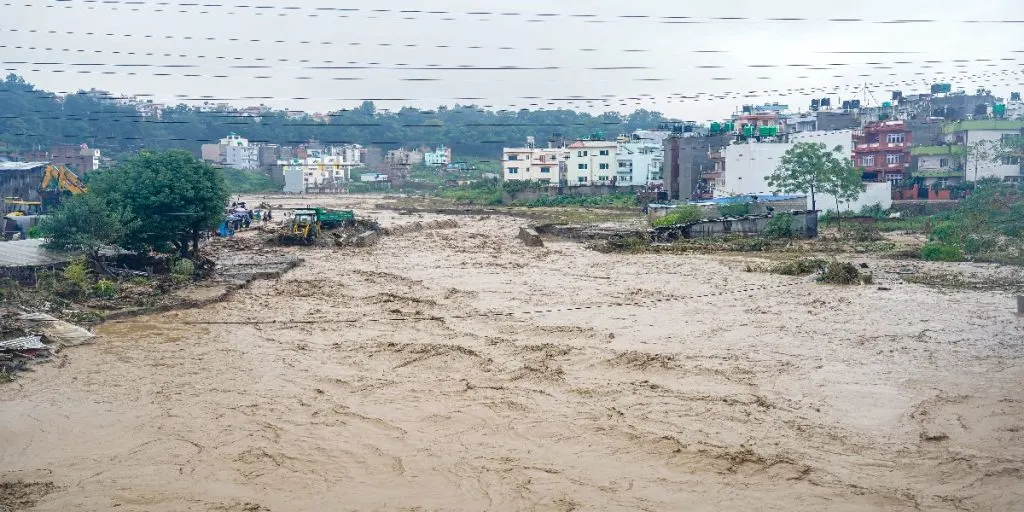
Massive flash floods triggered by a glacial avalanche killed at least 98 people and left hundreds missing across the Nepal-China border.
Massive flash floods devastated the border region between Nepal and China on Wednesday. The natural disaster killed at least 98 people and left hundreds of others missing across both countries. The sudden surge of water swept through several communities and halted travel in the Himalayan area.
Assessing the tragic toll
The sudden flooding caused significant casualties across the mountainous border region. According to a report by AP News, the prime minister’s office in Nepal reported at least 95 fatalities. Meanwhile, Chinese state media confirmed three dead and 265 missing individuals following a mudslide in Tibet’s Gyirong County.
Officials in Nepal reported that 403 people remain unaccounted for in the affected areas. This staggering number includes 341 foreign nationals and at least 28 local police officers. As noted by AP News, the missing foreigners include 133 Indian pilgrims, 47 Americans, 34 Australians, 33 Britons, and 24 Canadians.
Dozens of missing Nepali citizens were trekking near the Gosaikunda lake when the disaster struck. The Bhotekoshi river flooded early Wednesday morning and destroyed several villages along its path. Images from the hard-hit Nuwakot district showed building second floors slathered in mud and vehicles completely buried.


Coordinating rescue operations
Authorities across multiple nations initiated large-scale search and rescue missions to locate survivors. Chinese President Xi Jinping ordered officials to step up their recovery efforts in the border region. Nepali government spokesperson Sasmit Pokharel told AP News, “We have asked both India and China to help us with the rescue efforts.”
Indian Prime Minister Narendra Modi offered immediate assistance during a conversation with Nepal’s leadership. Modi stated on social media that his teams are closely coordinating on rescue and relief efforts. According to AP News, several European nations and Australia also expressed solidarity and encouraged people to follow local safety advisories.
South Korean officials reported that nine of their citizens working on a hydropower plant remain missing. The Malaysian foreign ministry also lost contact with 11 citizens believed to be in the hard-hit Rasuwa district. As highlighted by AP News, officials have warned residents across several districts to stay away from the banks of major rivers.
Tracing the climate impact
Climate experts determined that an ice rock avalanche from a glacier likely triggered the deadly flood. Disaster risk specialist Saswata Sanyal explained that this avalanche blocked the river and released a sudden surge downstream. As reported by AP News, the Lhende Khola river has now flooded twice in the past 14 months.
The Himalayan region remains especially vulnerable to heavy rains and landslides due to rapid warming. Researchers in Kathmandu found that glaciers across the Hindu Kush Himalaya region are melting at an accelerating rate. According to AP News, these regional ice loss rates have increased by 100% since the year 2000.
The same region experienced similar glacial lake overflows due to high temperatures last August. That previous disaster killed nine people and damaged critical infrastructure connecting the two nations. As noted by AP News, human-caused climate change continues to increase the frequency of extreme weather events worldwide.



