
 Nicolai Haugsted
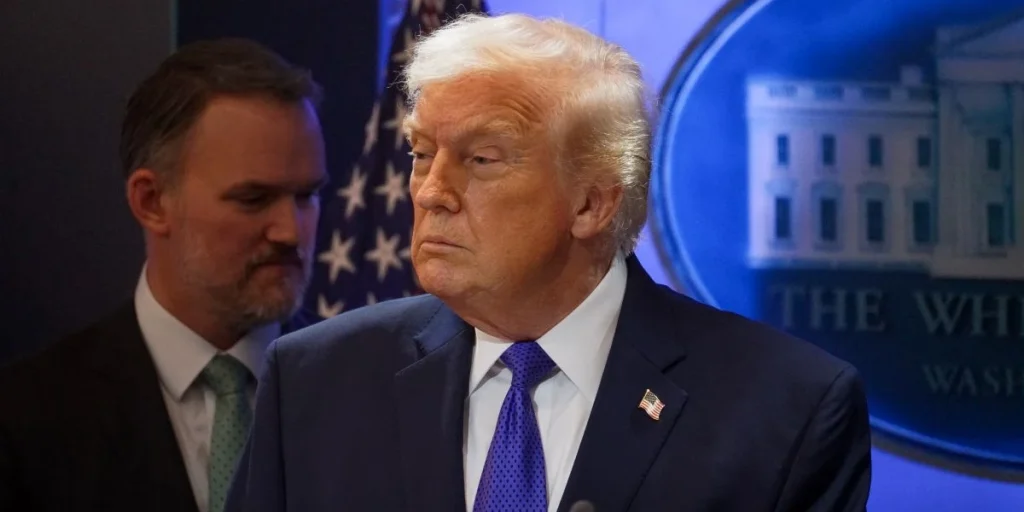
The president appeared to lose track of his geographical references before accusing Canada of taking advantage of the United States.

Trump appears to confuse Alaska with Canada before encouraging crowd to boo neighboring country
Donald Trump’s latest campaign appearance delivered another collection of remarks that had little to do with the usual political talking points, including an unusual exchange about America’s northern neighbor.
The 80-year-old president was addressing supporters in Alaska when his comments about the importance of the state appeared to get tangled up with references to Canada.
Rather than immediately clarifying the geographical confusion, Trump went on to ask the audience what they thought of the neighboring country.


The question prompted boos from the crowd, giving the president an opportunity to renew his criticism of Canada’s relationship with the United States.
Click to display external content from x,
- You can always enable and disable third-party content.

You agree to display external third-party content. Personal data may be sent to the provider of the content and other third-party services.
A geographical mix-up in Alaska
Trump’s apparent confusion emerged while he was discussing members of his administration who had accompanied him to the campaign event.
The president explained that his Cabinet officials rarely travel together because of their demanding schedules.
“Normally they don’t travel. I think this would be one of the few times, they’re so busy doing things, but they felt Canada is so important,” Trump told supporters.
There was, however, a geographical problem with that explanation.
Trump was speaking in Alaska, which has been part of the United States since its purchase from Russia in 1867.
The president continued by referring to his administration’s work on matters affecting the audience’s home state.
“One of I would say the biggest things they’ve done really pertained to your state, and not letting…” he said, leaving the thought unfinished.
His remarks suggested that he was referring to Alaska, although he did not name the state in that passage.
The available comments do not establish whether Trump genuinely confused his location or simply misspoke.
Canada gets an unexpected reception
Trump soon returned to the subject of Canada, this time inviting the audience to share its opinion.
“And by the way, Canada, I don’t know if anybody, does anybody like Canada?” he asked.
Supporters responded with boos and jeers.
Trump followed up by accusing the neighboring country of taking advantage of the United States.
“They have ripped us off for years but no longer, you notice? No longer,” he declared.
The president’s comments reflected his longstanding criticism of Canada’s trade relationship with Washington.
Trump then made another remark that appeared to bring the two locations together.
“They have been fighting for Alaska for a long time and now they’re seeing the fruits pay off,” he said.
The president did not explain precisely who he was referring to in that statement.
An unusual moment during presidential pardons
Canada was not the only subject to produce an unexpected exchange during Trump’s appearance in Wasilla on Tuesday, October 13.
The president also signed pardons for Zachary Czubak and Patrick Fleming, co-owners of Arm Rippin Toys, an Alaska business involved in modifying diesel vehicles.
The two men had pleaded guilty to violating the Clean Air Act by tampering with emissions-monitoring systems and removing pollution-control equipment from at least 37 vehicles between July 2019 and September 2020.
Trump criticized their prosecution, arguing that the punishment was excessive.
“They wanted to put them in jail for 10 years because they fixed an engine, how sick,” he told the crowd.
After signing the documents, the president offered an unusual explanation of what receiving a pardon meant.
“That means you’re as clean as a newborn baby’s a–,” Trump said, prompting laughter from the audience.
He then questioned the expression itself.
“Now, I never understood that. Why is that so clean?”
The exchange added a moment of humor to a rally otherwise focused on economic development, government regulations and the approaching midterm elections.
Alaska Public Media
Trump had traveled to Alaska to support Republican Senator Dan Sullivan, who faces Democratic challenger Mary Peltola in the November 3 election.
The president’s visit to Wasilla was politically significant because Alaska has traditionally favored Republicans in federal elections, yet the Senate contest has attracted considerable national attention.
During the rally, Trump also promoted his administration’s plans for energy development, including a proposed natural gas pipeline and investment commitments involving Taiwan.
His remarks about Canada were particularly notable given Alaska’s extensive border and commercial relationship with its northern neighbor.



