
 Daniel Wolfram
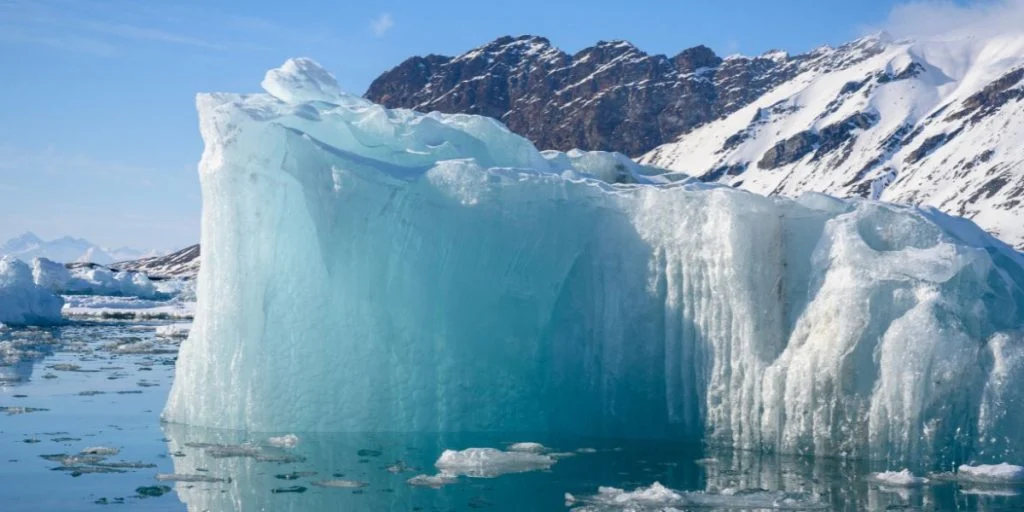
Global warming is melting Switzerland’s glaciers.


A dramatic transformation is happening across the Alps.
According to a report by Swiss climate monitoring groups cited by The Guardian, Switzerland lost nearly 20% of its glacier ice in just five years.
In the first eight months of 2026, total ice volume shrank by another 5.5%.
Glaciers are vanishing in plain sight
“I visited one last week and it’s so impressive to stand in this moonlike landscape where there was a big layer of ice, an extensive glacier, just a few years ago,” said lead author Matthias Huss, a glaciologist at ETH Zürich, to The Guardian.


“And now it’s a rock desert where there are some scattered blocks of old ice still lying around and melting on the hot rocks.”
According to Huss, entire ice fields are vanishing before scientists can even tally the loss.
Hollowed from within
The ice is melting from the inside out. Glaciers are losing up to four meters of average thickness in a year as subglacial streams carve out hidden caverns beneath the surface.
“You have huge holes like cheese in the middle of the ice that have collapsing roofs,” Huss explained. “These are processes that tear the glaciers apart and make them retreat even faster.”
MeteoSwiss reports that April through September this year was the warmest and driest summer since 1864. Human carbon pollution has warmed the planet by 1.4 degrees Celsius, driving European mountain temperatures up twice as fast as the global average.
An explosion of melt
Huss recently returned to the Griess Glacier, which he studied as a PhD student. Over the past two decades, that single ice mass lost 99% of its area.
“What was different at that time is that the rates of retreat were still kind of at a normal level,” said Huss.
“What we are seeing now is a complete explosion of these melt rates, leading to the disintegration of glaciers. They’re really just falling apart.”



