
 Kenneth Glad
Time rarely slows down the reach of justice, even as decades blur the memories of war. Across Europe, legal teams are racing against the clock to address atrocities committed more than eighty years ago. Now, a fresh inquiry in Germany shows that age alone will not stop prosecutors from seeking answers.


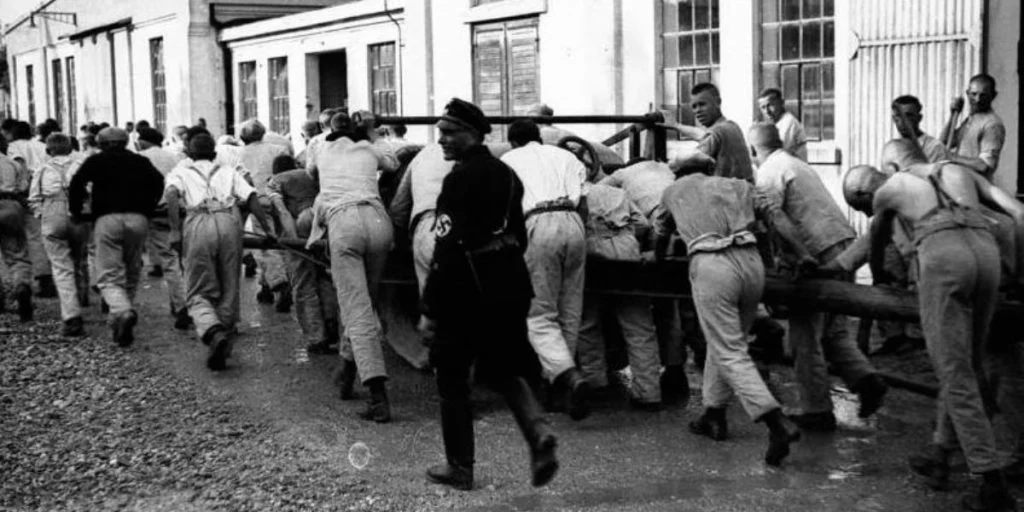
German authorities are investigating a 105-year-old man accused of acting as an accessory to multiple murders during the Second World War. According to local prosecutors, the suspect served as a guard at Stalag 326 VI K.
“The 105-year-old suspect is thought to have been a guard at the prisoner of war camp Stalag 326 VI K in the Senne region of western Germany,” prosecutors said in an official statement. They added that he is “accused of being an accessory to multiple murders owing to his activities there.”
Between 1941 and 1945, the facility held up to 200,000 Soviet prisoners, reports The Guardian. American soldiers finally liberated the grounds in April 1945, but thousands died there.
Changing the law
This case comes from an urgent, last-minute push by the judiciary to prosecute former camp workers before they pass away. For decades following the Second World War, lower-level staff escaped trial because officials viewed their roles as minor or insignificant to the regime’s broader goals.


That changed in 2011 with the landmark trial of John Demjanjuk. Prosecutors spent years seeking the Ukraine-born guard’s extradition from his Ohio home to Germany before a court finally convicted the former Sobibór guard for complicity in over 28,000 murders, setting a major judicial precedent.
Since then, prosecutors no longer need proof of a direct killing. Being an active cog in the camp machine is enough to face charges, paving the way for nonagenarians and centenarians to stand trial. Though Demjanjuk died at age 91 in March 2012 while awaiting appeal, his case fundamentally lowered the bar for proving complicity.
Race against time
Recent years have seen several trials involving very elderly defendants. Irmgard Furchner, a former concentration camp secretary, received a two-year suspended sentence for her role as an accessory to murder.
Another guard, Josef Schütz, received a five-year sentence in 2022 at age 101. He passed away the following year before serving time.
The current case began after specialized investigators in Ludwigsburg transferred their preliminary work to Dortmund prosecutors. History shows that even when trials cannot reach a final verdict, the open courtrooms offer a public record of tragic events that must not be forgotten.
Source: The Guardian



