
 Kenneth Glad
An unconventional waterfront development aims to combine tourism with environmental education. Its final form will determine how closely the completed attraction resembles the ambitious concept presented to the public.

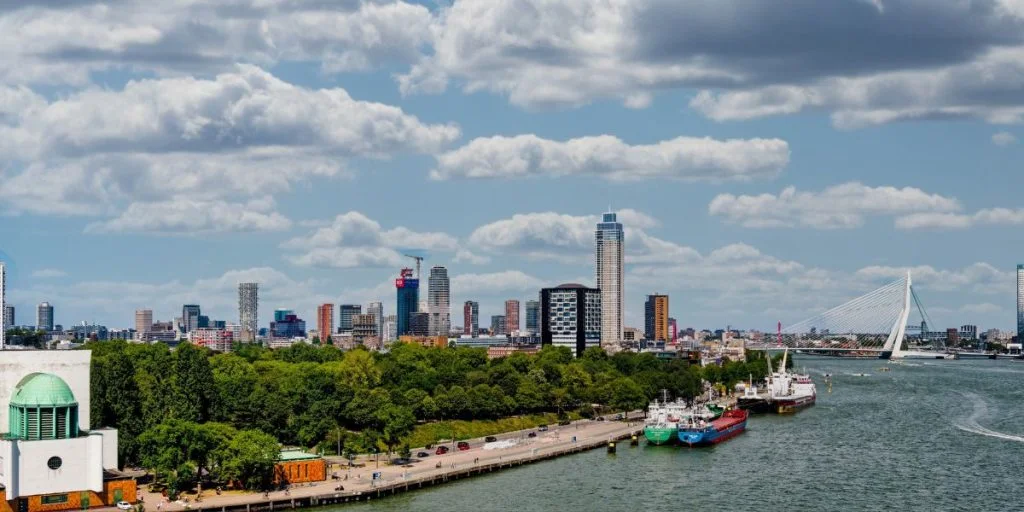
A major attraction is planned beside the Maas, the river running through Rotterdam and forming part of the Rhine-Meuse delta. The scheme is designed as a cluster of enormous artificial rock structures covered with vegetation.
Dutch architecture studio MVRDV has been selected to develop the project after winning a competition seeking a “new world wonder”, according to The Guardian.
Dutch entrepreneur Don Ritzen is closely associated with the initiative. He became known through Rockstart, a venture capital fund focused on green technology startups, and is involved with the nonprofit organisation Shift.
Environmental ideas shape the plan
The EUR 240 million development is planned to include Elysium, an immersive attraction focused on sustainability and circular living. The Guardian reports expected admission prices of EUR 20 to EUR 45, with individuals, companies and organisations among its intended audiences.


Plans also include a hotel, conference centre, food court and viewing deck. The project is intended to anchor Waterkant, a larger redevelopment on Rotterdam’s southern waterfront, where land had previously been considered for a new Feyenoord football stadium.
MVRDV’s competition images show stacked rock-like forms surrounded by extensive planting. An earlier waterfall feature has already been removed, The Guardian reports, showing that the design is changing as the proposal develops.
Rotterdam has long been associated with architectural experimentation, particularly after extensive rebuilding followed the destruction of large parts of the city during the Second World War.
Previous project brings scrutiny
MVRDV’s Marble Arch Mound in London has become an unavoidable comparison. The temporary planted hill suffered cost overruns, construction problems and criticism after its finished appearance failed to match the lush promotional images.
Dutch architectural historian Wouter Vanstiphout has also questioned the relationship between the Rotterdam scheme’s environmental ambitions and the amount of new construction involved.
The setting adds another dimension. Much of Rotterdam is below sea level and more than half of the Netherlands’ land area is vulnerable to flooding.
The Rotterdam design remains under development. With the waterfall already removed, further changes could emerge as MVRDV turns its competition proposal into a structure that can be built on the waterfront.
Sources: The Guardian



