
 Jens Asbjørn Bøgen

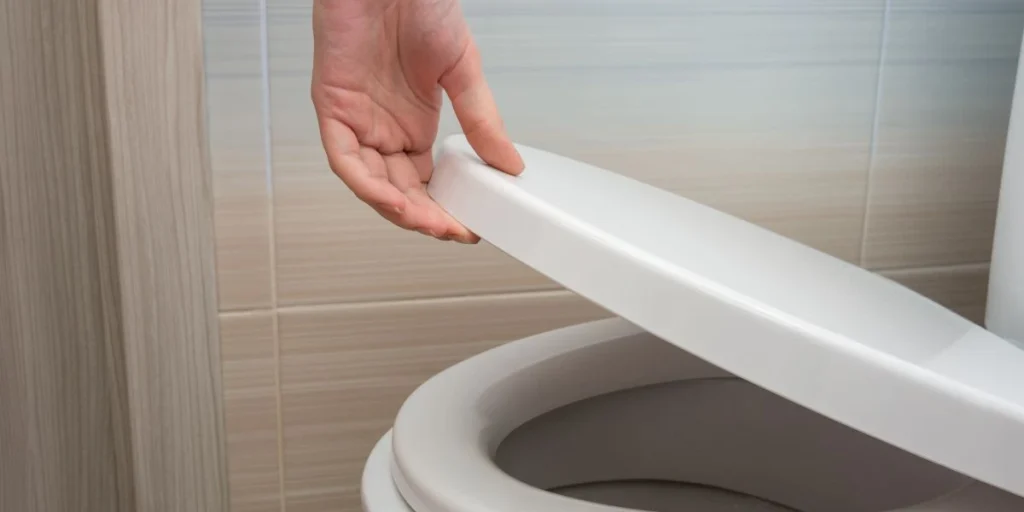
It is one of those bathroom debates that quietly splits men along cultural lines.


In Germany, sitting down to urinate is so routine that there is a dedicated word for a man who does it: Sitzpinkler.
In the United States, the posture is far less common.
A 2023 YouGov survey of 7,024 men across 13 countries found 40 percent of German men always sit, compared with 10 percent in the US.
Now a clinical trial has tested whether the posture actually affects how men pee, and the short answer is that it does not, at least not for healthy men in their prime.


The study, published October 13 in Neurourology and Urodynamics, ran a randomized crossover test on 52 healthy male volunteers aged 18 to 39.
Each participant urinated once sitting and once standing, with at least 24 hours between sessions and the order randomized.
Researchers from the Colombian Urology Research Group measured peak flow rate and total volume passed.
Neither differed meaningfully between the two positions.
Standing took slightly longer to reach peak flow, but the authors note that gap shrank once an outlier was removed and is unlikely to be clinically meaningful.
When age changes the answer
“In healthy men, voiding posture did not significantly modify the maximum urinary flow rate or voided volume,” the authors write, concluding that healthy men can simply void in their preferred position.
The picture changes with age. An earlier meta-analysis in PLOS ONE pooled data from men with lower urinary tract symptoms, typically linked to an enlarged prostate, and found that sitting reduced residual urine in the bladder by an average of 24.96 milliliters compared with standing.
Peak flow also rose by 1.23 milliliters per second while sitting, a difference the authors noted was close to the gain seen with alpha-blocker medications.
What the trial does not settle
The Colombian team was careful about what their result does and does not show. The formal equivalence test they ran did not prove the two positions are interchangeable at this sample size, and the authors call for larger, pre-registered trials that also include men with urinary symptoms.
For men under 50 with no prostate issues, the practical message is unchanged: whether you pick the German way or the American way is a matter of preference, not plumbing.
For men with an enlarged prostate, the evidence continues to favor sitting down.



