
 Kenneth Glad
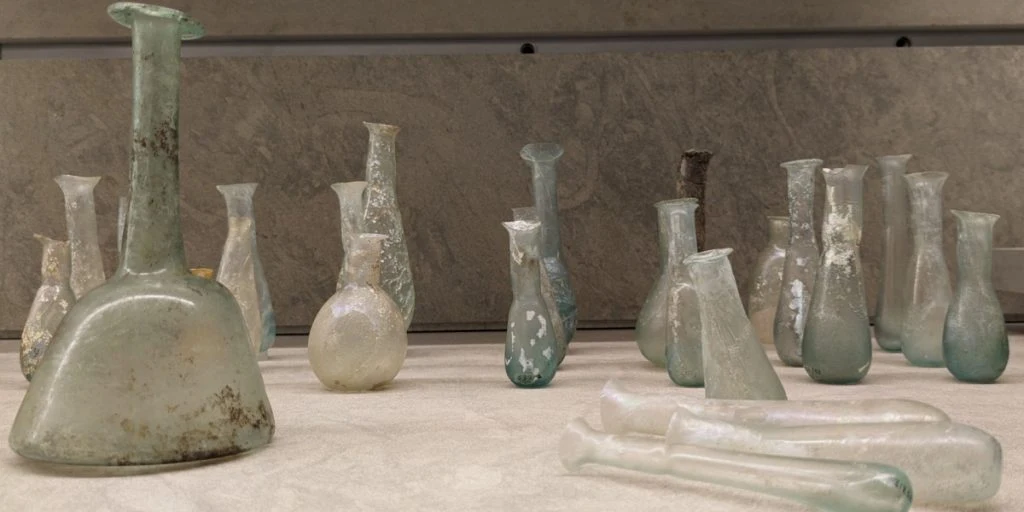
Researchers in Türkiye found chemical traces of human fecal matter and herbs in a second-century CE Roman glass vessel, suggesting some “perfume” bottles once contained medicinal preparations.

He treated gladiators, advised emperors and wrote medical texts that shaped medical thinking for more than a millennium. Galen of Pergamon, a second-century physician, recorded remedies drawn from plants, minerals and animals.
Some were elaborate compounds that later vanished from use. Others relied on dung and feces, sometimes mixed with oils and fragrant herbs. Ancient writers including Dioscorides and Pliny the Elder described similar treatments.
For generations, those references were known only from texts.
Evidence from Pergamon
Now, according to a study published in the Journal of Archaeological Science: Reports, researchers in Türkiye say they have identified chemical traces consistent with a feces-based preparation inside a Roman glass vessel dated to the second century CE and excavated in Pergamon.


The city, now Bergama in modern western Türkiye, was a prominent medical center of the Roman Empire and home to a major healing sanctuary. Galen himself was born there.
The object analyzed is a small, long-necked glass bottle known as an unguentarium, typically associated with perfumes or cosmetic oils and frequently recovered from tombs.
It wasn’t perfume.
What the lab found
Researchers scraped brown residue from the clay-sealed vessel and analyzed it using gas chromatography, a method that separates organic compounds while applying contamination controls, the study states.
They detected coprostanol, a compound produced during human digestion and widely used as a marker of human fecal matter. Additional sterol indicators supported that finding.
In a separate stage of testing, the team identified carvacrol, a chemical linked to thyme, pointing to the presence of a strong aromatic ingredient. The study also reports traces of olive oil.
“Faecal-based pharmacological treatments are widely attested in Greco-Roman medical texts,” said lead author Dr Cenker Atila of Sivas Cumhuriyet University. “However, until now, there had been no archaeological evidence of this practice.”
In interviews with CNN, Atila said matching chemical data with ancient descriptions was an unexpected result.
Rewriting assumptions
Nicholas Purcell, professor emeritus of ancient history at the University of Oxford, told CNN that the findings help bridge the gap between literary sources and physical artifacts and may encourage scholars to reconsider how similar vessels are classified.
Small glass bottles from graves are often catalogued as luxury goods. This case suggests some may have contained prepared medicines instead.
More broadly, the study underscores how residue analysis can recover evidence of practices that leave little visible trace, reshaping interpretations of daily life and medical treatment in the Roman world.
Sources: Journal of Archaeological Science: CNN



