
 Kenneth Glad
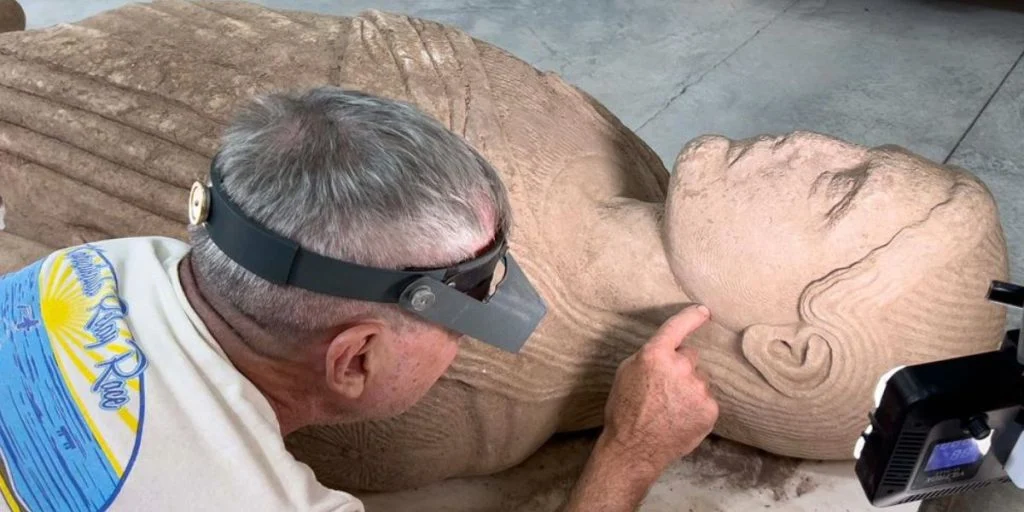
An archaeological discovery in western Turkey is giving specialists new material to examine. Distinctive clothing and possible traces of pigment could help researchers reconstruct how the object originally appeared.
A 2,500-year-old statue of a young man has been uncovered in the ruins of Sardis, an ancient city in western Turkey with a history stretching across several major civilizations.
The roughly 7.2-foot-tall statue dates to the fifth century B.C., according to News24, which cited Turkey’s Ministry of Culture and Tourism. Its unusually well-preserved facial features appear to owe much to what happened to the statue centuries after it was carved.
During the Roman period, builders reused the statue as paving along a colonnaded street, positioning it face-down. That placement helped shelter the carved features while other parts of the marble became covered by hardened deposits.
Sardis had previously served as the capital of Lydia, a kingdom centered in western Anatolia. It later came under Persian control and developed into an important center of the Persian Empire, the period to which the newly found statue has been dated.


Turkey’s culture and tourism minister, Mehmet Nuri Ersoy, described the find as an “extraordinary discovery.”
Unusual clothing points to Lydia
Officials have focused closely on the statue’s dress because its combination of garments differs from comparable sculptures known from Greece and Anatolia. The clothing includes a himation and chiton, as well as a distinctive piece decorated with horizontal lines.
“The unusual details of its clothing bear traces of Lydian culture,” Ersoy said.
The young man also appears to hold a fruit. Authorities believe the statue could contribute to research into religious beliefs, cultural exchange and everyday life in Sardis during the period.
Centuries later, Sardis became important in early Christian history. It was one of seven communities in Asia Minor addressed in the Book of Revelation, alongside Ephesus, Pergamum, Thyatira, Smyrna, Philadelphia and Laodicea.
Conservators will carefully remove the deposits covering the statue while watching for surviving ancient paint. Soil from around the find will also be examined for pigment. Once conservation and restoration are finished, the statue is expected to go on display at the Manisa Museum.
Sources: News24, Turkey’s Ministry of Culture and Tourism



