
 Asger Risom

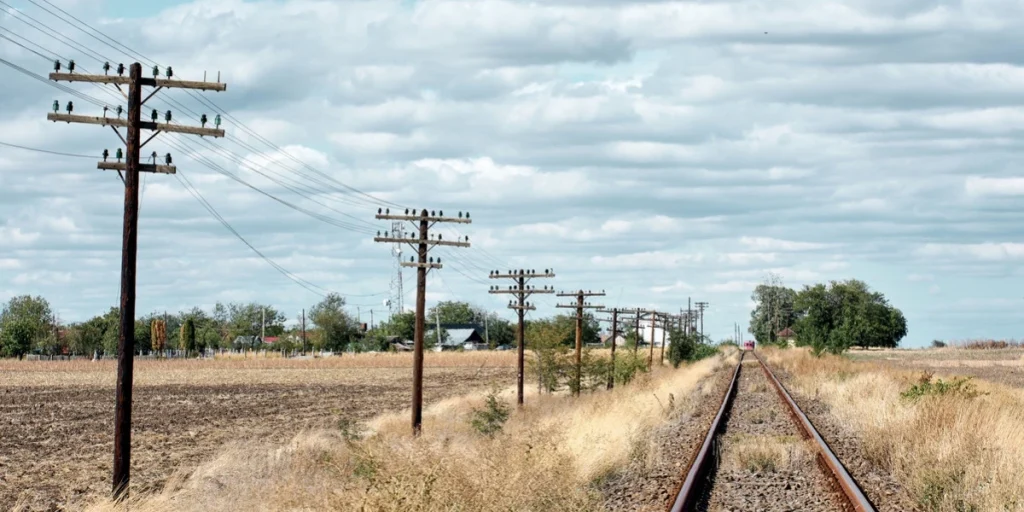
During the 1859 Carrington Event, a massive solar storm rattled Earth’s magnetic field and turned telegraph wires into accidental electrical generators—letting operators unplug their batteries and keep messaging anyway. Here is how that physics works, and what a similar hit would mean for modern power grids.


On the morning of September 2, 1859, a telegraph operator in Boston tapped out an unusual request to his counterpart in Portland, Maine: disconnect your batteries entirely from the line for fifteen minutes. Telegraph stations in that era relied on heavy glass jars filled with acid and metal plates to push electrical signals across long distances. Both men unhooked their power supplies, yet their machines kept clicking. For roughly two hours, they carried on a clear conversation across more than a hundred miles of wire using nothing but raw electricity generated by a storm in space.
A five-minute flash on the sun
The chain reaction began the previous morning in Redhill, a town south of London. British astronomer Richard Carrington was in his private observatory sketching a cluster of unusually large sunspots projected onto a screen when two blindingly bright beads of white light erupted inside the dark spots. The flare lasted barely five minutes before fading away, making Carrington the first person in history to witness a solar eruption in progress.
What Carrington could not see was that the explosion had also hurled billions of tons of magnetized plasma—a coronal mass ejection—straight toward Earth. Most solar blasts take three or four days to cross the ninety-three million miles between the sun and our planet. This cloud covered the distance in just under eighteen hours.
According to NOAA Research, the impact triggered the most intense geomagnetic storm ever recorded. Compass needles spun erratically across the globe, and nighttime skies erupted with curtains of red, green, and purple light. Auroras normally confined to polar latitudes appeared over Rome, Havana, and Honolulu—glowing brightly enough in the Rocky Mountains that gold miners woke up past midnight and began cooking breakfast under the impression that dawn had arrived.


How a geomagnetic storm turns wires into generators
Down on Earth, humanity’s newest communication network was acting like a giant antenna. To understand why telegraph lines suddenly came alive on their own, it helps to look at basic electromagnetism: whenever a magnetic field changes rapidly around a metal wire, it induces an electric current inside that conductor.
Earth is wrapped in a protective magnetic bubble called the magnetosphere. When the sun’s plasma cloud slammed into that bubble, it violently compressed and rattled Earth’s magnetic field lines across the entire planet. Every long stretch of iron and copper telegraph cable strung across North America and Europe suddenly sat inside a fluctuating magnetic field, turning thousands of miles of communication wire into accidental electrical generators.
As detailed by Britannica, those geomagnetically induced currents surged through telegraph offices with erratic force. Operators in Washington, D.C., and Philadelphia received painful shocks when brushing against their equipment, sparks leaped from key switches, and surges set recording paper on fire in stations from Norway to New England. In fact, the atmospheric current flowing through the wires was so strong that disconnecting station batteries actually reduced interference, letting operators transmit smoothly on solar power alone.
What a repeat storm would do to modern grids
In 1859, the telegraph was the only electrical infrastructure on Earth, so society mostly remembered the event as a dazzling sky show with a few scorched telegraph desks. Today, continents are wired together by hundreds of thousands of miles of high-voltage transmission lines, undersea cables, and orbiting satellites.
As Space.com notes, a Carrington-class storm hitting Earth today would flood modern power grids with massive surges of direct current. High-voltage grids are designed to carry alternating current, meaning an influx of direct current can rapidly overheat and melt the copper windings inside custom-built grid transformers that weigh hundreds of tons and take months or years to replace.
Space weather forecasters know the 1859 storm was not a one-off fluke. According to NASA Science, an equally powerful solar superstorm tore through Earth’s orbit in July 2012, missing the planet by just nine days because the sun had rotated slightly away from us before erupting. Thanks to dedicated solar-monitoring satellites, engineers now have early-warning systems to temporarily power down vulnerable transformers and put satellites into safe mode before a plasma cloud arrives, buying crucial hours the next time the sun sends a surge our way.



