
 Kenneth Glad

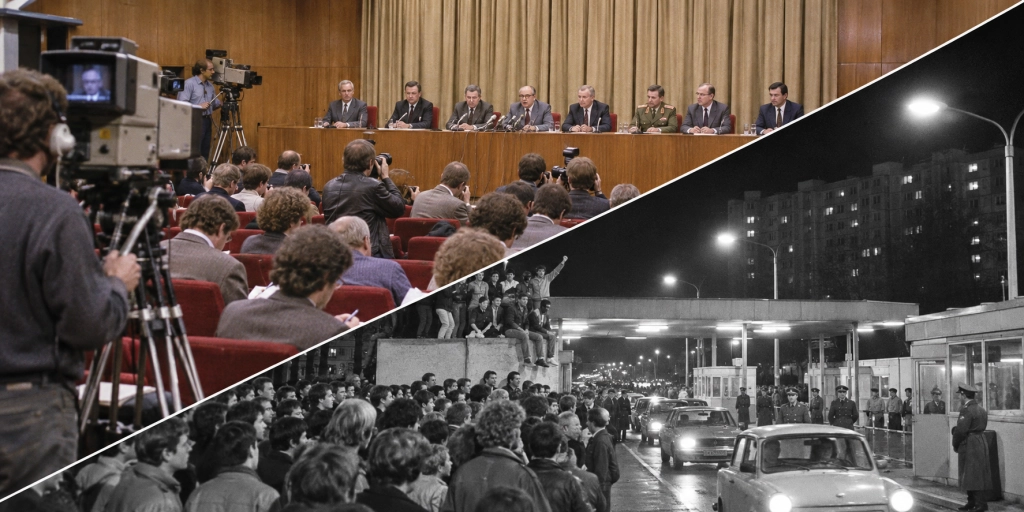
A long period of national separation came to a sudden close after unexpected public statements caused widespread confusion. What followed was an unplanned series of events that transformed the political landscape forever.


Party spokesman Günther Schabowski arrived late for a major international news broadcast on 9 November 1989. He was completely worn out from working around the clock. East German leader Egon Krenz shoved a stack of papers into his hands just before airtime.
The documents outlined updated travel regulations designed to stop a massive flight of citizens from the country. Officials planned to release the memo the next day so that municipal visa bureaus could process requests on Monday.
Schabowski did not read the text beforehand, writes HistorieNet. Live on camera, the exhausted spokesman overlooked the final page that detailed the official embargo date.
When an Italian journalist asked when the borders would open, Schabowski shuffled the papers nervously. He replied: “It happens… as far as I know, it takes place immediately, without delay.”


Broadcasters quickly picked up the live quote. In Mainz, the West German television channel ZDF read the wire announcement during its evening bulletin. The broadcast omitted the detail that travelers still required passports and visas.
Border guards faced total confusion at checkpoints
Over at the Bornholmer Strasse crossing, 46-year-old Lieutenant Colonel Harald Jäger sat down to eat his dinner. The mess hall television was on in the background.
Jäger choked on a mouthful of bread as he heard the shocking announcement. He could not believe what the spokesman was saying on state television.
The officer ran to his office to dial his supervisor, Colonel Rudi Ziegenhorn, as reported by HistorieNet. Jäger asked what the broadcast meant for their post.
The colonel dismissed the television clip as complete nonsense. Ziegenhorn instructed Jäger to turn away any civilians who showed up at the crossing.
By 8 p.m., hundreds of East Berliners were congregating outside the gates. Jäger tried to explain that people needed valid travel permits. The crowd shouted back, furious at what looked like another official deception.
Frantic phone calls failed to produce clear answers
By 9 p.m., thousands of people blocked Bornholmer Strasse with cars and bicycles. The crowd began chanting in unison: “Open the gate!”
Jäger called his superiors again to warn that the station was overrun. He insisted that his small unit could not defend the perimeter without guidance.
HistorieNet notes that higher officials eventually issued a cynical compromise. Commanders told Jäger to let the loudest demonstrators leave for the West while stamping over their passport photos.
This stamp effectively revoked their citizenship and banned them from returning. The plan proved disastrous almost immediately.
Later that evening, an upset mother approached the barrier weeping. She had crossed into West Berlin for a brief visit, leaving two sleeping children behind.
Officers refused to let her re-enter because of the cancelled photo. Jäger took pity on the woman and let her pass, convinced that the leadership plan was cruel and unsustainable.
One final command ends decades of division
Outside the checkpoint, thousands of civilians surged against the barrier. People at the very front risked being trampled to death against the steel as the crowd started chanting in unison for the gates to open.
According to HistorieNet, Jäger realized that party leaders had abandoned him and his officers after hours of unanswered pleas for clear orders. Refusing to let panic kill anyone, the commander told his staff to stop all passport checks and lock the ink stamps inside the station safe.
“Open the gate,” he commanded his stunned subordinates. The guards hesitated until Jäger shouted the order a second time with total authority.
The gates swung open, unleashing an emotional wave of people into West Berlin. Relieved citizens hugged the bewildered guards, one newlywed bride handed a soldier her wedding bouquet, and by morning twenty thousand people had crossed that single border crossing.



