
 Kenneth Glad

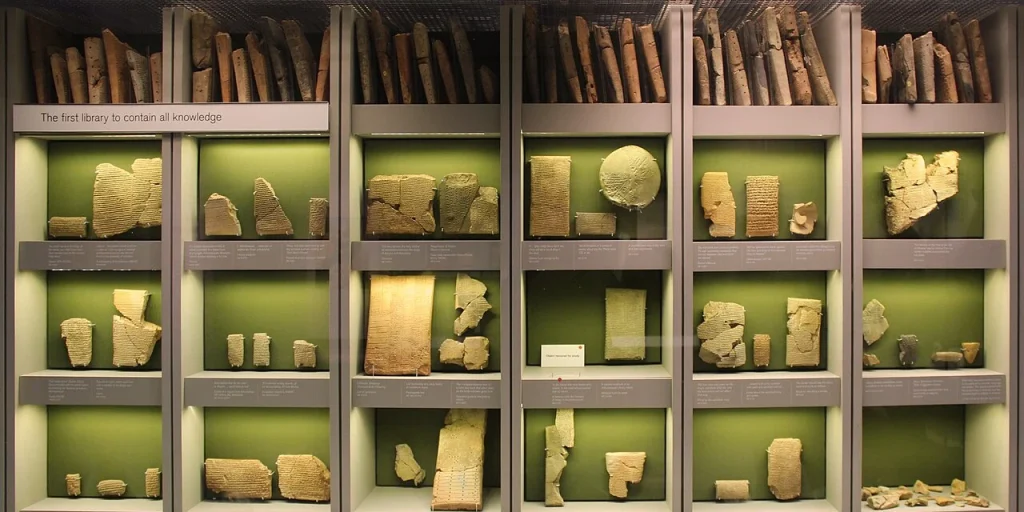
Long before the internet or modern archives, one ruler tried to gather all human knowledge under a single roof. This massive collection vanished from history for thousands of years. Now, experts are still rushing to read the secrets it left behind.

Most people think of ancient Egypt or Greece when they imagine the early days of civilization. But the Middle East holds an even older treasure.
In the seventh century BC, an Assyrian king built a massive archive in Nineveh. That city sits in modern Iraq, and back then, it was the largest and most splendid city on Earth.
Ashurbanipal ruled a vast territory stretching from Turkey to Iran, yet he wanted to be known as a brilliant scholar. As the youngest son of his father, Esarhaddon, he was probably never meant to take the throne at all.
Instead, the young prince was educated alongside royal advisers and learned to debate them. According to a detailed report by History Today, the ancient ruler claimed he could solve highly complex mathematical problems and read obscure texts from forgotten eras.


He actively gathered documents covering everything from magic and medicine to ancient religion.
The king bragged about his skills in his own writings. “I learned the craft of the sage Adapa, the secret [and] hidden lore of all the scribal arts,” he wrote.
Fire saves the past
Babylonian invaders sacked Nineveh and burned the royal palace to the ground in 612 BC. That disaster actually saved the archive for future generations.
The ancient Mesopotamians wrote on raw clay using a wedge-shaped script called cuneiform. When the raging fires swept through the buildings, they baked the clay and hardened the documents perfectly.
This unexpected heat treatment ensured the tablets would never decay in the earth.
Roughly 33,000 of these ancient texts survive to this day in the British Museum. History Today notes that researchers are still working to translate the massive backlog.
The translation process could take many more years, simply because there are too few historians trained to read the dead languages.
Cracking the code
European explorers dug up the lost city in the 1840s and 1850s. They focused their efforts on a massive dirt mound that locals used for grazing sheep. Deep in the earth, they found thousands of strange clay pieces scattered everywhere.
Austen Henry Layard was a pioneering British archaeologist who spearheaded the excavation on behalf of the British Museum. He and his local assistant Hormuzd Rassam discovered a major room filled with documents in 1850.
Experts later realized the ancient invaders had simply dumped these precious texts into a royal bathroom during the siege.
Layard noted that the writing was incredibly small. “The cuneiform characters on most of them were singularly sharp and well defined, but so minute in some instances as to be almost illegible without magnifying glass,” he reported.
Deciphering the dead language took decades of intense work. Scholars only cracked the code after studying trilingual translations carved into steep cliffsides.
Shocking discoveries
The massive archive held everything from medical manuals to magical rituals written by ancient exorcists. It also preserved bitter letters detailing Ashurbanipal’s war against his own brother who ruled Babylon. His wrath was not reserved just for his family, however, as he also sent brutal threats to foreign rivals.
“I swear by Ashur and my gods that under the aegis of the gods I will make the future even more horrible than the past for you,” Ashurbanipal warned one rival king.
A self-taught scholar named George Smith uncovered the biggest surprise at the British Museum. He translated a Babylonian text, later known as the Epic of Gilgamesh, about a ship resting on a hill and releasing a dove to find land.
The ancient narrative sounded exactly like the biblical tale of Noah. The discovery was so monumental that a London newspaper actually funded an expedition to find the missing pieces.
According to History Today, the breakthrough prompted a wild reaction. “I am the first man to read that after more than two thousand years of oblivion,” Smith reportedly said in his excitement, before jumping up and tearing off his clothes in an astonishing celebration that captured the sheer thrill of the era’s discoveries.
Thanks to those baked clay tablets, Ashurbanipal’s quest to preserve human knowledge ultimately outlasted his empire by thousands of years.



