
 Kenneth Glad
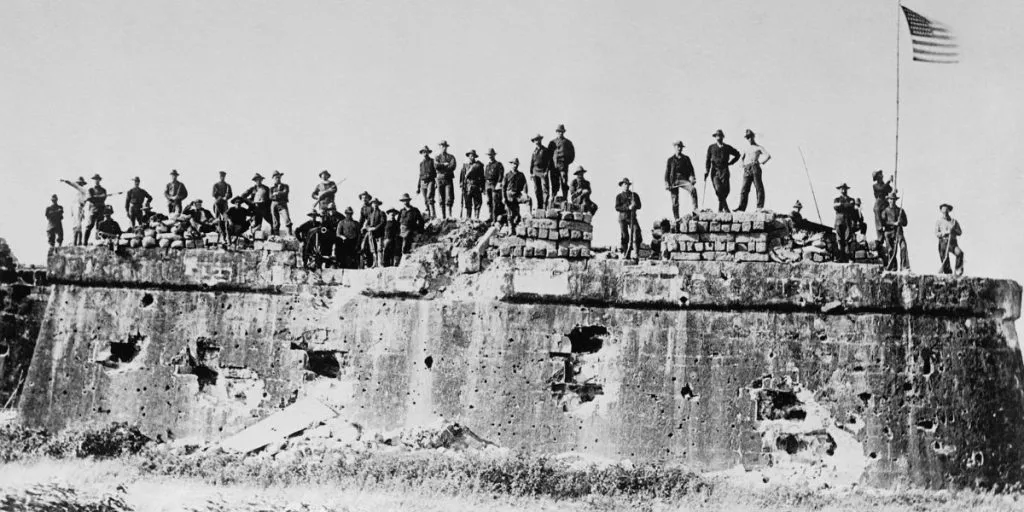
Spanish troops still held the Philippine capital in August 1898, but their position was collapsing. Filipino revolutionaries and newly arrived American forces were both waiting to see who would inherit the city.
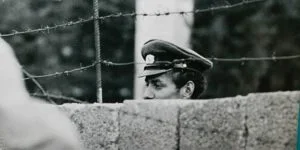
By the summer of 1898, the future of the Philippines had become increasingly uncertain. Spanish colonial rule was weakening rapidly, but it was not yet clear whether its collapse would bring independence or simply open the door to another foreign power.
By August, revolutionaries led by Emilio Aguinaldo had already declared Philippine independence and surrounded much of Manila. Spain appeared close to defeat, yet the political outcome remained unresolved.
The United States had entered the war against Spain months earlier and was steadily increasing its military presence in the Philippines. As more American troops arrived, their positions increasingly formed a barrier between Aguinaldo’s forces and the capital.
Spanish commanders also faced a difficult choice. After years of brutal repression, they feared what might happen if Manila were surrendered directly to the Filipino revolutionaries.


According to Historienet, senior Spanish and American officers quietly worked out another solution. Spain would surrender the city to U.S. forces, but only after putting up enough resistance to preserve the appearance of military honor.
Spain sought an exit
Spain’s ability to defend Manila had already been badly weakened. Admiral George Dewey’s fleet destroyed the Spanish squadron in Manila Bay on May 1, leaving the colonial authorities without meaningful naval protection while Filipino forces continued to tighten pressure on land.
By August, the Spanish position inside the capital was increasingly difficult to sustain. Supplies were limited, the city was under growing pressure, and commanders knew that a prolonged defense was unlikely to change the eventual outcome.
On August 13, American warships opened fire on Spanish positions as U.S. soldiers began their advance toward Manila. Many of the ordinary troops taking part had no knowledge of the negotiations taking place between senior officers.
Historienet reports that Spanish resistance had been deliberately limited as part of the arrangement, although the fighting was not entirely theatrical. Some Spanish units were apparently unaware of the agreement and exchanged real fire with American troops. Elsewhere, advancing U.S. soldiers found defensive positions already abandoned.
The operation ended quickly. By later that day, American troops controlled Manila, while Filipino forces that had helped surround and isolate the Spanish garrison were prevented from entering the capital alongside them..
Sovereignty remained unsettled
Possession of Manila did not settle the future of the entire Philippine archipelago. Although American troops controlled the capital, the broader question of sovereignty was left to the peace negotiations that followed. U.S. representatives eventually demanded that Spain cede the Philippines and offered $20 million as part of the settlement.
The Treaty of Paris was signed on December 10, 1898, formally ending the war between Spain and the United States. President William McKinley’s administration later described its policy in the islands as “benevolent assimilation,” but Washington did not recognize the Philippine Republic that Aguinaldo and his supporters had already proclaimed.
That refusal helped turn former wartime allies into enemies. Fighting between American and Filipino forces began on February 4, 1899, according to the U.S. Office of the Historian, opening a new and far more prolonged conflict over who would rule the islands. Aguinaldo was captured in 1901, and major organized resistance declined during the following year. Philippine independence would not come until 1946.
The events of August 13 therefore mattered far beyond the military capture of Manila. Filipino revolutionaries had spent years fighting Spanish colonial rule, surrounded the capital and declared their own state. Yet when Spanish authority in Manila finally collapsed, they were excluded from the city while another foreign army took control of its political and administrative center.
Sources: Historienet, U.S. Office of the Historian



