
 Kenneth Glad
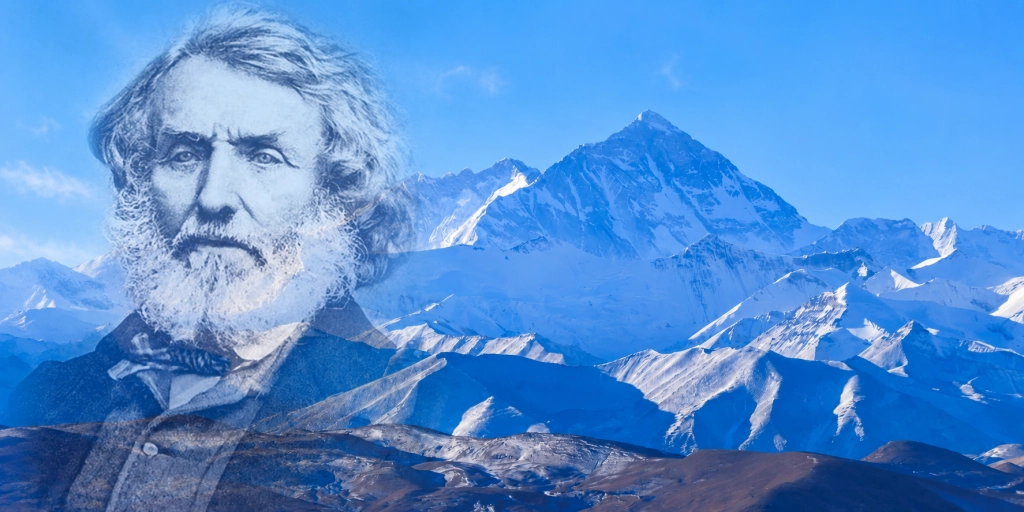
Scaling the world’s highest peak is the ultimate dream for ambitious mountaineers and thrill-seekers around the globe. Yet behind the famous summit lies a forgotten battle over the very name stamped across every map. The man who gave the giant its name actually spent his final years begging the world to call it something else.

Sir George Everest served for decades as surveyor general, mapping vast expanses across the Indian subcontinent. Under his steady leadership, survey teams laid the essential groundwork for measuring the Himalayan mountain range.
Everest retired to Britain in 1843, long before researchers calculated the towering height of the peak then known simply as Peak XV. In fact, the Welsh surveyor never set eyes on the majestic mountain himself. He played no active role in measuring its record-breaking elevation.
When British officials proposed naming the giant peak after him in 1856, according to HistorieNet, Everest raised immediate and sharp objections. He firmly insisted that local titles should always take precedence over foreign names.
Native populations in Nepal and Tibet already had their own established names for the peak, including Chomolungma, grounded in regional culture and geography.


They ignored him
The Royal Geographical Society pressed forward with the proposal anyway. His successor, Andrew Waugh, argued that choosing among various local dialects proved too complicated for official mapping. Waugh claimed the remote mountain lacked a single, widely recognized native name.
Everest warned that local populations across India could not easily pronounce his surname or write it in native scripts. His protests fell on deaf ears among British authorities in London. In 1865, the society officially christened the world’s highest summit Mount Everest.
The retired surveyor passed away the following year, leaving behind a legacy he actively tried to prevent. Today, his name remains an enduring global symbol, even though the man himself fought tirelessly to keep it off the map.
One man’s mission
Long before the controversy over Peak XV unfolded, George Everest had devoted his career to precision mapping across vast, harsh landscapes. He spent years leading grueling expeditions through dense jungle, scorching heat, and difficult terrain.
His meticulous work standardized geographic measurements across the entire Indian subcontinent, earning him high acclaim among fellow scientists in Europe, writes the history site.
Despite his official accolades, Everest always maintained a strong respect for local culture and language. He firmly believed that geography belonged to the people who inhabited the land rather than remote administrators sitting in London offices.
His principled stance created a lasting friction with colonial cartographers who preferred simple Western designations on global atlases. When society leaders overruled his objections, Everest expressed deep disappointment that international maps would ignore indigenous heritage in favor of personal honors.
Source: HistorieNet



