Nicolai Haugsted
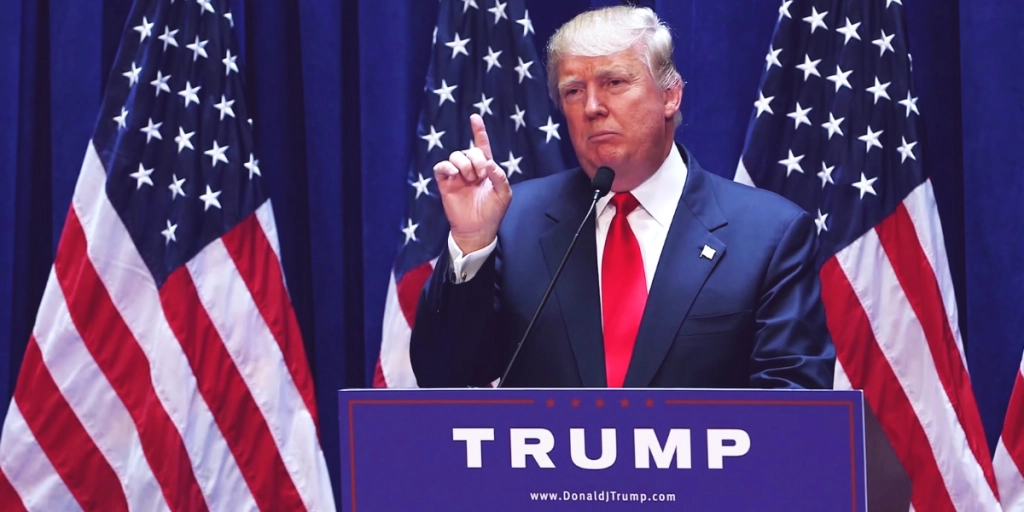
Backlash grows over Donald Trump’s “ECONOMIC D-DAY” threats against China and Russia.


Foreign policy debates took a sharp turn after recent public statements regarding the ongoing conflict with Iran drew widespread skepticism from political commentators and market experts.
Addressing a crowd on Long Island, New York, Donald Trump doubled down on a hardline stance, warning that foreign nations and global markets should brace for extreme economic isolation measures.
The escalating rhetoric comes amid widespread domestic anxiety regarding living costs. According to survey data from the Harris Poll, 95 percent of citizens believe the nation is facing a severe affordability crisis, while 57 percent report that the overall economy is steadily deteriorating.
Defiant stance on rising household expenses


Addressing public anxiety over rising fuel prices, Trump made it clear that consumers will simply have to absorb higher expenses at the pump as part of a broader security strategy.
“For you to pay a little bit more for your gasoline, just remember, you’re doing it so a very evil country cannot have… a country, really, it’s the number one state sponsor of terror in the world, we don’t want to have them have nuclear weapons,” Trump stated during his speech.
Refusing to back down on his economic narrative, he explicitly rejected issuing any form of apology to struggling households: “When you have to pay a little bit more, you’re at $4. It’s Ok, I mean, it’s… I’m not… I’m not… I’ll never apologise; I did the right thing.”
Backlash over global economic threats
Social media platforms and cable news networks immediately erupted with critical reactions following the address.
Outlining a strategy he dubbed an “ECONOMIC D-DAY,” Trump issued a stern warning to international partners on Truth Social, writing: “This will be an ECONOMIC D-DAY, and we need all of our Allies to stand with the United States of America to isolate, and defeat, the Iran threat.” He added that any nation providing a lifeline to Iran “will itself face TREMENDOUS Economic Consequences.”
Critics quickly pointed out the practical flaws in the proposed ultimatum. Speaking on CNN’s “Anderson Cooper 360°,” foreign policy analyst Fareed Zakaria explained that Tehran’s primary commercial partners remain largely insulated from Washington’s influence.
“Iran’s largest trading partner is China; its second largest trading partner, I believe, is Russia. It also trades with North Korea, a little bit with India. These are not countries that the Trump administration has that much influence over,” Zakaria noted.
Addressing the feasibility of cutting off economic ties with Beijing to enforce the policy, Zakaria emphasized the severe potential fallout for domestic supply chains:
“We’ve already seen how that would work ’cause the Chinese would cut off their exports of rare earth, and all kinds of crucial things that the United States depends on. So it seems unlikely that you’re actually gonna get at the core problem.”
Escalating claims regarding international waters
Adding another layer of geopolitical tension to his address, Trump outlined plans to assert direct control over vital maritime trade routes in the Middle East.
“After we finish defeating Iran, which is being very badly defeated… pretty soon I will be declaring the Hormuz Strait a territory of the United States,” Trump declared to the crowd. He subsequently reaffirmed the claim online, stating: “Essentially, that’s what it is. We have the blockade. No ships get through unless we want them to.”
With 54 percent of voters in the Harris Poll reporting that neither major political party possesses a clear solution to the affordability crisis, the controversial policy statements leave working families facing both foreign policy uncertainty and a continuing squeeze on household budgets.
Click to display external content from t.co,
- You can always enable and disable third-party content.